
Is spray foam always better than blown-in fiberglass?
No. The right material depends on the attic assembly, air-sealing needs, existing conditions, inspection access, moisture strategy, product specifications, and local requirements.

A+ BBB Rated Universal Insulation Doctor
Accredited business for Insulation Guidance across Hampton Roads
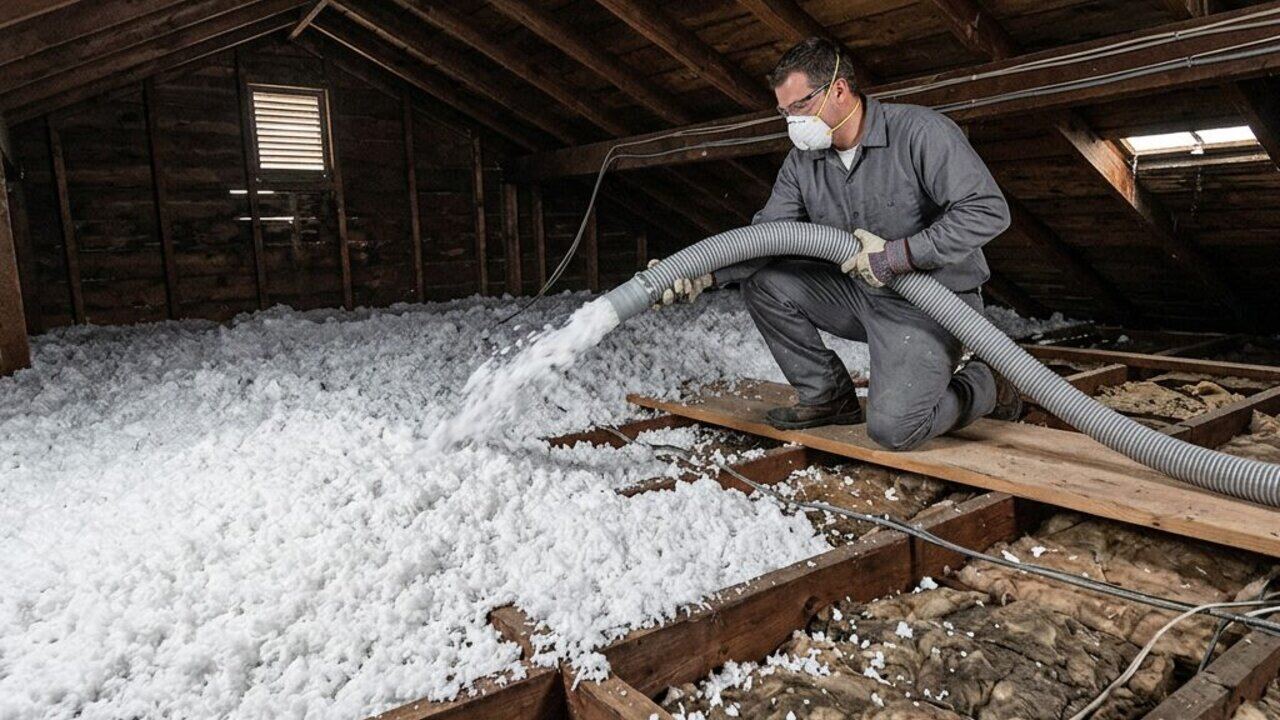
Spray foam and blown-in fiberglass can both be part of a good attic insulation plan, but they do different jobs. Foam can provide insulation and air control when the right product is installed continuously at the specified thickness. Blown-in fiberglass is installed across the attic floor to a planned depth and R-value. The right choice depends on the attic assembly, air-sealing needs, existing conditions, inspection access, and local code—not just the biggest R-value on an estimate.
Quick answer
Spray foam may be a fit when a designed roofline or other assembly needs both insulation and air control. Blown-in fiberglass is often considered for an accessible attic floor where the target depth can be installed and checked. For Pest Guard™, Universal Insulation Doctor offers a treated fiberglass option intended to help deter certain label-listed insects. It is not termite treatment or a substitute for inspection. If termites are a concern, discuss foam access with a termite professional before installation.
Spray polyurethane foam is applied in place. Depending on the product and thickness, it can add thermal resistance and help limit air movement through the assembly. The design must account for the roof or attic floor, ventilation strategy, moisture conditions, fire protection, and the manufacturer’s installation requirements.
Blown-in fiberglass is a loose-fill insulation installed over an attic floor. It can build an even thermal layer over a large area, but it does not seal every crack or penetration by itself. Accessible air leaks should be evaluated and the included air-sealing work clearly stated before new insulation covers them.
| What to compare | Spray foam | Blown-in fiberglass |
|---|---|---|
| R-value and air control | R-value depends on foam type and thickness; a correctly designed, continuous application can also limit air movement. | R-value depends on the selected product and installed depth. Air sealing is a separate part of the scope. |
| Inspection access | Foam over framing can make concealed wood, termite evidence, or moisture harder to inspect. | Loose-fill can generally be moved locally for access, then restored by a qualified crew as needed. |
| Pest-related role | Not a termite treatment. Foam does not replace inspection, treatment, or an active pest-service plan. | Standard fiberglass is insulation. Pest Guard™ is a separate treated option with label-specific insect claims. |
| Best next question | Will the installation preserve required inspection areas and work with my termite contract? | What product, target depth, air sealing, and coverage verification are included? |
There is not one R-value that fits every Virginia home. Climate-zone requirements vary by locality, and the right recommendation also depends on whether insulation is at the attic floor or roofline, what is already installed, and how the assembly is designed.
The Virginia Department of Housing and Community Development’s FAQ on the 2021 Virginia Residential Code says ceiling insulation in Climate Zones 3 and 4 is subject to an R-60 minimum under that code; it also says local building departments determine how the code applies. That code figure is not automatically a retrofit requirement for every existing home. Before using a number for a project, confirm the current code edition and permit requirements with your local building department, then compare the proposed target with the product’s coverage chart.
A useful estimate names the insulation product, target R-value, expected installed depth, air-sealing work, ventilation clearances, and how coverage will be checked. OurVirginia attic R-value and installed-depth guideexplains how to compare those details without relying on a generic inches-to-R-value conversion.
Read theVirginia DHCD’s 2021 Residential Code FAQand ask the local building department which rules apply to your work.
Spray foam does not attract or feed termites, but it can cover wood and make evidence of activity or moisture harder to see. Mississippi State University Extension describes termites tunneling through or behind foam, and notes that inspection and treatment in foam-insulated buildings can take additional work. These are reasons to plan access with a licensed pest professional—not proof that every foam-insulated home has termites.
If termites are suspected or confirmed, a pest professional should inspect the affected structure and decide how to treat it. Where foam hides the wood that needs examination, selective removal may be recommended to expose specific areas. The extent depends on the infestation, the building assembly, and the treatment plan; a full removal of all foam is not automatic. If you already have a termite agreement, contact the provider before adding foam and ask how the installation could affect inspection access or contract terms.
For more background, seeMississippi State University Extension’s article on spray foam and termites. Its guidance is general; your own pest professional should assess your property and contract.
Pest Guard™ is not spray foam. It is a blown-in fiberglass insulation option that incorporates a pest-control product. Universal Insulation Doctor is the only installer in Hampton Roads offering Pest Guard™. The product is intended to help deter certain insects listed on its current label; it is not a termite treatment, rodent treatment, or replacement for pest inspection and exclusion. Ask to review the current label and manufacturer instructions for approved applications and claims.
This is where the Total Home Health connection matters.Universal Pest & Termitehandles pest and termite inspection and treatment within its service scope. Universal Insulation Doctor evaluates insulation, air sealing, and replacement options, including Pest Guard™ where appropriate. The two sister companies can coordinate the sequence so pest concerns are assessed by pest professionals and insulation work is scoped by the insulation team. Pest Guard should not be presented as a termite control method.
Learn more aboutPest Guard attic insulationand theTotal Home Health approach in Hampton Roads.
Compare proposals by the assembly, product, installed depth, air sealing, inspection access, and written scope—not by insulation type alone. Homeowners in Hampton Roads canrequest a free attic estimateor review ourattic insulation services. If you have an active or suspected termite issue, contact a pest professional before changing insulation around the affected area.
No. The right material depends on the attic assembly, air-sealing needs, existing conditions, inspection access, moisture strategy, product specifications, and local requirements.
There is no single number for every Virginia home. Climate zones and code requirements vary by locality, and the target depends on the assembly, existing insulation, product, and project scope. Confirm current requirements with the local building department.
Foam can cover wood and make some termite evidence harder to see. A pest professional should review inspection access and treatment options before foam is installed or altered.
No. A pest professional may recommend selective removal where foam hides wood that must be inspected or treated. The amount depends on the affected areas and the treatment plan.
No. Pest Guard™ is a treated blown-in fiberglass insulation option intended to help deter certain label-listed insects. It is not a termite or rodent treatment and does not replace pest inspection or exclusion.
Universal Pest & Termite handles pest and termite work within its scope. Universal Insulation Doctor handles insulation evaluation and installation. The sister companies can coordinate the work sequence while keeping each service within its specialty.
Universal Insulation Doctor serves all of Hampton Roads. Call now or fill out our quick form — we'll get back to you same day.
Can't find the answer you're looking for? Our team is always happy to help. Give us a call or fill out the form for a free no-obligation consultation.
(757) 962-0340