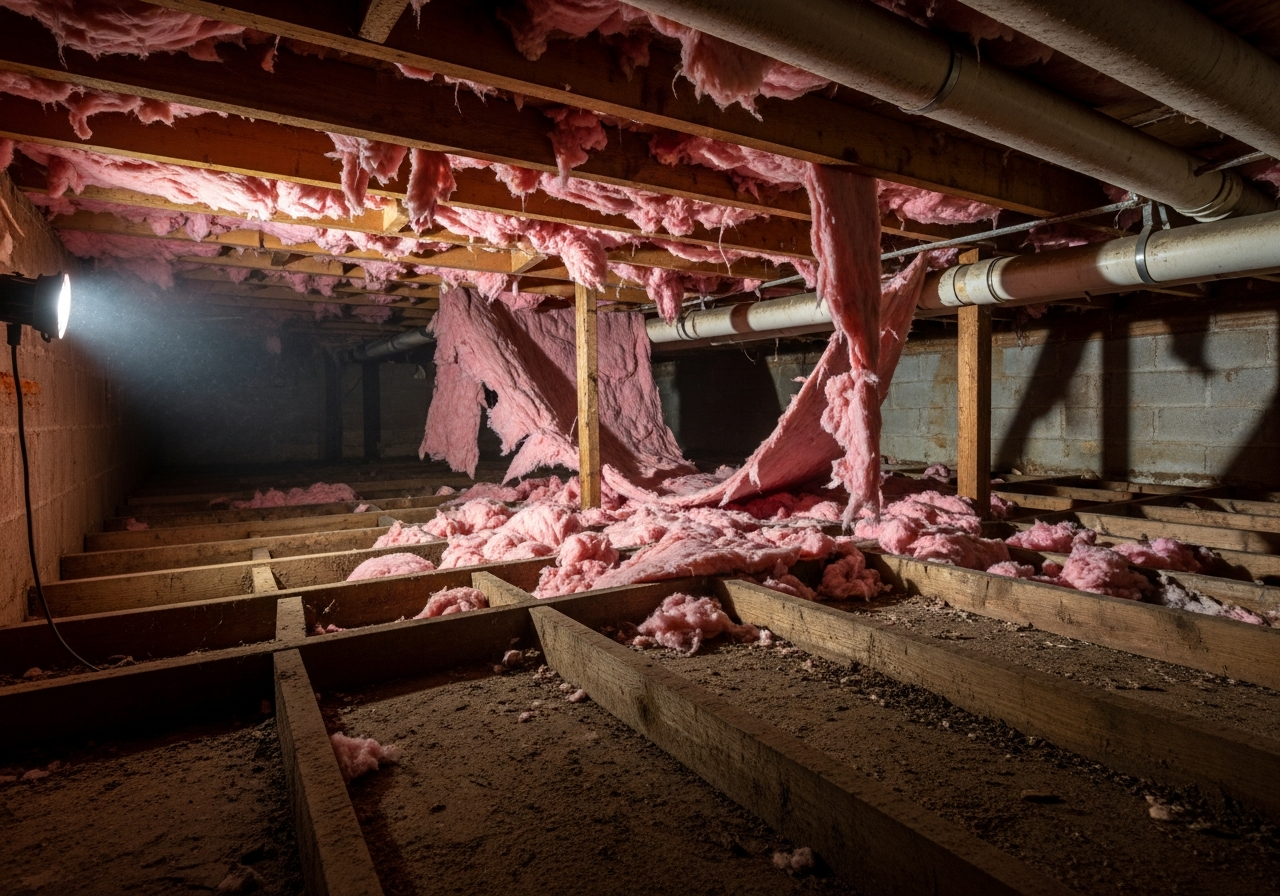
Look at the Insulation and the Space Around It
Sub-floor insulation should fit the intended assembly without large gaps, sagging, or exposed sections. In Hampton Roads crawl spaces, moisture can add weight, damage supports, compress fibers, and change whether existing material should remain.
The inspection should document the cold rooms above, visible insulation condition, ground cover or liner, moisture signs, vents, access, and plumbing leaks that fall outside the insulation scope.
Repair, Replace, or Address Moisture First
A limited dry area may be repairable. Widespread sagging, wet material, contamination, or poor fit may justify removal and replacement. When ground moisture, drainage, humidity, or water intrusion is driving the damage, crawl-space encapsulation or another moisture-control scope may need to be evaluated first.
Cold Floors Can Have Other Causes
Flooring materials, room airflow, thermostat location, duct distribution, and outdoor conditions affect how a floor feels. Insulation work does not replace plumbing repair, drainage correction, HVAC balancing, or structural work. The written scope should identify what was found below the floor and which conditions require another trade.