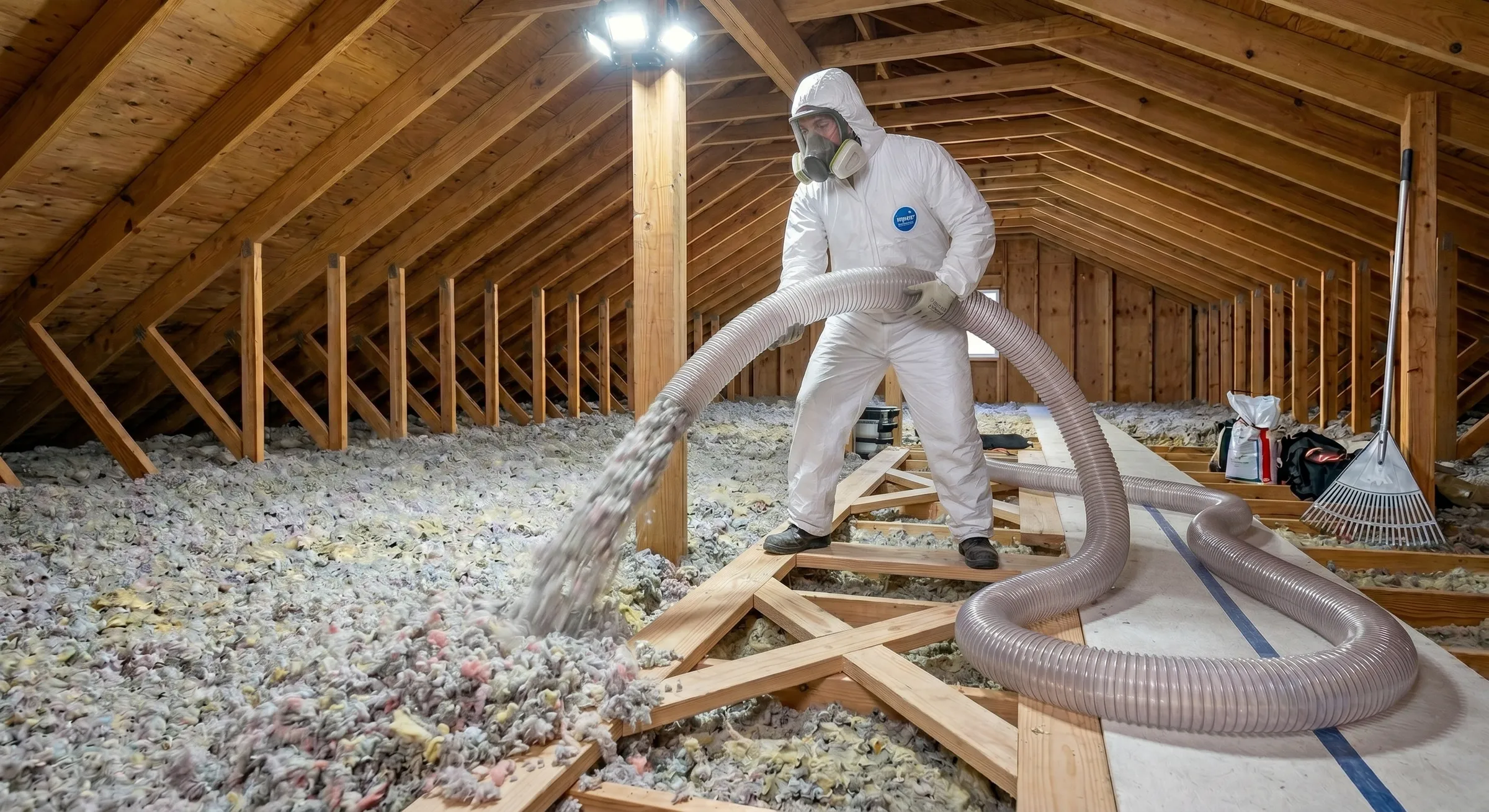
Why Covering Contaminated Insulation Does Not Solve It
New insulation can improve thermal performance, but it does not erase droppings, urine, nesting material, saturated fibers, or the odor source underneath. Covering damaged material can also make future inspection harder and hide a moisture problem.
The first question is what caused the condition. The removal scope should account for the material type, access, contamination level, disposal, exposed framing, and what needs to happen before the space is rebuilt.
A Contained Restoration Process
Inspect and document
Contain and remove
Clean exposed surfaces
Reinstall to the right scope
Removal Is Only One Part of the Plan
Insulation removal does not replace pest treatment, exclusion, plumbing repair, roof repair, or duct cleaning. We identify those boundaries in the written scope and coordinate with the appropriate specialist when another condition is contributing to the damage.
When insulation moves from repairable to removable
A visual chart cannot diagnose a home, but these conditions help explain why a professional may recommend removal instead of covering the existing material.
Clean but below targetConsider top-off
Dry, stable insulation may be eligible for additional material after air sealing.
Settled or compressedMeasure loss
Compression reduces loft and may leave the assembly performing below its label.
Wet, stained, or odorousInvestigate source
Moisture and odor require source identification before replacement.
Pest-contaminated or deterioratedRemove & restore
Affected material may need contained removal, sanitation, and replacement.
Common causes include rodent droppings or urine, nesting material, water intrusion, persistent moisture, strong odors, and visible deterioration. The condition and source should be inspected before deciding whether removal is needed.
Can contaminated insulation be sanitized instead of removed?
Some surfaces can be cleaned after affected insulation is removed, but fibrous insulation that is wet, pest-contaminated, compressed, or deteriorated generally needs a more careful removal and replacement assessment.
Blown-in material is commonly extracted with industrial vacuum equipment and contained for disposal. Batt insulation in crawl spaces or tight areas may be removed by hand and bagged; the method depends on access and material.
How long does contaminated insulation removal take?
A typical project can range from part of a day to longer depending on square footage, depth, access, contamination, and whether sanitation or replacement is included. The inspection determines the realistic schedule.
Most homes benefit from a replacement plan after removal, but the material and target should be chosen after the space is clean, dry, and ready. A written estimate should separate removal, sanitation, and reinstallation.
Removed affected attic insulation and accessible squirrel nesting materials, cleaned impacted areas, and prepared the attic for replacement insulation.