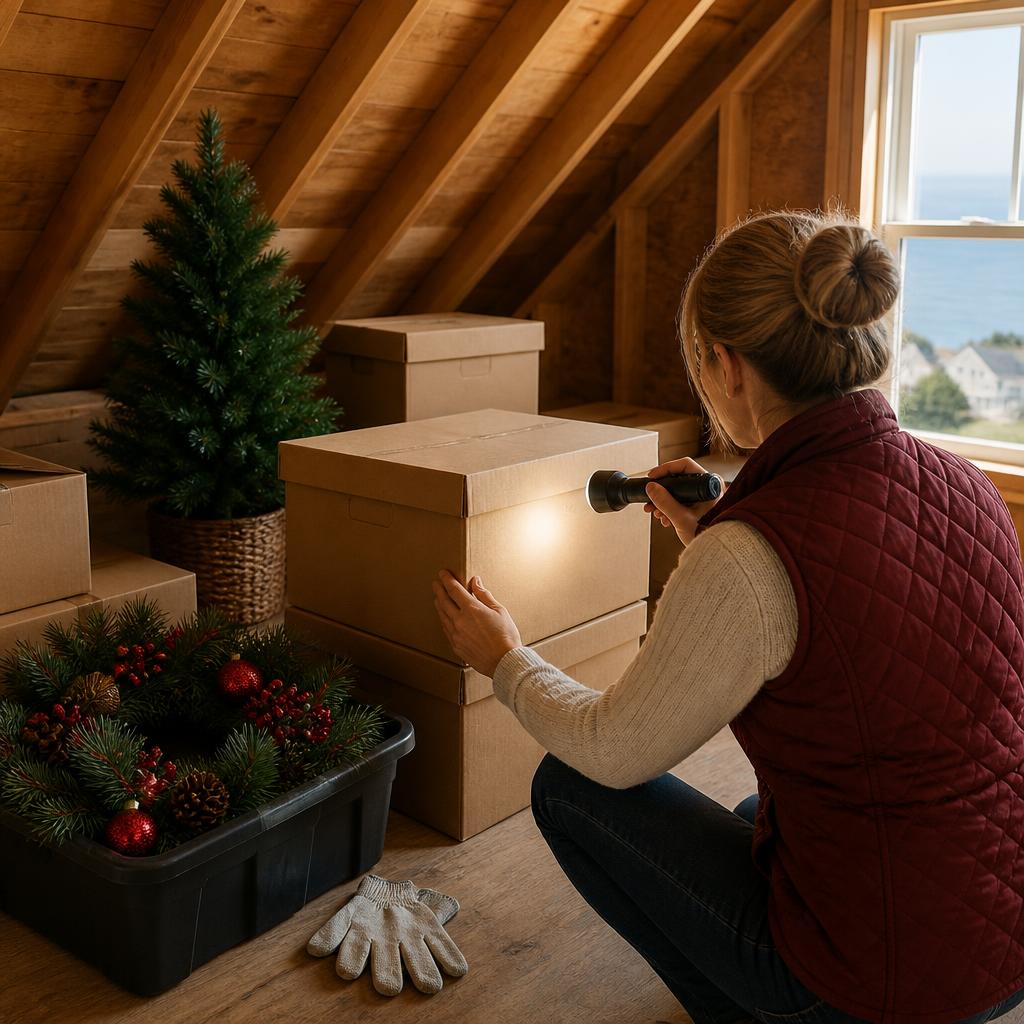
Before bringing holiday boxes down from a Great Neck (Virginia Beach, VA 23454) or Ghent (Norfolk, VA 23507) attic, pause for a quick visual check. Look for chewed cardboard, droppings, shredded greenery, feathers, nests, unusual odors, or insects. From homes near First Landing State Park to neighborhoods along the Elizabeth River, Hampton Roads attics can have different rooflines and access points, so do not assume a box that looks closed stayed undisturbed.
This is a health-and-safety check, not a reason to panic. Most stored decorations are fine. The goal is to notice signs of rodents, nesting birds, or bats before dust, droppings, parasites, or an animal are carried into the living space.
Quick answer
Do not shake or vacuum a box if you see droppings, nesting material, feathers, a live animal, or a bat. Set it down without disturbing the contents, keep people and pets away, and contact the appropriate pest or wildlife professional. If anyone may have touched a bat, seek medical and local public-health advice promptly.
Check boxes, wreaths, artificial trees, and greenery
Use a flashlight before reaching into attic corners or picking up a box. Check its top, bottom, seams, and the storage area around it for:
- Small droppings, urine staining, gnaw marks, or a strong animal odor
- Shredded paper, fabric, leaves, or insulation that could be nesting material
- Feathers, twigs, or a nest near eaves, vents, or attic openings
- Dark piles of bat droppings beneath a roosting spot or unusual scratching and fluttering
- Fleas or tiny mites, especially near a nest or animal activity
Do not shake greenery, beat dust out of a box, or use a household vacuum on droppings or nesting debris. Do not reach behind stored items where an animal could be hiding. If something looks contaminated, leave it in place and get advice before deciding whether it can be cleaned or needs to be discarded.
Rodent droppings and nesting debris can affect health
Mice and rats can carry germs. The CDC explains that infection can happen through contact with rodent urine, saliva, or feces, or by breathing contaminated air after fresh waste or nesting material is stirred up. One example is hantavirus, which can cause serious illness; not every rodent is infected, and droppings alone cannot identify a disease. Avoid disturbing waste and followCDC rodent cleanup guidance. For a closer look at warning signs, see ourHampton Roads guide to rodent droppings in attic insulation.
A dusty or musty smell does not confirm a specific infection. But visible droppings, urine staining, nesting material, or repeated animal activity are good reasons to keep children and pets away and arrange a professional assessment before unpacking the decorations.
Fleas and mites: bites, itching, and identification
Fleas may bite people and cause itchy bumps or skin irritation. Some flea species can spread infections when infected; the CDC describes flea-borne typhus, but that does not mean it is present in a particular attic or that every flea carries disease. Do not try to identify flea species from a bite alone. If a household member develops fever, rash, or other concerning symptoms after a suspected exposure, contact a healthcare professional and mention the possible animal or flea contact. SeeCDC information about flea-borne typhus.
Bird mites are associated with bird nests. They can bite people while looking for a host, but the University of Minnesota Extension notes that bird mites cannot reproduce on human blood. Tiny mites are hard to identify by sight, so bites do not prove which pest is involved. Avoid handling a suspected nest and ask a qualified professional to identify the source.Learn about bird mites.
Birds and bats call for extra care
Feathers, twigs, chirping, or droppings can signal bird activity around a roofline or vent. A nest may attract bird mites, and dry droppings or contaminated dust should not be swept or blown into the air. Do not disturb an active nest yourself; have a qualified wildlife professional advise on a safe, appropriate next step.
Bats may roost in roofline gaps or secluded attic areas. Never pick up or handle a bat, even if it appears injured or dead. Bat bites can be hard to see. If a person or pet may have had contact with one, wash any wound and contact a medical professional and the local health department or animal control promptly for exposure advice. The CDC notes that bats do not all carry rabies, but possible contact needs timely assessment.Read CDC bat-exposure guidance.
Bird or bat droppings can also matter if they build up. In places where the fungus is present, disturbing contaminated soil or droppings can release Histoplasma spores; many people exposed do not become ill, but the risk is higher with heavy disturbance and for some people with weakened immune systems. TheCDC explains how to reduce histoplasmosis risk.
A safer decoration-unpacking routine
- Look first.Use a flashlight and check the box and nearby insulation before moving anything.
- Stop at signs of activity.Do not shake, sweep, vacuum, or spray a nest or droppings.
- Keep clear.Keep children and pets out of the area and avoid touching animals, nests, or contaminated materials.
- Call the right professional.Ask a pest or wildlife professional to assess animal activity; contact a medical professional or health department for possible exposure questions.
- Check the attic after the immediate concern is addressed.An insulation inspection can document disturbed or missing coverage, visible entry gaps, and other conditions that may need a separate repair.
Local attic checks in Norfolk and Virginia Beach
In Ghent (Norfolk, VA 23507), Great Neck (Virginia Beach, VA 23454), and Great Bridge (Chesapeake, VA 23322), seasonal storage often means boxes are moved through attic hatches, garages, and utility spaces. If you notice insulation pulled aside or a daylight gap at the roofline, do not assume decorations caused it—or that a pest is still present. A focused inspection can document what is visible and identify whether insulation, pest, or wildlife follow-up is appropriate. See ourNorfolk service-area pageandVirginia Beach service-area page.
Need the attic checked before the decorations come down?
Universal Insulation Doctor can assess insulation and visible attic conditions in Great Neck (Virginia Beach, VA 23454) and throughout Hampton Roads. Pest and wildlife removal are handled separately byUniversal Pest & Termite.
Request an attic inspectionFrequently Asked Questions
What should I look for before taking Christmas decorations out of the attic?
Check boxes and nearby insulation for droppings, urine stains, gnaw marks, shredded material, feathers, nests, insects, or an animal. Do not shake or vacuum anything that may be contaminated; keep people and pets clear and ask a professional what to do.
🐀Still finding droppings after the traps went quiet? Book a free attic inspection
Can rodent droppings in an attic make people sick?
Rodents can carry germs, and disturbing fresh urine, droppings, or nesting material can expose people to contaminated air. Not every rodent is infected, and waste cannot diagnose a disease. Avoid disturbing it and follow CDC cleanup guidance or contact a qualified professional.
🐀Want to see how contaminated material actually comes out? How insulation removal works
Can bird mites from an attic nest bite people?
Bird mites can bite people while searching for a host, but they cannot reproduce on human blood. Itching or bumps alone do not identify a mite; a professional may need to identify the pest and its source.
🐀Wondering what Pest Guard adds on the reinstall? About Pest Guard Insulation™
What should I do if I find a bat in the attic?
Do not touch or try to capture it. Keep people and pets away and contact local animal control or the health department. If anyone may have had contact with the bat, seek medical and public-health advice promptly because bites can be difficult to see.
🐀Need a number for your own home? See current pricing
Can bat or bird droppings cause histoplasmosis?
In areas where Histoplasma fungus is present, disturbing contaminated soil or droppings can release spores. Many exposed people do not become ill, but heavy disturbance and some health conditions increase concern. Do not sweep or blow dried material into the air; follow CDC prevention guidance and seek professional help for accumulations.
🐀Still finding droppings after the traps went quiet? Book a free attic inspection