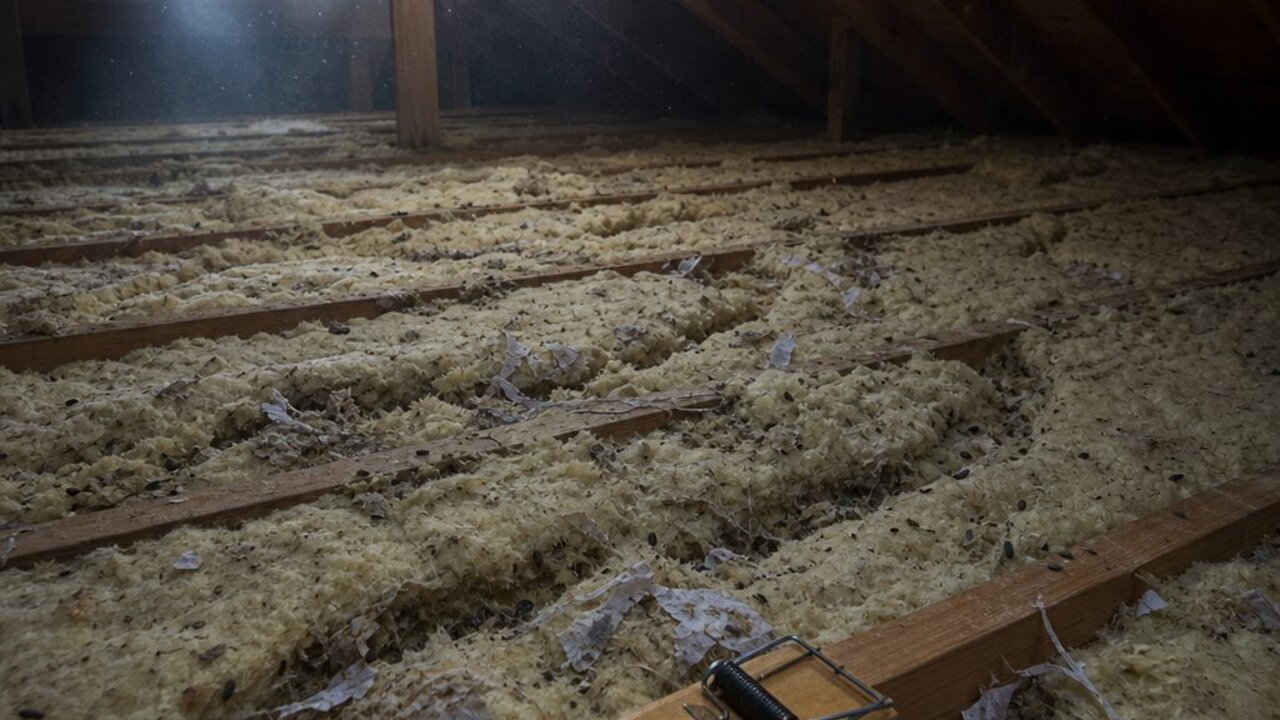
Rat Droppings in Attic Insulation: Hampton Roads Guide
November 6, 2026
Finding dark pellets in the attic is unsettling. In Edinburgh (Chesapeake, VA 23322) and across Hampton Roads, droppings can point to rat, mouse, or squirrel activity—but appearance alone cannot confirm the animal or tell whether it carried an infection. Do not sweep or vacuum the material.
Quick answer
Keep people and pets out of the attic. Rodent urine, droppings, and nesting debris can release contaminated particles when disturbed. Have the animal activity addressed first, then assess damaged insulation and exposed surfaces for appropriate cleanup.
What do rat droppings in attic insulation look like?
Rodent droppings are often dark brown or black pellets. CDC notes that they may be pointed at one end and can contain hair. Rat droppings are generally larger than mouse droppings, but age, diet, and drying change their appearance. Squirrel droppings can also be mistaken for rat droppings, so don’t rely on a photo or pellet size alone to identify the animal.
Look from a safe distance for other clues: nests, shredded material, tunnels through loose-fill insulation, gnaw marks, staining, or repeated paths along framing. A pest professional can inspect the signs and identify the likely animal and entry route.
Airborne exposure and indoor air quality
Rodent urine, droppings, saliva, and nesting material may contain germs. CDC warns that stirring contaminated material into the air can create an inhalation exposure; some hantaviruses, for example, can spread when contaminated material from an infected rodent becomes airborne. This does not mean every rat carries hantavirus, and droppings cannot show whether an animal was infected.
Dust and odors from an attic infestation may affect how a home smells and feels, but attic contamination does not automatically mean it is circulating through every room. Open ceiling penetrations or damaged, leaking ductwork can create pathways. If you see debris or damage near ducts, have that system evaluated separately rather than assuming it is contaminated.
Until the area is assessed, don’t dry sweep, brush, or vacuum droppings, urine, or nests. Review the CDC’s rodent cleanup guidance. Heavy attic infestations and contaminated insulation need a professional cleanup plan; consult a healthcare professional about illness or exposure concerns.
Can rats bring fleas into the attic?
Yes. Rodents can carry fleas, and fleas can bite people and pets. Most flea bites cause itchy skin irritation, but certain infected fleas can transmit disease. CDC identifies the Oriental rat flea and cat flea as common vectors of flea-borne typhus; most reported U.S. cases are in southern California, Hawaii, and southern Texas, though cases can occur elsewhere. That is not a claim that Hampton Roads rats or fleas carry this disease.
Avoid handling rodents, nests, or flea debris. Ask a pest professional whether flea treatment is needed along with rodent removal, and ask your veterinarian about safe flea protection for pets. See CDC information about flea-borne typhus.
Why sanitation may be part of attic remediation
First address the animals and entry points. Then remove insulation or nesting material that is contaminated or damaged. When droppings or urine have contacted exposed framing or other hard surfaces, cleanup followed by a label-approved disinfectant treatment is an important part of remediation. It addresses surface residue and can help with odor; the product and application must follow the label.
A surface treatment does not make contaminated insulation reusable and does not replace removal, rodent control, or exclusion. The correct product and application depend on the surface and the current product label; no treatment should be described as guaranteeing a disease-free attic. Learn about our sanitize and disinfect treatment and insulation removal service.
Squirrels can leave similar attic evidence
Squirrels can tear, tunnel through, and nest in attic insulation; their droppings may be confused with rat droppings. Squirrel activity can also damage roofline openings or wiring. Don’t touch damaged wiring or try to trap or seal wildlife yourself. Have a pest professional identify the animal and handle removal and entry-point exclusion before insulation restoration.
Keep clear. Keep children and pets away, and don’t disturb droppings, nesting material, or damaged wiring.
Address the animal first.Universal Pest & Termite handles rodent and wildlife removal and entry-point exclusion.
Assess the insulation. After pest work, Universal Insulation Doctor can evaluate affected insulation and explain cleanup, sanitation, and restoration options.
Check ducts if evidence reaches them. Universal Duct Cleaning can separately inspect ductwork when there are signs of damage or contamination.
Recent Work in Norfolk and Virginia Beach
Recent Rodent Cleanup Jobs in Hampton Roads
Completed by Universal Pest & Termite2 owner-verified rodent cleanup projects completed in Norfolk and Virginia Beach. Click a pin for service details.
🏠 Insulation / PestGuard💨 Air Duct Work🐀 Rodent / Wildlife
Showing 2 owner-verified completed jobs · Pins mark approximate street locations, not exact homes
We serve Edinburgh (Chesapeake, VA 23322) and communities across Hampton Roads. Start with the right pest professional for active animals, then request an insulation assessment after the attic is safe to inspect.
What do rat droppings in attic insulation look like?
They are often dark pellets, sometimes pointed at one end. Mouse and squirrel droppings can look similar, so appearance alone cannot reliably identify the animal.
Yes. Disturbing rodent urine, droppings, or nesting material can put contaminated particles into the air. Don’t sweep or vacuum them; keep people and pets away and follow CDC cleanup guidance.
Do rats in an attic mean my home’s air is contaminated?
Not automatically. Dust or odors may be present, and gaps or damaged ductwork can create pathways. Have the attic and any suspect ducts evaluated rather than assuming contamination has spread throughout the home.
Rodents can carry fleas that bite people and pets. Some infected flea species can transmit illness, but not every flea is infected and this article does not imply a specific local disease risk.
After contaminated insulation and debris are removed, a disinfectant or sanitizing treatment may be appropriate for compatible exposed surfaces. Product labels determine where and how it can be used; surface treatment does not replace insulation removal.
Can squirrels leave droppings and damage insulation too?
Yes. Squirrels can nest in and disturb insulation, and their droppings may be confused with rat droppings. Have a pest professional identify the animal and handle removal and exclusion before restoration.