Winter-Ready Crawl Spaces & Attics in Hampton Roads
November 15, 2026
A cold bedroom floor or an upstairs room that never seems comfortable can be a sign to look above and below the living space. Before winter cold fronts reach Hampton Roads, have the attic and crawl space checked for insulation gaps, moisture, air leaks, and signs of animal activity. A quick look can help you prioritize repairs before the heating season is underway.
From homes near First Landing State Park and the Chesapeake Bay Bridge-Tunnel to neighborhoods farther inland, coastal humidity and seasonal rain can make moisture management important year-round. In Great Neck, Virginia Beach (VA 23454), and Deep Creek, Chesapeake (VA 23323), conditions still vary house by house. A local inspection should document what is present rather than assume every crawl space needs the same fix. See ourVirginia Beach insulation service areaandChesapeake insulation service area.
Quick answer
Wet, compressed, displaced, or missing subfloor insulation can leave the floor system less protected and allow more heat to move between the home and crawl space. There is no dependable universal percentage for the energy lost from one failed crawl-space insulation job. The impact depends on the area, insulation condition, air leakage, moisture source, home, and heating system.
How much energy can failing crawl-space insulation waste?
The honest answer is that a particular damp or falling batt does not translate to a fixed percentage of a household’s energy bill. Insulation slows heat transfer; gaps, compression, wet materials, and air movement can reduce the performance of the floor assembly. But utility use also depends on the weather, thermostat settings, equipment efficiency, duct leakage, air sealing, and insulation elsewhere in the house.
For broader context, the U.S. EPA’s ENERGY STAR savings methodology estimates an average 15% reduction in heating and cooling costs—or 11% in total energy costs—in a modeled package of cost-effective air sealing and insulation improvements in typical existing U.S. homes; these are estimates, not a guarantee, and the package can include attic insulation, floors over crawl spaces, and accessible basement rim joists.This is not a Hampton Roads-specific result or a percentage attributable to crawl-space insulation alone.Read ENERGY STAR’s savings methodology.
The most useful inspection records the insulation type and condition, coverage, visible moisture, air leakage, and any duct or plumbing concerns. Those observations help determine whether the next step is drying and fixing a moisture source, securing or replacing insulation, air sealing, or a separate trade evaluation.
What to check in the crawl space
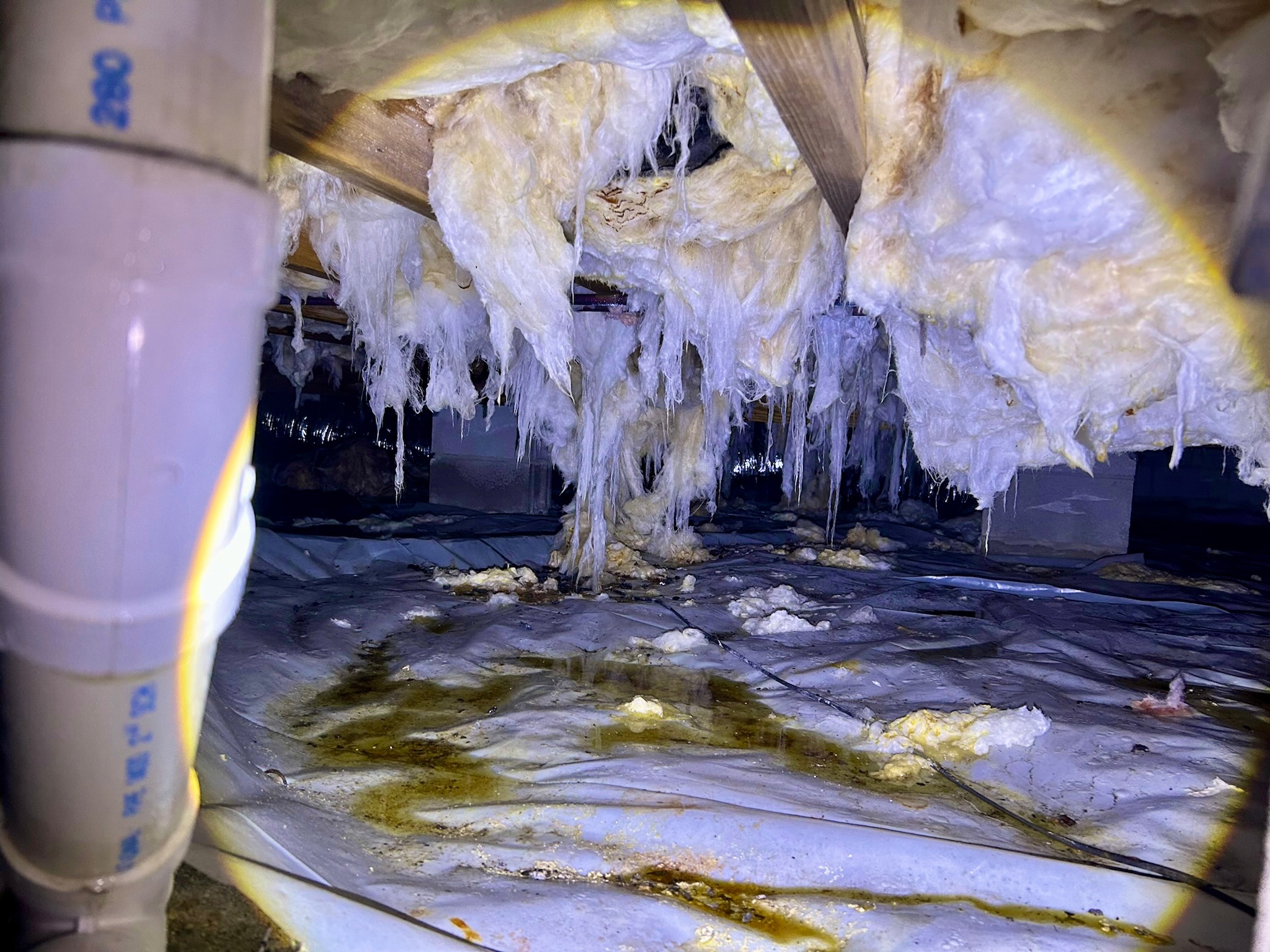
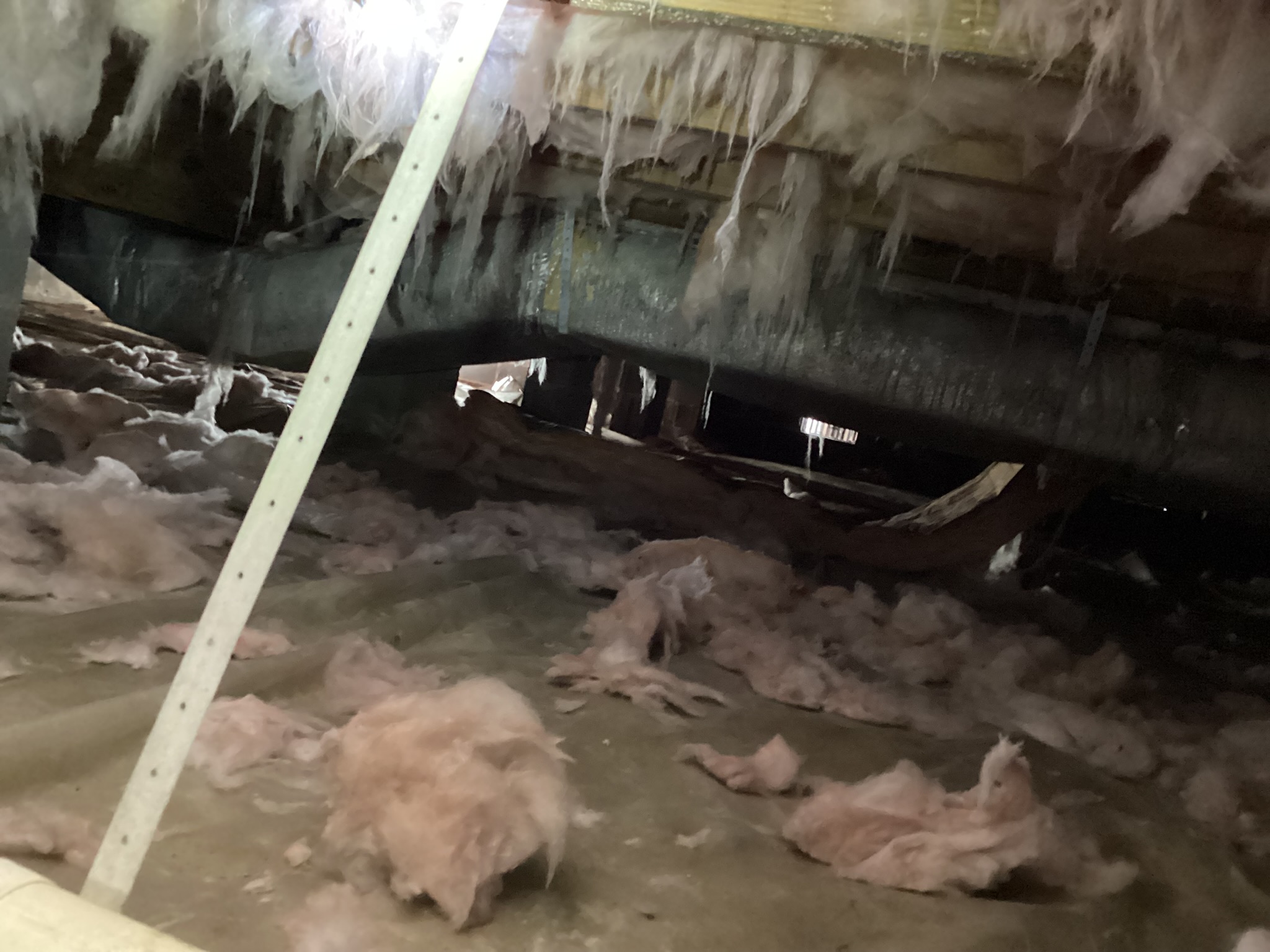
Look from the access opening if it is safe; do not crawl through standing water, disturb animal waste, or pull at insulation. Warning signs include batts hanging from the subfloor, insulation on the ground, bare joist bays, wet or stained material, a musty odor, visible water, or a torn and displaced ground liner.
Fallen and displaced insulation leaves parts of the floor assembly uncovered. The cause and appropriate repair need an inspection.
Fiberglass insulation can lose effectiveness when it is wet, compressed, or no longer held in place. However, replacing insulation without addressing a plumbing leak, drainage issue, condensation, or ground moisture can lead to the same problem returning. A crawl-space assessment should identify the visible moisture conditions and make clear when plumbing, drainage, structural, or other specialist work is outside the insulation scope.
Depending on the home, the right recommendation may involve repair or replacement of insulation, moisture-control work, or both. Learn aboutsubfloor insulationandcrawl-space encapsulation. Encapsulation is not a substitute for fixing active water intrusion or a plumbing leak.
Why rodents and wildlife may use a crawl space
A sheltered crawl space can offer rodents and other wildlife cover from weather. Openings around foundation vents, pipes, access doors, or damaged screens can provide entry. Once inside, animals may disturb insulation or pull loose material into nesting areas. Droppings, gnaw marks, nesting debris, and repeated scratching are reasons to arrange a pest inspection—not proof that every damaged batt was caused by wildlife.
Do not handle animals, nests, droppings, or contaminated insulation. Avoid dry sweeping or vacuuming suspected rodent waste, and do not seal an opening while animals may still be inside. Pest inspection and exclusion should be coordinated with insulation restoration so the entry issue is addressed before new material is installed.
Do not skip the attic before winter
In the attic, check from the access point for thin or uneven coverage, compressed or disturbed insulation, visible gaps around hatches and framing, water staining, and blocked ventilation paths. Do not step onto ceiling drywall or move insulation around wiring, recessed fixtures, or equipment. If you see exposed or damaged wiring, keep clear and contact a qualified electrician.
A qualified inspection can also note whether the attic hatch seals, insulation is distributed consistently, and accessible air leaks need attention. Review ourattic insulation serviceandinsulation removal options.
Schedule an inspection before the first sustained cold spell
Take photos from a safe location, note rooms with cold floors or uneven temperatures, and mention any dampness, odors, or animal sounds when you request an inspection. A written assessment can separate insulation work from moisture, pest, electrical, plumbing, and structural concerns—and avoid recommending a repair before the cause is understood.
Get your attic and crawl space ready for winter
Universal Insulation Doctor can assess insulation and crawl-space conditions across Hampton Roads and explain the work in a clear scope. Recommendations depend on what the inspection finds.
How much energy does wet crawl-space insulation waste?
There is no dependable universal percentage for energy lost from wet crawl-space insulation. The effect depends on how much insulation is affected, air leakage, moisture, the home's construction, weather, and heating system. ENERGY STAR's average savings estimate applies to a modeled package of air sealing and insulation improvements throughout typical existing homes, not crawl-space insulation alone.
Should I replace insulation that is hanging from the crawl-space floor?
Have the cause assessed first. Moisture, damaged supports, air movement, or animal activity may be involved. The plan may include addressing the source, removing or securing material, and restoring coverage; the right scope depends on inspection.
Can rodents or wildlife nest in crawl-space insulation?
Rodents and other wildlife may use accessible, sheltered crawl spaces and disturb loose insulation. Look for entry gaps, droppings, gnawing, nesting debris, or sounds, but do not handle animals or contaminated materials. Arrange pest inspection and coordinate insulation restoration after entry points are addressed.
Not automatically. Venting and moisture control depend on the home's crawl-space design and local code requirements. Simply covering vents does not correct standing water, plumbing leaks, or ground moisture; have the full conditions assessed.
What should an attic inspection include before winter?
A visual assessment can check insulation depth and coverage, obvious gaps and air leaks, the attic hatch, water staining, ventilation clearances, and accessible duct connections. Do not step on ceiling drywall or disturb insulation around wiring or equipment.