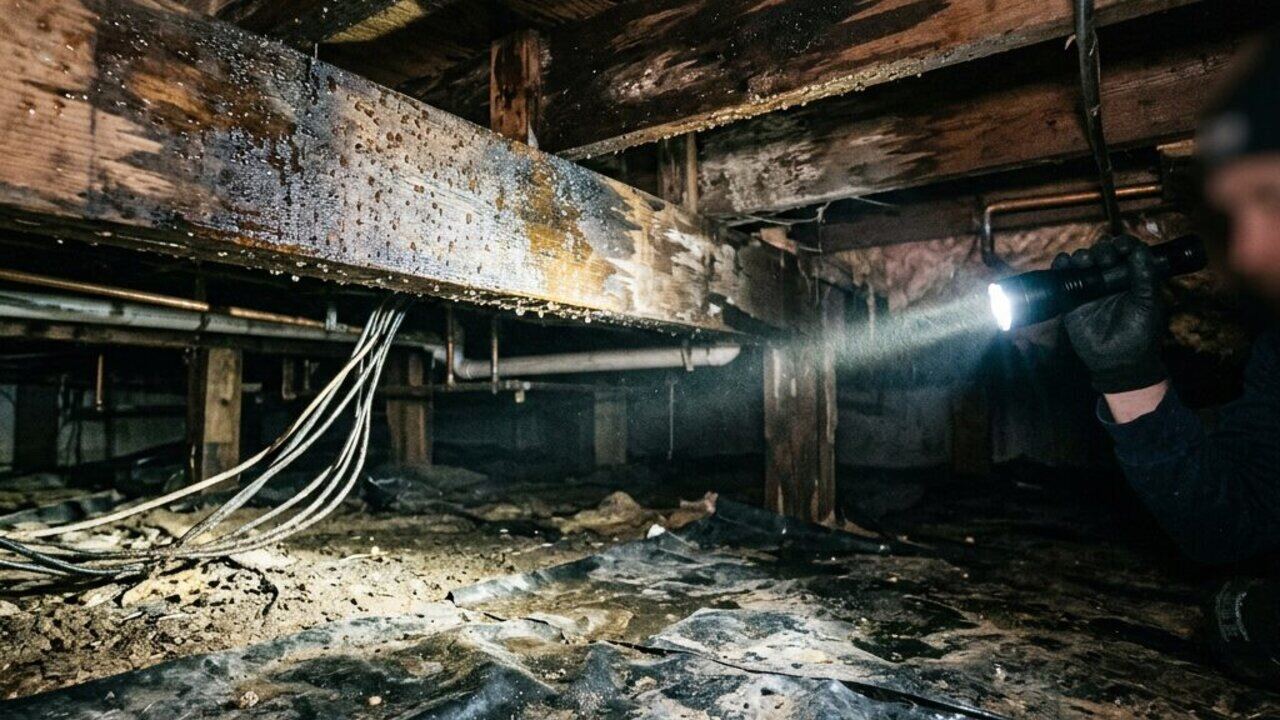
A crawl space can look dry in May and feel wet in August without a plumbing leak. In Coastal Virginia, hot humid outdoor air can enter through foundation vents, touch cooler framing or ductwork, and leave condensation behind. The result is the familiar damp-earth smell, wet insulation, and uncomfortable floors homeowners notice in Virginia Beach and Chesapeake.
The useful first step is not guessing at a product. It is identifying whether the moisture is condensation, ground moisture, rainwater intrusion, a plumbing issue, or a combination of those conditions.
Why Summer Humidity Changes the Crawl Space
A vented crawl space is connected to outdoor weather. When August air carries a lot of moisture, it can raise the humidity below the house even when the space is shaded. Surfaces that stay cooler than the incoming air—subflooring, metal ducts, water lines, and masonry—can collect condensation.
Insulation that is damp, compressed, or stained no longer performs as intended. Over time, persistent moisture can contribute to musty odor, wood deterioration, and higher cooling demand. Those symptoms deserve an inspection before covering them with new insulation.
- A sharp musty odor that is strongest after rain or on humid mornings
- Sagging fiberglass batts, wet kraft facing, or dark staining on joists
- Condensation on ductwork, pipes, or the underside of the subfloor
- Floors that feel sticky, soft, or unusually warm during cooling season
The Right Fix Depends on the Water Source
A vapor barrier limits moisture rising from exposed soil; it does not stop roof runoff, plumbing leaks, or water entering through the foundation. Likewise, a dehumidifier can help control air moisture, but it cannot compensate for standing water or a failed drainage path.
For a crawl space with broad ground-moisture and humidity issues, a properly scoped encapsulation plan may include a sealed ground liner, wall treatment, air sealing, and humidity control. The exact materials and layout should match the home, access conditions, and local drainage picture.
Why an August Inspection Is Useful
Summer conditions make active moisture patterns easier to see. A technician can document relative humidity, look for water entry points, inspect insulation and framing, and separate a localized repair from a whole-space improvement.
If you are comparing options, ask for a written scope that explains what moisture source each recommendation addresses. That keeps a vapor barrier, insulation replacement, drainage work, and humidity control from being treated as interchangeable fixes.
What to Do Next
Universal Insulation Doctor can inspect crawl-space insulation and moisture conditions across Virginia Beach and Chesapeake. Start with a free crawl space and insulation assessment so the recommendation is based on what is actually happening under your home.
Frequently Asked Questions
Why is my crawl space sweating during the summer?
Summer crawl space condensation usually occurs when warm, humid outdoor air enters the space and contacts cooler framing, ductwork, or subfloor surfaces. Ground moisture, rainwater intrusion, plumbing leaks, and inadequate drainage can add to the problem, so an inspection should identify the actual source before choosing a fix.
Should crawl space vents be open or closed in Virginia in August?
There is no single setting that is right for every Virginia crawl space. Vent decisions should account for the home's construction, local code requirements, moisture source, and whether the space is designed as vented or conditioned; closing vents alone does not solve ground moisture, drainage, or air-leak problems.
What is the ideal humidity level for a crawl space in Coastal Virginia?
Many moisture-control plans aim to keep crawl space relative humidity below 60 percent to reduce conditions that support persistent dampness and biological growth. The target and equipment settings should be confirmed for the home's layout and monitored over time rather than assumed from a single reading.
How much does crawl space encapsulation cost in Virginia Beach and Chesapeake?
Crawl space encapsulation cost varies with square footage, access height, liner specification, drainage needs, existing insulation, and whether humidity-control equipment is needed. A site inspection is the reliable way to receive a written scope and price for a Virginia Beach or Chesapeake home.
Can damp crawl space insulation cause mold to spread into my living areas?
Damp insulation and framing can create musty odors and moisture conditions that deserve prompt attention, especially when air leaks connect the crawl space to the rooms above. A professional inspection can identify moisture damage and air pathways; it should not be assumed that every musty crawl space has mold or that a smell alone identifies a health risk.