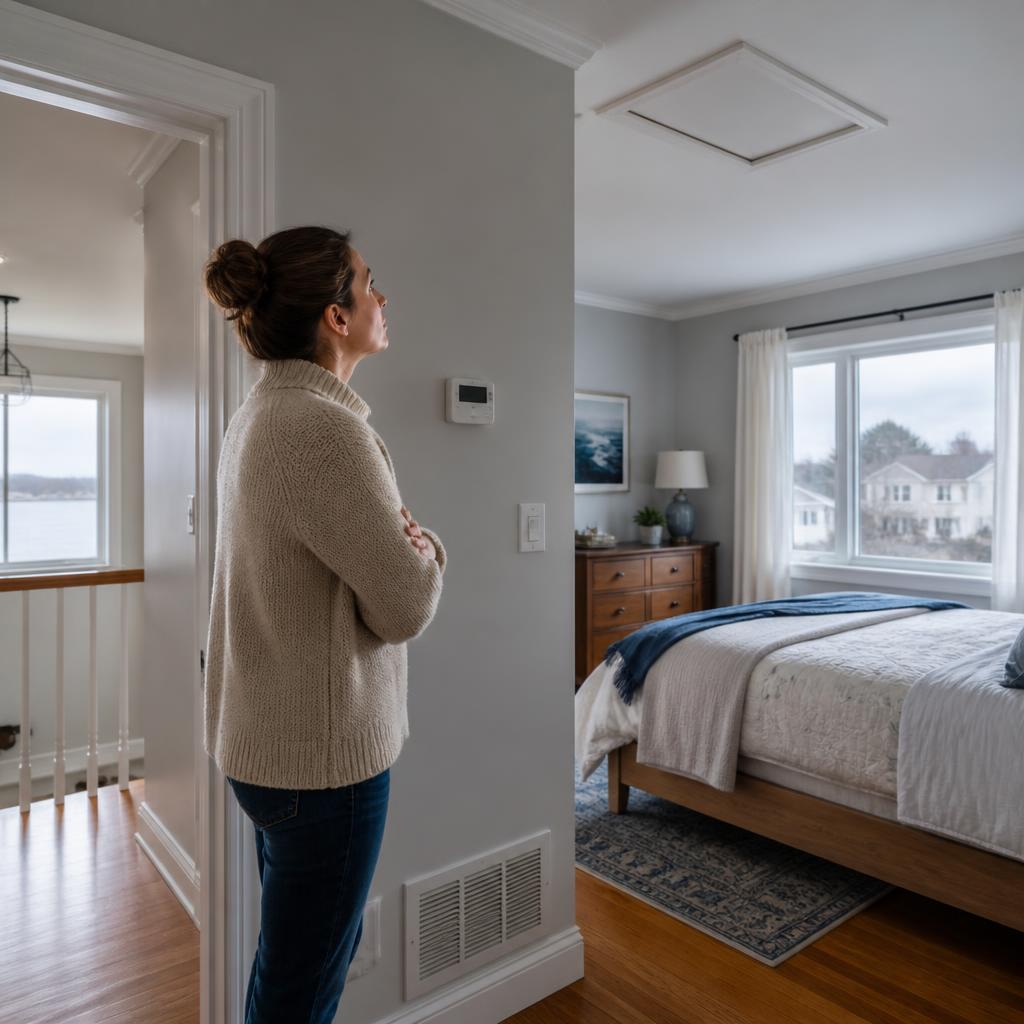
If the downstairs feels comfortable but the upstairs bedroom stays chilly, the cause may be above the ceiling, along an outside wall, or in the heating system—not necessarily the furnace itself. Homeowners in Ghent (Norfolk, VA 23507), Great Neck (Virginia Beach, VA 23454), and Great Bridge (Chesapeake, VA 23322) can all experience uneven temperatures, but the right fix depends on what an inspection finds in that particular home.
Start by noticing whether the whole second floor is cold or only one room, whether air is coming from the vent, and whether the problem changes on windy or especially cold days. Those clues can help separate an attic insulation concern from a duct, equipment, window, or airflow issue.
Quick answer
An upstairs room may feel colder because attic insulation is thin or uneven, air is leaking around the ceiling or attic hatch, a window or exterior wall is drafty, or the HVAC system is not delivering enough warm air. Check for blocked vents and obvious drafts, but have attic, duct, or equipment concerns assessed by the appropriate professional before choosing a fix.
Common reasons an upstairs room feels cold
1. Attic insulation is thin, uneven, or disturbed
The ceiling under an attic separates a heated room from an unheated space. If insulation is missing, compressed, displaced, or inconsistent, more heat can move through the weaker sections. That may contribute to a cold ceiling or an uncomfortable room, especially when the room is directly below the attic. The U.S. EPA’s ENERGY STAR program lists cold rooms and uneven temperatures among the symptoms that can make an attic insulation or air sealing assessment useful.See ENERGY STAR’s attic-insulation guidance.
From a safe attic access point, a qualified inspector can document insulation depth, coverage, and visible gaps. Do not step onto ceiling drywall or move insulation around wiring, lights, or equipment. Learn about ourattic insulation service.
2. Air leaks let heat escape around the top floor
Small openings around an attic hatch, ceiling fixtures, plumbing penetrations, or framing can allow air to move between the home and attic. A draft around trim or a hatch does not prove the attic is the only problem, but it is worth noting. ENERGY STAR recommends checking for attic air leaks and having insulation work follow appropriate air sealing.Review ENERGY STAR’s attic air-sealing project guide.
3. The heating system is not delivering enough air upstairs
If one room is much colder than the rest, has little airflow at its supply register, or takes a long time to warm up, the issue may involve a blocked, disconnected, poorly sealed, or poorly insulated duct—or the way the system is balanced. ENERGY STAR notes that duct problems can make rooms difficult to heat and keep the home uncomfortable. An HVAC professional can evaluate airflow, ducts, and equipment; insulation work alone will not correct a mechanical or balancing problem.Read ENERGY STAR’s duct-sealing guidance.
4. A window, outside wall, or closed door affects comfort
Cold air near a window, exterior wall, or floor can point to drafts, a window-covering issue, or another part of the building envelope. A closed bedroom door may also change how air returns to the HVAC system in some homes. Look for a pattern and mention it to the relevant professional; do not assume every cold room needs more attic insulation.
Simple checks you can make without entering the attic
- Compare room temperatures with the same thermometer and note the time, weather, and thermostat setting.
- Make sure supply registers are not covered by rugs, curtains, furniture, or stored items.
- Check that the air filter is being maintained according to the equipment instructions.
- Notice whether the room feels drafty at a window, exterior wall, or attic hatch, and whether its vent has weaker airflow than other rooms.
- Keep notes or photos from safe locations. Do not climb onto attic framing or disturb insulation, wiring, or equipment.
Avoid closing several supply registers to force more heat upstairs unless an HVAC professional recommends it for your system. Changing airflow without checking the equipment and duct design may create other comfort problems.
When to call an insulation professional or an HVAC technician
Ask for an attic insulation assessment when the room is under an attic and the insulation looks thin, uneven, compressed, or disturbed, or when you notice a draft near the attic hatch. If airflow is weak, a duct is noisy or visibly disconnected, or the equipment is not heating consistently, contact an HVAC professional. A window or building-envelope specialist may be the better fit when the draft is clearly coming from a window or exterior wall.
A good assessment documents what is visible and explains what falls inside the contractor’s scope. ENERGY STAR recommends considering air sealing before adding attic insulation, but each home needs an evaluation of its existing conditions and safety concerns.
Cold upstairs rooms in Norfolk, Virginia Beach, and Chesapeake
In Ghent (Norfolk, VA 23507), Great Neck (Virginia Beach, VA 23454), and Great Bridge (Chesapeake, VA 23322), two homes on the same block can have different attic layouts, duct routes, windows, and heating systems. A cold upstairs is a useful symptom to investigate—not a diagnosis. Start with the room pattern, then have the attic or heating system checked as appropriate. Explore ourNorfolk service area,Virginia Beach service area, andChesapeake service area.
Find out why the upstairs feels cold
Universal Insulation Doctor can assess attic insulation and visible conditions in Great Bridge (Chesapeake, VA 23322) and across Hampton Roads. If the symptoms point to ductwork or heating equipment, we’ll help clarify when a separate HVAC evaluation is appropriate.
Request an attic assessmentFor a seasonal comparison, readwhy an upstairs can feel too hot in summer.
Frequently Asked Questions
Can attic insulation make an upstairs bedroom feel cold?
Thin, uneven, compressed, or disturbed attic insulation can allow more heat to move through the ceiling and may contribute to a cold room. Air leaks, windows, ducts, and HVAC airflow can also be involved, so an assessment should identify the cause before recommending work.
🪳Not sure how much insulation you have up there right now? Book a free attic inspection
Does heat rising mean upstairs rooms should always be warmer?
No. Warm air can rise, but insulation, air leakage, windows, duct delivery, return-air paths, and thermostat placement all affect room temperatures. A colder upstairs is a symptom to investigate, not proof of one cause.
🪳Want the detail on what we install and to what depth? See our attic insulation service
Why is one upstairs room colder than the others?
A single cold room may have a blocked or weak supply register, a duct issue, a drafty window or wall, or a different attic exposure. Compare airflow and drafts in that room with the rest of the house and ask an HVAC or building-envelope professional to assess the likely source.
🪳Budgeting the work? Check attic insulation pricing
Should I close downstairs vents to warm the upstairs?
Do not close several registers to force heat to another floor unless an HVAC professional recommends it for your system. The effect depends on the equipment and duct design; a technician can check airflow and balancing.
🪳Not sure how much insulation you have up there right now? Book a free attic inspection
Who should I call about cold upstairs rooms in Hampton Roads?
Call an insulation professional when the attic coverage or ceiling air sealing may be involved. Contact an HVAC technician for weak vent airflow, duct concerns, or heating-equipment problems. Drafts centered on windows or exterior walls may need a window or building-envelope specialist.
🪳Want the detail on what we install and to what depth? See our attic insulation service