What Should an Attic Look Like After Insulation Replacement? A Homeowner's Checklist
September 10, 2026
After an attic insulation replacement, homeowners often ask a simple question:does the finished attic look right?You do not need to judge the work by the number of bags used or by whether the new material looks perfectly smooth. A useful visual review checks for continuous coverage, a consistent installed depth, protected ventilation, and safe access to the parts of the attic that still need service.
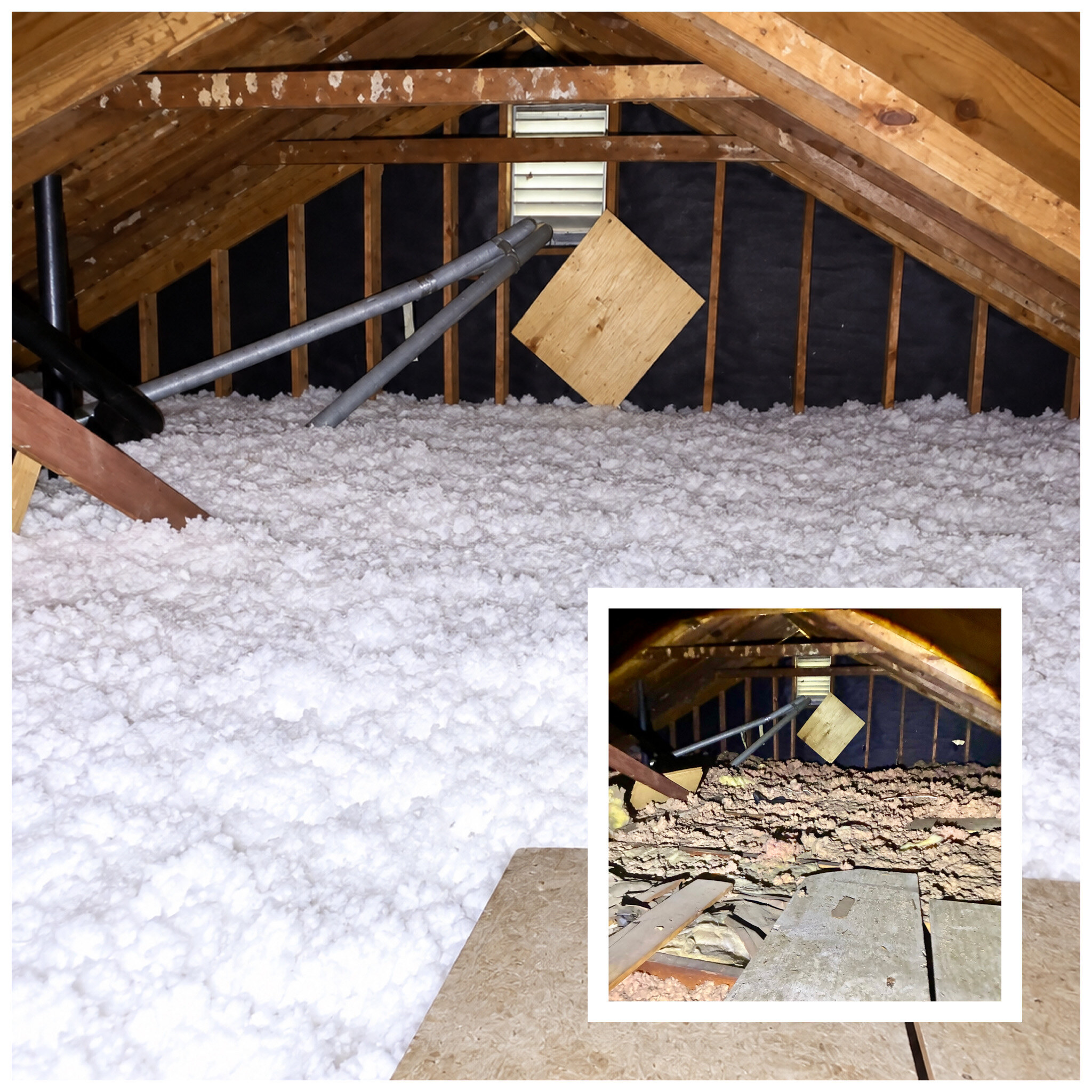
The photos in this guide show a real before-and-after change: older, uneven material was removed or cleared from the work area, and the attic floor was brought back to a full, even layer of new blown-in insulation. The appearance is a helpful quality check, but it cannot replace the installation record or an inspection.
A before-and-after view: the finished attic has broad, continuous coverage instead of the older uneven material visible in the inset.
What a Finished Attic Should Show
Blown-in fiberglass or cellulose normally has a loose, textured surface. It does not need to look flat or compacted. The important visual signs are continuity and depth across the areas that were included in the written scope.
Even coverage:the insulation should reach the corners and low areas of the attic floor without obvious bare strips, deep depressions, or large thin spots.
Consistent depth:the installed depth should match the product and final R-value specified in the proposal, with depth markers or another way to verify it.
Ventilation remains open:soffit vents and other required air paths should be protected with baffles rather than buried under the new material.
Equipment and access remain serviceable:the attic hatch, electrical components, HVAC equipment, and required work areas should not be hidden or made unsafe.
Air-sealing work is complete where included:common bypasses around penetrations, top plates, and the attic hatch should be addressed before insulation covers the deck.
What the Finished Layer Can Look Like
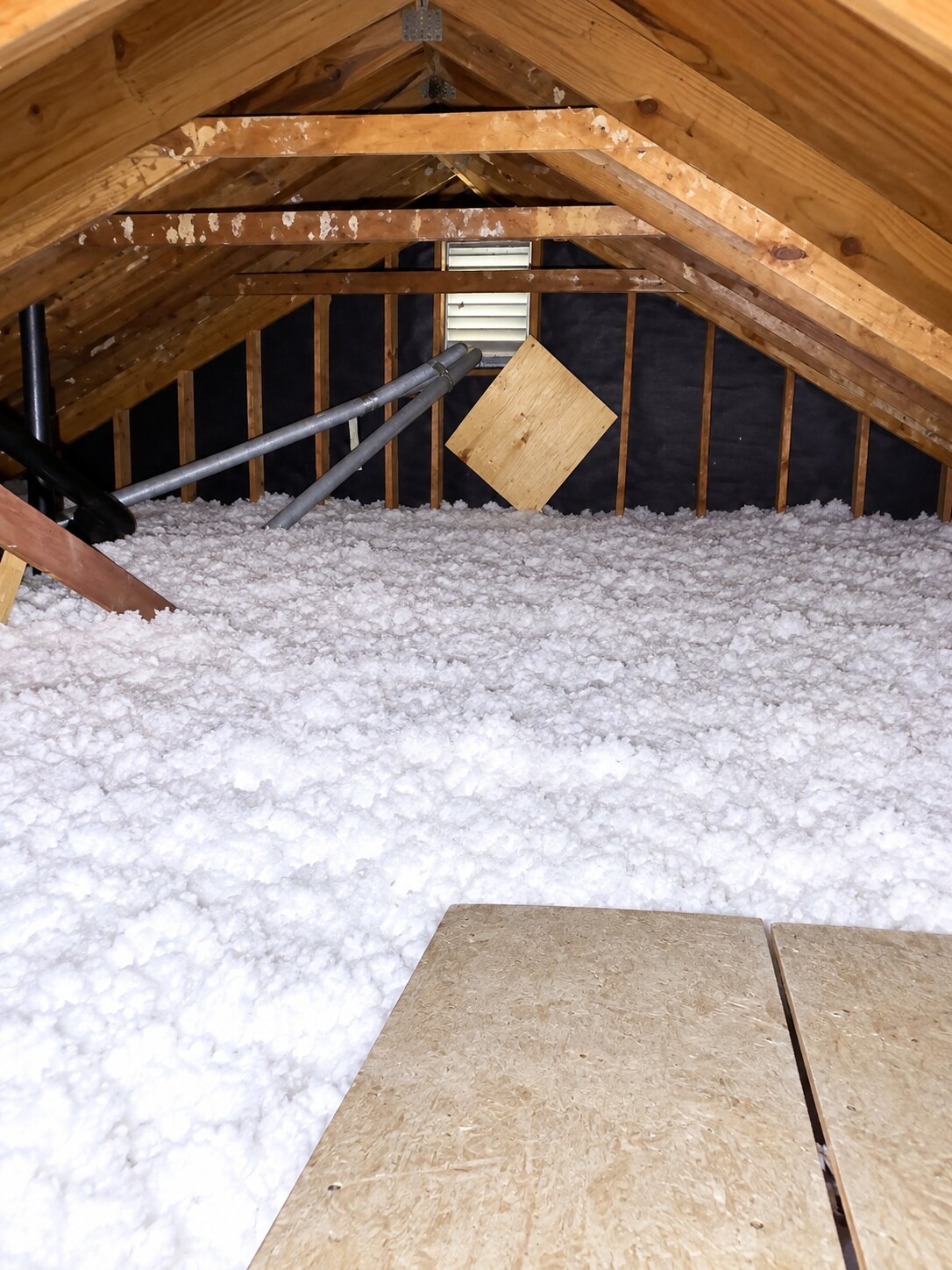
The finished surface in this photo is fluffy and irregular at close range, which is normal for blown-in insulation. From the attic entrance, it should read as one continuous blanket rather than a patchwork of old and new material. The surface should not be compressed into hard tracks, soaked, visibly contaminated, or pulled away from the perimeter.
The new blown-in layer is full and continuous while the framing, vent area, and service path remain visible.
Why the Before Photo Matters
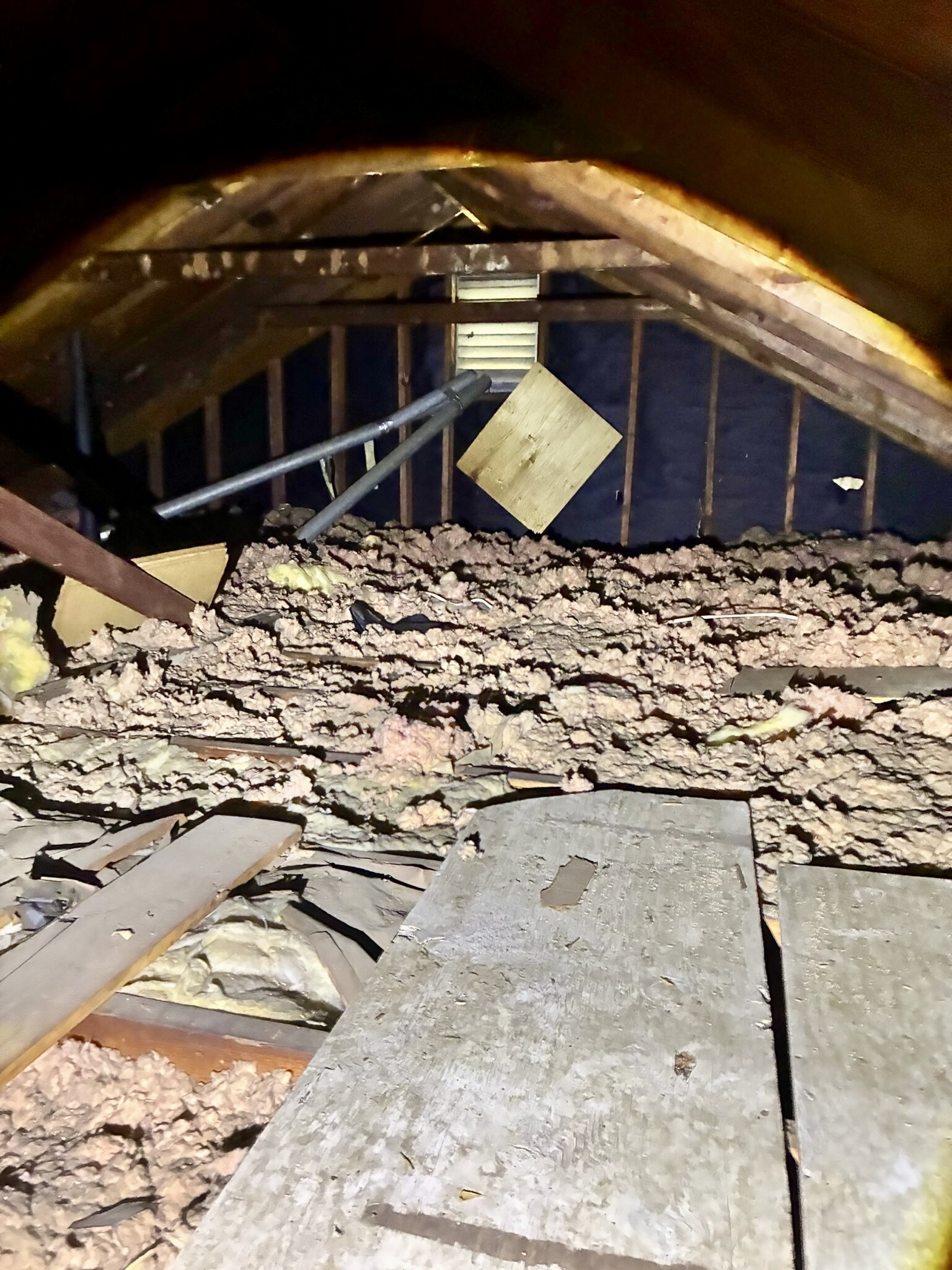
Older attic insulation can settle, separate, become compressed, or leave exposed areas around framing and penetrations. A before photo gives you a useful record of the starting condition and makes it easier to see whether the replacement addressed the areas included in the scope.
Older, uneven insulation can leave low spots and exposed sections that are easy to miss from the attic hatch.
What Photos Cannot Confirm
A good-looking attic is encouraging, but appearance alone cannot verify the full performance of the assembly. Ask for the final installed depth and R-value, the insulation product used, and confirmation that air sealing and ventilation protection were completed where included. A photo also cannot confirm hidden moisture, roof leaks, electrical clearances, or whether insulation was installed over material that should have been removed first.
If the attic had rodent contamination, water damage, mold-like growth, or strong odors, the source needs to be addressed before new insulation is installed. Covering damaged material can make the attic look finished without solving the underlying problem.
Questions to Ask at the Final Walk-Through
What final depth and R-value were installed, and where can I see the depth markers?
Were the soffit vents and other required ventilation paths protected?
Which air leaks were sealed before the new insulation went in?
Was any old, wet, compressed, pest-damaged, or contaminated insulation removed?
Where are the attic access, equipment, and safe service paths?
Can I receive before-and-after photos and the final scope for my records?
The Practical Standard
The goal is not an attic that looks cosmetically perfect. The goal is a clean, continuous, properly measured insulation layer installed over a prepared attic floor, with ventilation and future service access protected. If you are comparing an attic replacement proposal, ask the installer to describe that finished condition in writing instead of relying on a material quantity or a broad promise about savings.
Universal Insulation Doctor provides attic inspections and written insulation scopes across Hampton Roads. Visit ourattic insulation service pageor request afree estimateif you want the existing depth, needed scope, and finished target documented before work begins.
Frequently Asked Questions
What should new blown-in attic insulation look like?
It should form a continuous, evenly distributed layer across the included attic floor, without obvious bare areas, deep low spots, compressed tracks, or exposed sections that the scope was meant to cover. The surface can remain loose and textured because that is normal for blown-in insulation.
Should the attic floor joists be visible after insulation replacement?
Some framing may remain visible at the perimeter, around equipment, or along required access paths. Across the insulated areas, the final depth should match the written scope and should not leave unexplained strips of exposed attic floor. Depth markers are a better verification than judging the surface alone.
How do I know whether the attic reached the promised R-value?
Ask for the insulation product, final installed depth, and depth markers or an installation record. Appearance alone cannot verify R-value because different products achieve different R-values at different depths.
Should soffit vents still be visible after attic insulation is installed?
Required soffit ventilation should remain open and protected with baffles or another appropriate method. New insulation should not block the airflow path at the eaves.
Can new insulation be installed over old attic insulation?
Sometimes, if the existing material is dry, clean, stable, and suitable for a top-off. Wet, contaminated, pest-damaged, heavily compressed, or deteriorated material should be evaluated for removal before new insulation is installed.
Ready for a Free Estimate?
Universal Insulation Doctor serves all of Hampton Roads. Call now or fill out our quick form — we'll get back to you same day.