
Should I enter my crawl space after a flood?
Not if there is standing water, an electrical or utility concern, sewage, or suspected structural damage. Wait for an official all-clear and qualified guidance before entering.

A+ BBB Rated Universal Insulation Doctor
Accredited business for Crawl Space Insulation in Hampton
The late-September 2026 nor’easter brought high-wind and coastal-flood concerns to Hampton Roads. In its separate storm update, sister companyUniversal Pest & Termite reported tidal flooding in some low-lying Virginia Beach and Norfolk crawl spaces. That report is not a damage tally, and it does not confirm wet insulation at any particular home. Conditions vary by address, so an insulation assessment should follow only after the area is safe.
For example, Ocean View and Willoughby Spit (Norfolk, VA 23503) are coastal neighborhoods, but a neighborhood or ZIP code alone cannot tell you whether a specific crawl space took on water. Elevation, drainage, foundation details, and the water source all matter.
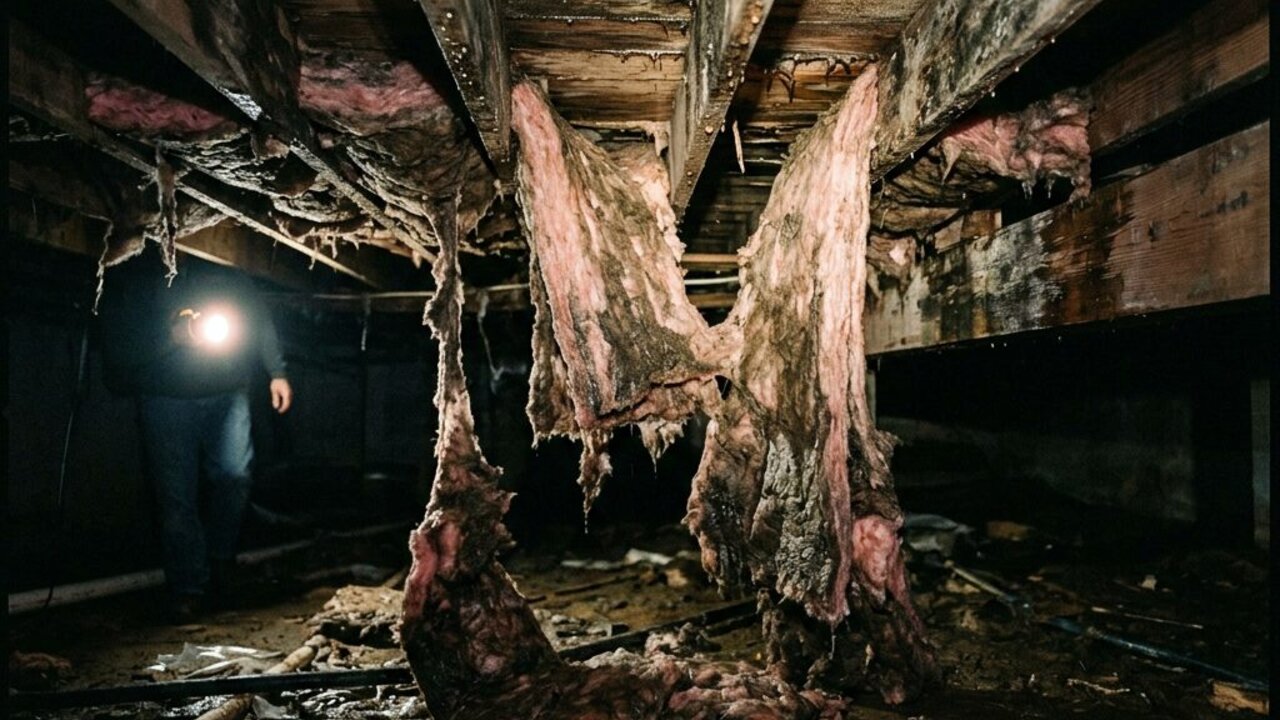
The photo above illustrates sagging crawl-space insulation; it is not a photograph of a home affected by the September 2026 nor’easter.
Do not enter a crawl space with standing water, suspected electrical hazards, sewage, structural damage, or an active utility concern. Floodwater can hide hazards, and wet insulation should not be handled casually. Follow local emergency guidance and checkNational Weather Service Wakefield alertsbefore going near a flooded or storm-damaged area. If you see immediate danger, contact the appropriate emergency or utility service rather than an insulation contractor.
Without opening a flooded access hatch or stepping into water, note what is visible from a safe place. Photos and a short timeline can help a qualified professional understand what happened without disturbing wet material.
Do not pull down batts, move debris, or try to dry insulation while the space is unsafe. If the water may contain sewage or other contaminants, avoid contact and wait for an appropriate remediation professional.
Once access is safe, an insulation professional can document whether crawl-space batts are wet, sagging, displaced, compressed, or visibly contaminated, and how much of the insulated area appears affected. The inspection should also record conditions that may have contributed to the problem, while keeping other work—such as electrical, plumbing, drainage, structural, or pest-control repairs—with the appropriate trade.
A quick look at one damp section may not show the full extent. The inspection should distinguish stormwater or surface-water entry from plumbing leaks, ground moisture, and condensation before anyone recommends a repair. Do not cover wet or displaced material with new insulation before its condition and the water source are understood.
Not automatically. The right scope depends on the insulation type, how long it was wet, whether it was submerged or contaminated, whether it has lost its shape or support, and whether it can be safely dried and assessed. A professional may recommend monitoring, targeted removal, or broader removal and replacement based on the material’s condition; the storm alone does not determine the answer.
Address water entry before installing new insulation. Crawl-space encapsulation can be part of a moisture-control plan where appropriate, but it is not a substitute for correcting a drainage, plumbing, or floodwater-entry problem.
Universal Insulation Doctor can assess crawl-space insulation and explain the available insulation scope once the area is safe to inspect. Homeowners in Ocean View and Willoughby Spit (Norfolk, VA 23503) can start with ourNorfolk insulation service area. Learn aboutcrawl-space insulationandcrawl-space encapsulation, orrequest a free estimate.
Should I enter my crawl space after a flood?
Not if there is standing water, an electrical or utility concern, sewage, or suspected structural damage. Wait for an official all-clear and qualified guidance before entering.
Does wet crawl-space insulation always have to be replaced?
No. The material and extent of exposure matter. Have it assessed after the area is safe; do not assume all of it must be replaced or that it can simply be covered with new insulation.
Can I install new insulation before fixing the water source?
No. Identify and address the source first. Otherwise, new material may be exposed to the same conditions.
Does crawl-space encapsulation stop floodwater?
Encapsulation can help manage ground moisture in suitable conditions, but it is not floodproofing and does not replace a plan for recurring surface water, plumbing leaks, or other water entry.
Not if there is standing water, an electrical or utility concern, sewage, or suspected structural damage. Wait for an official all-clear and qualified guidance before entering.
No. The material and extent of exposure matter. Have it assessed after the area is safe; do not assume all of it must be replaced or that it can simply be covered with new insulation.
No. Identify and address the source first. Otherwise, new material may be exposed to the same conditions.
Encapsulation can help manage ground moisture in suitable conditions, but it is not floodproofing and does not replace a plan for recurring surface water, plumbing leaks, or other water entry.
Universal Insulation Doctor serves all of Hampton Roads. Call now or fill out our quick form — we'll get back to you same day.
Can't find the answer you're looking for? Our team is always happy to help. Give us a call or fill out the form for a free no-obligation consultation.
(757) 962-0340