
Why are my crawl-space ducts sweating?
Warm, humid air can condense on cold duct surfaces, especially when duct insulation is damaged or crawl-space humidity is elevated. A duct/HVAC specialist should rule out leaks and equipment issues.

A+ BBB Rated Universal Insulation Doctor
Accredited business for Insulation Guidance in Hampton
September 19, 2026
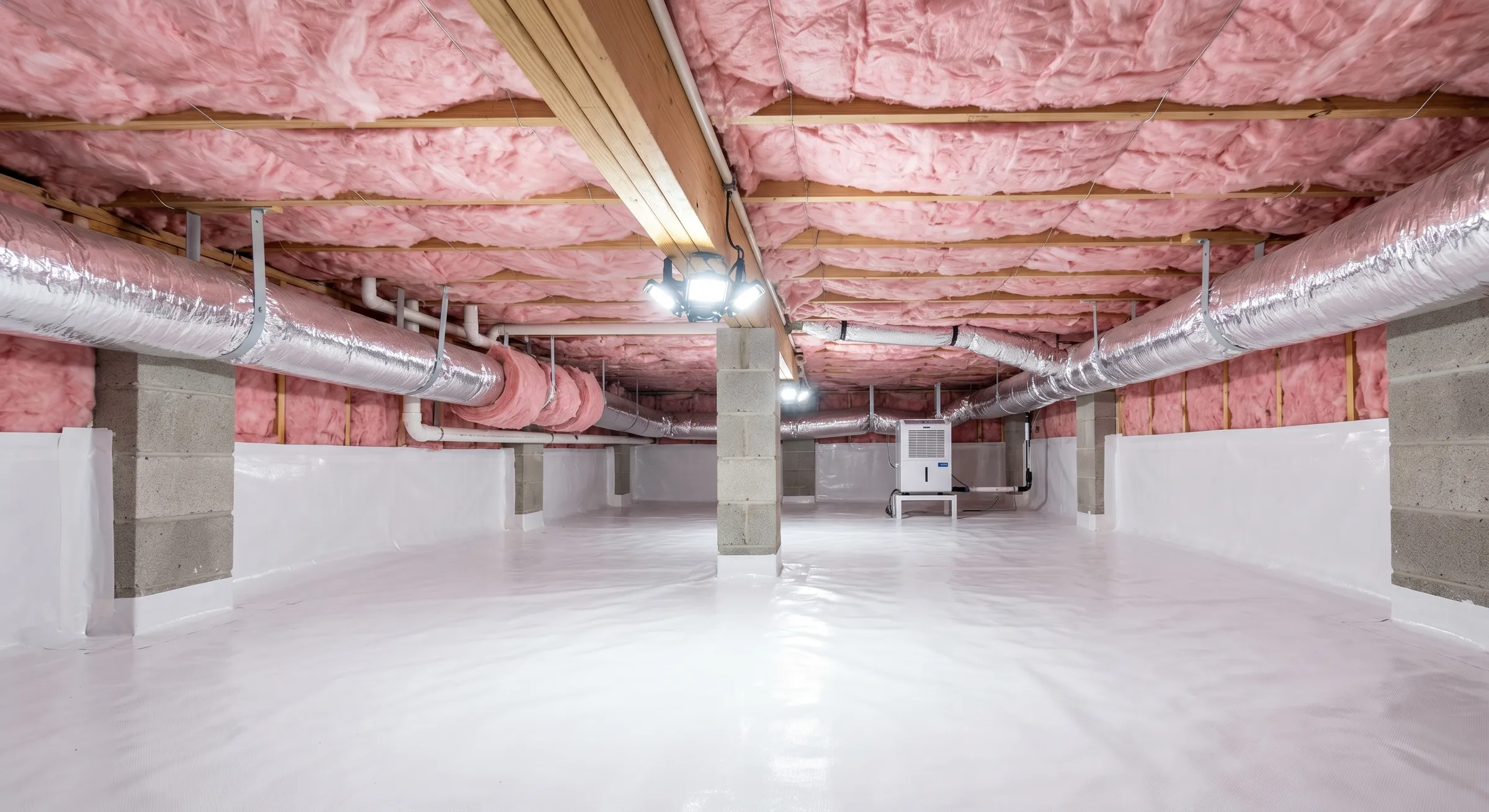
Cold supply ducts running through a warm, humid crawl space can collect water on their exterior. Homeowners often call this “sweating ducts,” but condensation is only one possibility. Leaks, damaged insulation, high crawl-space humidity, and HVAC operating conditions should be evaluated before choosing a remedy.
Duct work and HVAC diagnosis belong with the duct/HVAC specialist. Universal Duct Cleaning handles duct cleaning and related duct-service questions; Universal Insulation Doctor can address insulation and crawl-space moisture-control work when that is the documented need.
Condensation forms when a surface is colder than the surrounding air’s dew point. In Hampton Roads summers, humid crawl-space air can meet chilled metal or poorly insulated duct surfaces. A damaged vapor barrier, open vents, plumbing leak, or standing water can increase the moisture available in that air.
Water around a duct can also come from another source, so wipe marks and location matter. Look for a pattern along the entire run, isolated drips at a connection, nearby plumbing, or water that appears only after rain.
Repeated dampness can affect nearby insulation, wood, fasteners, and stored materials. It can also signal that the crawl-space humidity is not controlled. These observations warrant attention, but they do not establish a health diagnosis or prove that a particular material must be replaced.
Do not wrap a wet duct with an improvised material or seal over an unknown leak. Covering the evidence can make the source harder to find and may interfere with airflow or equipment access.
A duct/HVAC specialist should evaluate duct integrity, airflow, insulation on the duct system, equipment operation, and any cleaning question. Ask for the proposed duct work in writing, including access points and what cleaning or repair does and does not include.
A crawl-space professional can evaluate ground vapor, standing water, insulation, access, and general humidity conditions. These scopes may coordinate, but one provider should not imply it performs every trade. Plumbing, roofing, drainage, and structural concerns need their own specialists.
Take dated photographs before wiping away droplets. Note thermostat settings, whether the system was running, recent rain, and any nearby water source. Keep people out of unsafe areas and do not touch electrical equipment that is wet.
After the duct/HVAC evaluation, use the findings to decide whether crawl-space moisture control or insulation work is also appropriate. A complete plan addresses the source rather than promising that a single coating, liner, or cleaning will solve every symptom.
For duct questions, contact Universal Duct Cleaning. For crawl-space conditions, request a free insulation and moisture assessment and review the current pricing page.
Warm, humid air can condense on cold duct surfaces, especially when duct insulation is damaged or crawl-space humidity is elevated. A duct/HVAC specialist should rule out leaks and equipment issues.
It is a sign worth investigating because repeated moisture can affect nearby materials and indicate a humidity problem. The condition and appropriate response depend on the source, duration, and affected materials.
Crawl-space moisture control may reduce humid air around ducts, but it will not repair a duct leak or correct an HVAC problem. The duct/HVAC system should be evaluated separately.
Universal Duct Cleaning handles duct cleaning and related duct-service questions. HVAC repairs and system diagnosis should be handled by the appropriate HVAC specialist.
Do not cover wet ductwork before the source and condition are evaluated. A specialist should determine whether drying, repair, replacement, or insulation work is appropriate.
Universal Insulation Doctor serves all of Hampton Roads. Call now or fill out our quick form — we'll get back to you same day.
Can't find the answer you're looking for? Our team is always happy to help. Give us a call or fill out the form for a free no-obligation consultation.
(757) 962-0340