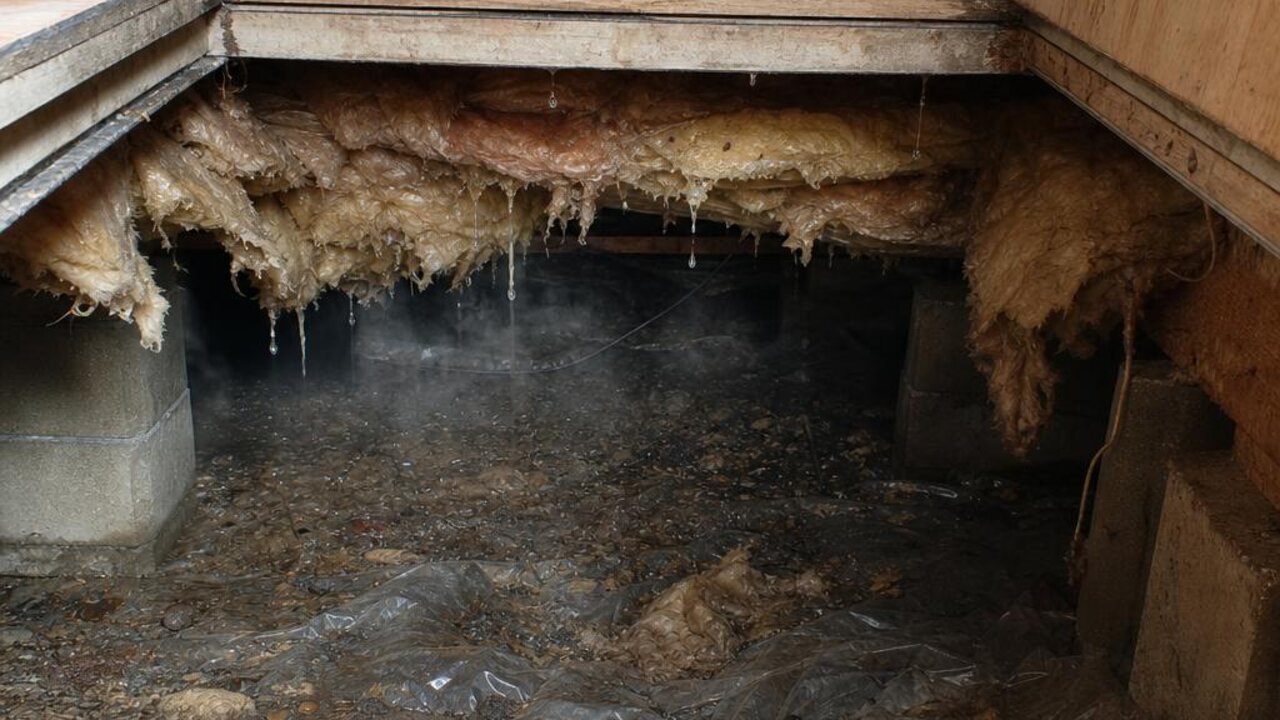
The stack effect is a building-airflow pattern, not a label for a particular contaminant. Temperature differences, wind, HVAC operation, and openings in the floor system can create pressure differences that move air between a crawl space and occupied rooms.
You may see a claim that 50% of breathing air comes from a crawl space. That is not a reliable universal fact and should be rejected. The amount of air movement is specific to the home, its leakage paths, weather, and mechanical systems; an inspection is more useful than a percentage.
A Plain-Language Look at Stack Effect
Air moves when pressure is different from one place to another. In a home, warm air may rise and leave through upper leaks while replacement air enters through lower openings; cooling equipment, exhaust fans, wind, and door operation can change the pattern. In some conditions, air can move upward from a crawl space through gaps around pipes, wiring, ducts, or the floor perimeter.
The direction is not constant in every house or every season. A draft test, visual inspection, and careful review of the enclosure can help identify pathways without claiming that all crawl-space air enters the home.
Where to Look for Air Pathways
A homeowner can note accessible openings, but should not pull insulation from wiring or enter a confined space without appropriate training. The floor system, plumbing penetrations, duct boots, crawl-space door, rim joist, and utility chases are common places for an evaluator to review.
- Gaps around pipes, cables, and HVAC lines crossing the floor
- Loose or missing insulation at the rim joist and perimeter
- An ill-fitting access door or visible daylight at the foundation
- Duct connections or registers that are loose, damaged, or unusually noisy
- Musty odors or humidity that are stronger near one known pathway
Address Moisture and Air Leakage Separately
Air sealing can reduce a pathway, but it does not remove standing water or correct a plumbing leak. A ground liner and humidity-control plan address different conditions than a damaged duct or a gap around a pipe. Scope should follow what the inspection actually finds.
Universal Insulation Doctor handles insulation and crawl-space condition work. Duct cleaning and ductwork services belong to Universal Duct Cleaning. If an inspection identifies pests, Universal Pest & Termite handles pest work. None of these observations is a medical diagnosis or a promise about health.
Use Measurements Instead of a Blanket Claim
Useful documentation may include crawl-space and living-area humidity readings, visible water conditions, insulation coverage, pressure or airflow observations, and photographs of accessible pathways. Testing for a specific concern should be designed and interpreted by a qualified independent professional.
If someone in the household has a health concern, discuss symptoms with a healthcare professional. Home improvement work can address building conditions, but it should not be presented as treatment or as proof that a particular exposure caused a symptom.
What to Do Next
Start with a free estimate so the right specialist can review the conditions before work is recommended. Explore our Hampton crawl-space services and Virginia Beach crawl-space guidance for related planning information.
Frequently Asked Questions
What is the stack effect in a house?
Stack effect is air movement caused by temperature and pressure differences between parts of a building. Openings in the floor, walls, attic, or crawl space can influence the pattern, which changes with weather, HVAC operation, and the home’s construction.
Does 50% of my breathing air come from the crawl space?
No universal 50% figure should be applied to homes. The amount of air that moves from a crawl space depends on actual leakage paths, pressure, weather, and mechanical systems. An inspection can document conditions instead of relying on that unsupported claim.
Can crawl-space encapsulation stop stack effect?
A properly scoped crawl-space and air-sealing project may reduce some pathways and moisture sources, but results depend on the home and the cause of the airflow. It cannot be promised without inspecting the enclosure, drainage, insulation, and mechanical systems.
Who should inspect a crawl space and duct pathway?
An insulation contractor can evaluate insulation and crawl-space conditions, while a qualified ductwork or HVAC professional should assess ducts and HVAC airflow. Universal Pest & Termite handles pest work when active pest conditions are found.
Is stack effect proof that crawl-space air is unsafe?
No. Stack effect describes movement, not the identity or safety of the air. A building inspection can document moisture, odors, materials, and pathways; health questions or specialized testing should be discussed with qualified independent professionals.