Why Squirrels and Rats Enter Hampton Roads Attics in Fall
October 27, 2026
When fall nights cool inGreat Neck (Virginia Beach, VA 23454)andEdinburgh (Chesapeake, VA 23322), a quiet attic can look like shelter to squirrels, rats, and mice. Cooler weather does not cause every home to have an infestation, but it can make a warm, protected attic more appealing when an animal finds a way inside.
Quick answer
Listen for scratching or scurrying, look from the ground for damaged soffits or fascia, and do not enter the attic or disturb droppings and nesting material. Have Universal Pest & Termite assess and address the animals and access points first. Then Universal Insulation Doctor can assess damaged insulation; Universal Duct Cleaning can evaluate ductwork separately if needed.
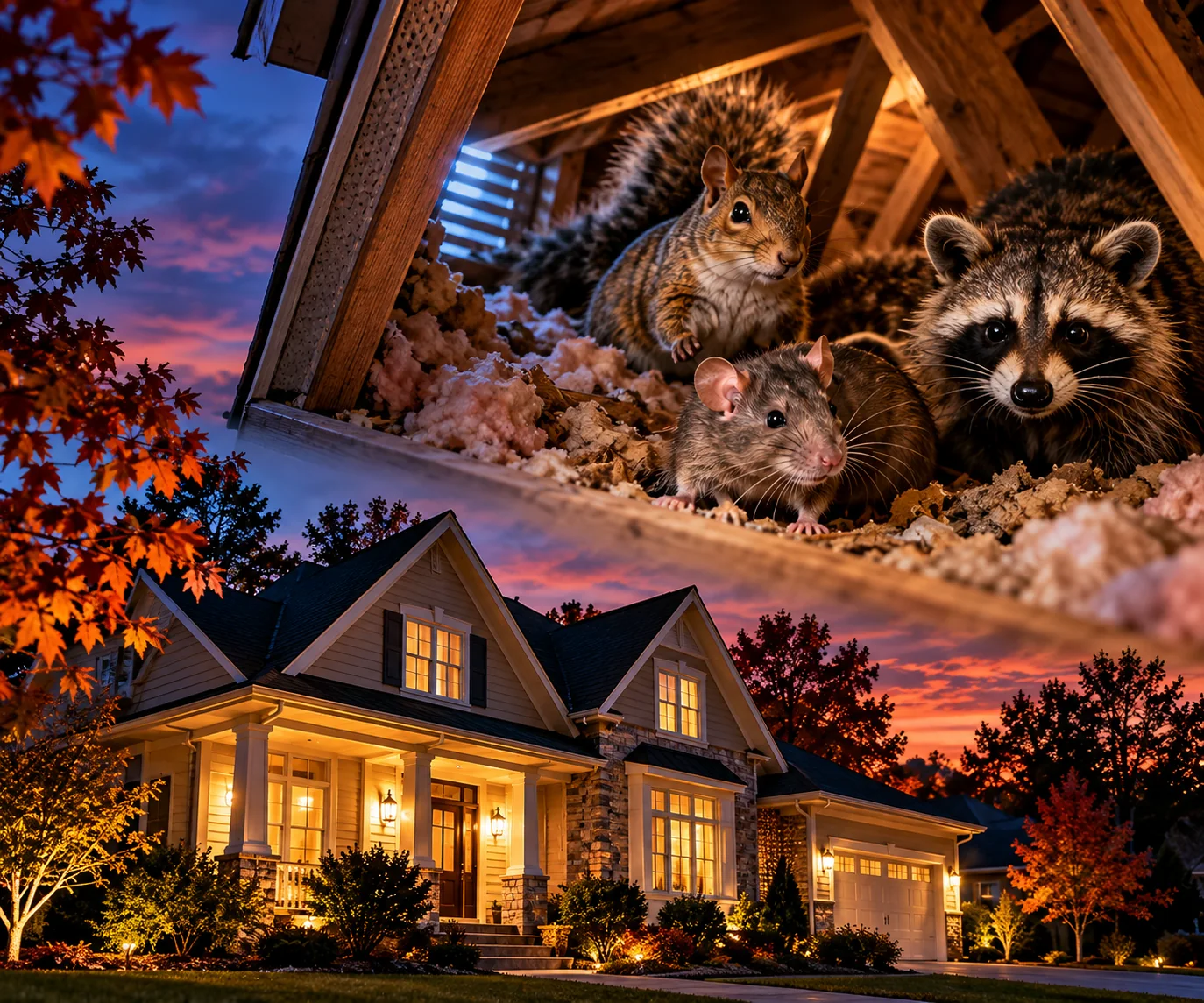
Illustration: several kinds of wildlife may seek shelter in building openings.
Why animals look for attic shelter in fall
Squirrels, rats, and mice can use attics as sheltered places to nest or travel through a building. They do not need a wide-open hole: damaged vent screens, loose soffit panels, gaps at roof edges, and openings around pipes or cables can provide access. Existing openings can also be enlarged by gnawing.
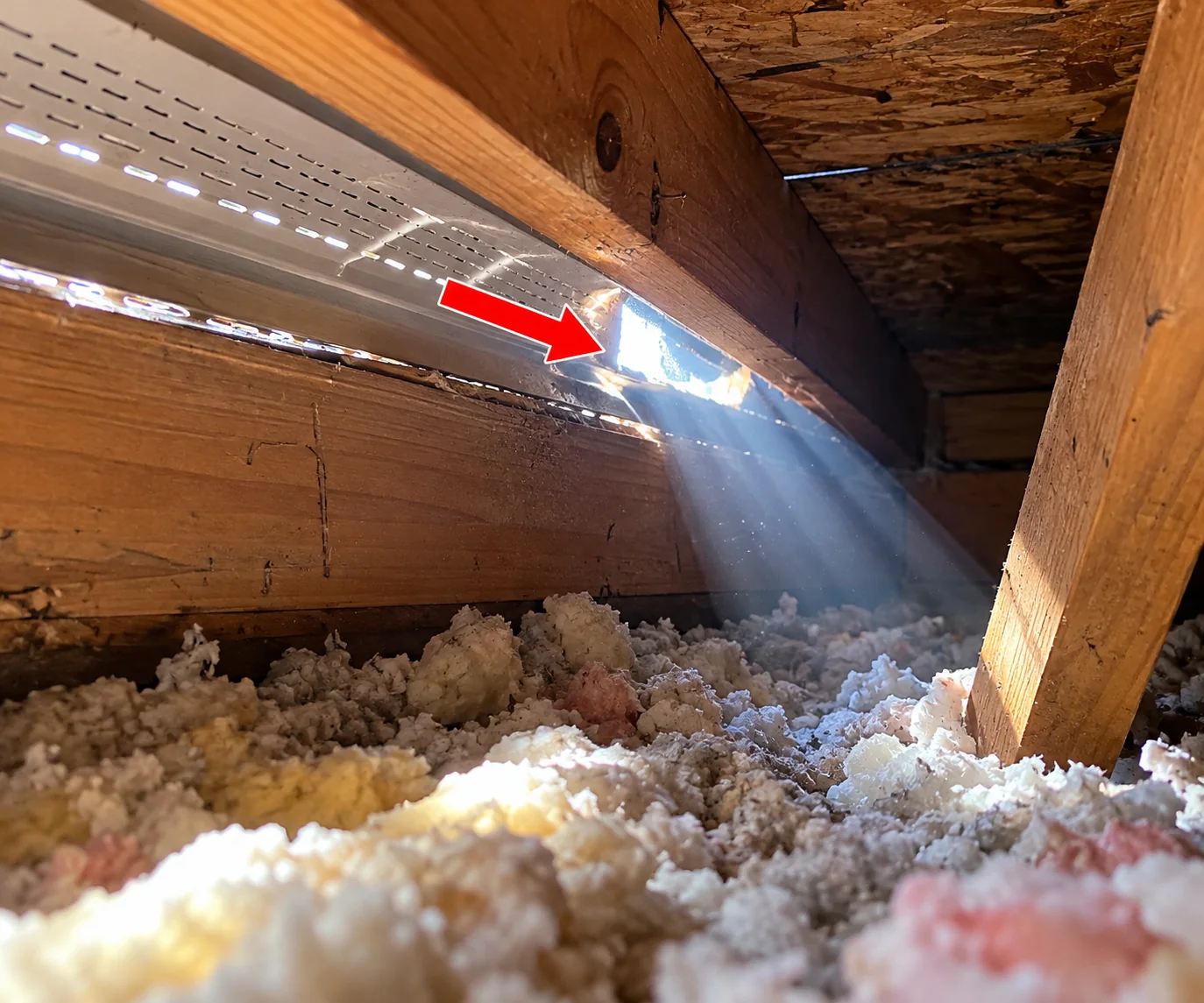
In older Hampton Roads homes, weathered trim and roofline details may hide a gap from the ground. A visible beam of daylight in an attic can be a clue that an opening needs inspection, but not every attic light leak is an animal entrance. A qualified pest professional can identify the route and determine what kind of animal activity is present.
Fascia, soffits, and wiring can be damaged
Animals may chew or pull at wood trim, fascia boards, soffits, and vent covers as they enter or enlarge a route. Inside the attic, gnawing can damage stored materials and electrical wiring. Exposed or damaged wiring can create a shock or fire hazard; do not touch it or attempt a repair. If you see damaged wiring, report it to the pest professional and have a qualified electrician evaluate it.
Nesting and activity can also crush, shift, or tear insulation. If you see scorch marks, smell burning, notice repeated breaker trips, or lose power in part of the home, keep clear and contact an electrician promptly. Do not climb into an unsafe or contaminated attic to investigate.
Droppings and nesting material need careful handling
Rodent urine, droppings, saliva, and nesting materials can carry germs. For example, CDC guidance notes that people can be exposed to hantavirus when contaminated material from an infected rodent becomes airborne. That does not mean every rat or mouse carries hantavirus, and signs in an attic cannot diagnose an illness. It is a reason to avoid disturbing waste and to use appropriate cleanup procedures.
Do not dry sweep or vacuum rodent droppings, urine, or nesting material. CDC recommends safe cleanup practices and extra precautions for heavy infestations. Keep children and pets away, and ask a qualified professional to assess the condition before cleanup. Read theCDC rodent cleanup guidance.
Contaminated insulation and nesting debris may contribute to dust or persistent odors, and activity near duct openings deserves a separate look. Do not assume that all attic contamination is entering the home through the HVAC system; an inspection can determine whether ductwork is affected. If air quality or health symptoms are a concern, consult a healthcare professional.
Use the right order: animals, entry points, then insulation
Limit access.Do not handle wildlife, nests, droppings, or visibly damaged wiring. Avoid sealing a suspected opening yourself while animals may still be inside.
Have the pest work assessed.Universal Pest & Termitehandles wildlife inspection, removal, and entry-point exclusion. The appropriate scope depends on the animal and the home.
Assess insulation damage.After animal activity and access points are addressed,Universal Insulation Doctorcan inspect affected insulation and explain removal, surface-treatment, and restoration options in a written scope.
Check ductwork separately if needed.If there are signs that wildlife or contamination reached the HVAC system,Universal Duct Cleaningcan evaluate the ductwork.
Attic wildlife questions homeowners ask
Does a cold snap mean there are animals in my attic?
No. Cooler weather may make shelter more attractive, but scratching, droppings, damaged trim, and other signs need an inspection to determine whether animals are present and how they entered.
Can I replace insulation before the animals are removed?
Address active animal activity and entry points before restoring insulation. New insulation alone does not remove animals or close an entry route.
What if I only see a damaged fascia board?
Do not assume the opening is inactive. Have the roofline and attic checked by the appropriate professional before repairs close off access.
Can attic wildlife affect my ducts?
It can, but not every attic issue reaches the duct system. If you see contamination, nesting, or damage near ducts, arrange a separate evaluation by a duct professional.
Get the right team for each part of the work
Whether your home is in Great Neck (Virginia Beach, VA 23454) or Edinburgh (Chesapeake, VA 23322), start with the right team for the problem. For squirrel removal and exclusion, contactUniversal Pest & Termite. For insulation damage after wildlife work, see oursquirrel removal and attic restoration guideor request an assessment from Universal Insulation Doctor.
Do squirrels and rats enter Hampton Roads attics more often in fall?
Cooler nights can make sheltered spaces attractive, but seasonal weather alone does not prove there is animal activity. Look for scratching, damaged roofline materials, droppings, or disturbed insulation and arrange a professional inspection.
Can rats or squirrels damage attic wiring?
Gnawing can damage wiring and insulation around it. Do not touch exposed or damaged wiring; have a qualified electrician inspect it and let the pest professional know what you found.
Can rodent droppings make my family sick?
Rodent waste can carry germs, and disturbing contaminated material can expose people to airborne particles. Not every rodent is infected, and droppings do not diagnose disease. Avoid disturbing the material and follow current CDC cleanup guidance.
Who removes contaminated attic insulation after wildlife?
Universal Insulation Doctor can assess and restore affected insulation after the animal activity and entry points are addressed. Universal Pest & Termite handles wildlife removal and exclusion; duct concerns are evaluated separately by Universal Duct Cleaning.
Ready for a Free Estimate?
Universal Insulation Doctor serves all of Hampton Roads. Call now or fill out our quick form — we'll get back to you same day.