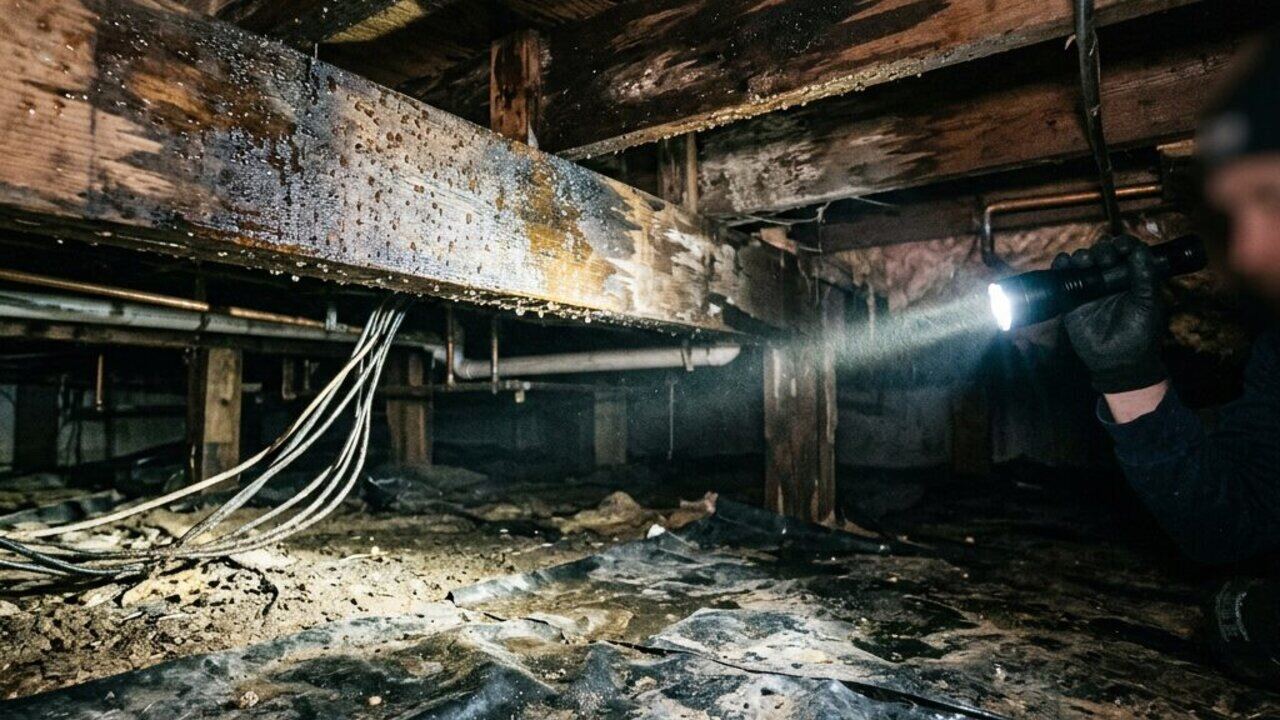
A soft spot, dip, or cupped board understandably makes a homeowner look below the floor. Moisture in a crawl space can affect wood, insulation, fasteners, and the indoor environment, but a symptom alone does not prove that moisture caused the floor movement.
Because floors involve structure and finishes, arrange a qualified structural and flooring evaluation before selecting insulation or encapsulation. This article explains what to document without attempting to diagnose the cause.
What Homeowners Mean by Sagging or Cupping
“Sagging” may describe a broad dip, a bouncy area, or a low spot that became noticeable after furniture moved. “Cupping” usually describes board edges sitting higher than the center, but flooring type, installation, wear, and seasonal movement matter. Laminate, engineered wood, solid wood, tile, and carpet can show different symptoms.
Map the change rather than relying on a single impression. Photograph the area in natural light, note its location relative to walls and plumbing, and record whether it changes after rain or with the seasons.
- Mark the perimeter of a soft or visibly uneven area with removable tape
- Record odors, dampness, staining, or condensation below the location
- Look for plumbing fixtures or exterior walls near the affected floor
- Avoid cutting materials or disturbing supports before evaluation
How Moisture Could Be Part of the Picture
Persistent dampness can change the condition of wood and other materials, while wet insulation can lose its intended shape and performance. Condensation, ground vapor, rain entry, plumbing leaks, and poor drainage are different scenarios that require different responses.
A crawl-space inspection can document humidity, standing water, insulation condition, and visible framing. Those observations are useful context for a structural or flooring professional, but they do not establish load capacity, cause, or the required repair.
Why a Structural and Flooring Evaluation Comes First
Uneven floors may relate to framing, supports, subfloor, joists, foundation movement, installation, moisture, or combinations of these. Only the appropriate qualified professional can determine which evaluation and repair are needed. Do not rely on a moisture-control contractor to diagnose a structural condition.
If movement is sudden, a surface feels unsafe, a support appears damaged, or there is active water, limit access to the area and seek prompt professional guidance. Do not add weight or attempt to jack, shim, or sister framing as a DIY experiment.
Moisture Control Belongs After the Cause Is Scoped
Once the relevant professionals identify the condition, an insulation and crawl-space plan can address documented moisture sources that fall within its scope. That may include wet insulation handling, ground-vapor control, or air sealing. It does not include structural repair, flooring replacement, plumbing, roofing, or drainage construction.
A coordinated plan is safer than covering a symptom. Keep copies of reports, photographs, humidity readings, and written exclusions so each contractor understands what has already been evaluated.
What to Do Next
Begin with a free crawl-space and insulation estimate while arranging the required structural and flooring review. You can also see Norfolk insulation services and the current pricing information.
Frequently Asked Questions
Can crawl-space moisture cause my floors to sag?
Moisture may affect some building materials, but floor movement has multiple possible causes. A structural and flooring professional must evaluate the system before anyone attributes the symptom to moisture.
Does cupped wood flooring always mean there is a crawl-space leak?
No. Cupping can relate to several moisture exposures, installation conditions, seasonal movement, or other flooring factors. Inspect both the flooring and the spaces below it.
Should I encapsulate before repairing a sagging floor?
Arrange structural and flooring evaluation first. Encapsulation should not cover an unresolved structural, plumbing, drainage, or other building problem.
What should I photograph for an inspection?
Photograph the floor from several angles, the transition to unaffected rooms, nearby plumbing and exterior walls, and visible crawl-space water, staining, insulation, or framing conditions. Do not disturb supports.
Does Universal Insulation Doctor repair floor joists or flooring?
No. Universal Insulation Doctor focuses on insulation and crawl-space moisture-control work. Structural repair and flooring work should be evaluated and performed by the appropriate specialists.