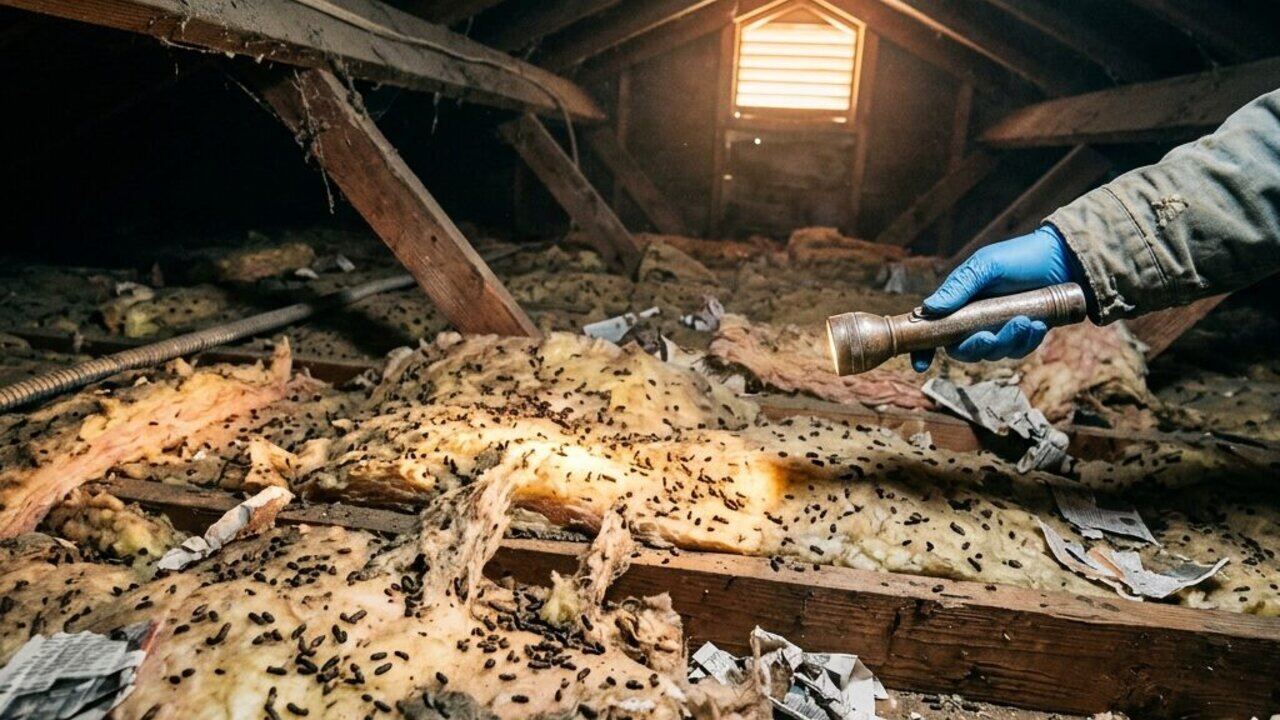
Rodent activity can turn a comfort problem into a cleanup decision. Nesting material, droppings, urine, compressed insulation, and chewed pathways can affect the insulation’s performance and make an attic or crawl space unpleasant to inspect.
The safest plan separates the jobs clearly: a qualified pest-control provider addresses active rodents and entry points, while the insulation contractor evaluates removal, cleanup, sanitizing, and re-insulation after the activity is controlled.
Why Damaged Insulation Needs a Real Scope
Fiberglass and cellulose depend on consistent depth and loft. When rodents tunnel, flatten, or soil the material, the affected area may no longer insulate as intended. Visible damage is not always the full boundary, which is why a site inspection matters before deciding on spot treatment or broader removal.
Contamination concerns should be handled carefully in an enclosed attic or crawl space. Homeowners should avoid dry sweeping or ordinary vacuuming of rodent waste because disturbing dried material can put particles into the air.
A Coordinated Sequence Protects the New Insulation
First, Universal Pest & Termite or another licensed pest-control provider can assess trapping and entry-point exclusion. That step is important because replacement insulation should not be installed while the source of the activity remains open.
Once the area is ready, the insulation scope can include contained removal of affected material, cleanup of accessible framing surfaces, an appropriate sanitizing treatment, and installation of new insulation. Duct contamination or duct cleaning is handled by the Universal Duct Cleaning team, not by the insulation crew.
Ask for Clear Boundaries in the Proposal
For Chesapeake and Suffolk homeowners, the written scope should say what material will be removed, what surfaces will be cleaned, what will be disposed of, and what work is being coordinated with the pest or duct company. That clarity prevents an insulation bid from being mistaken for a pest-control or duct-cleaning service.
Insurance treatment varies by policy and the cause of loss. If you plan to file a claim, photograph the damage, save the written inspection findings, and ask your insurer what your policy covers before authorizing the work.
What to Do Next
If rodents have damaged insulation, request a free insulation damage inspection in Chesapeake or Suffolk. We will explain the insulation scope and coordinate clearly with the appropriate sister-company service.
Frequently Asked Questions
Does homeowners insurance cover attic insulation replacement caused by rodents?
Coverage for rodent-related insulation damage depends on the policy language, cause of loss, maintenance history, and insurer’s claim decision. Document the damage and contact your insurer directly; an insulation contractor cannot determine whether a policy will cover the work.
How do professionals safely remove contaminated fiberglass insulation?
Professional removal typically uses appropriate personal protection, containment practices, controlled bagging and disposal, and cleaning of accessible surfaces before replacement insulation is installed. The exact method depends on the extent of contamination, access conditions, and the materials present in the attic or crawl space.
What are the health risks of living with mouse or squirrel droppings in the attic?
Rodent waste can create sanitation concerns, especially if dried material is disturbed in an enclosed space. Avoid dry sweeping or ordinary vacuuming, follow current public-health guidance, and consult a qualified professional if there is substantial contamination or a concern about exposure.
How do you prevent pests from re-entering a newly insulated crawl space or attic?
Preventing re-entry requires pest-control assessment, trapping when appropriate, and sealing identified access points. Universal Pest & Termite performs rodent-control and exclusion work; insulation replacement should follow once the pest-control provider confirms the space is ready.
What is attic fogging and sanitization, and is it safe for families and pets?
Sanitizing treatments are applied to accessible structural surfaces after affected insulation is removed; they are not a substitute for removing contaminated material or resolving active pest entry. Product selection, application method, re-entry instructions, and safety precautions should be reviewed with the service provider for the specific job.