

Rodents in Your Air Ducts: The Hidden Health Hazard in Hampton Roads Homes
July 3, 2026
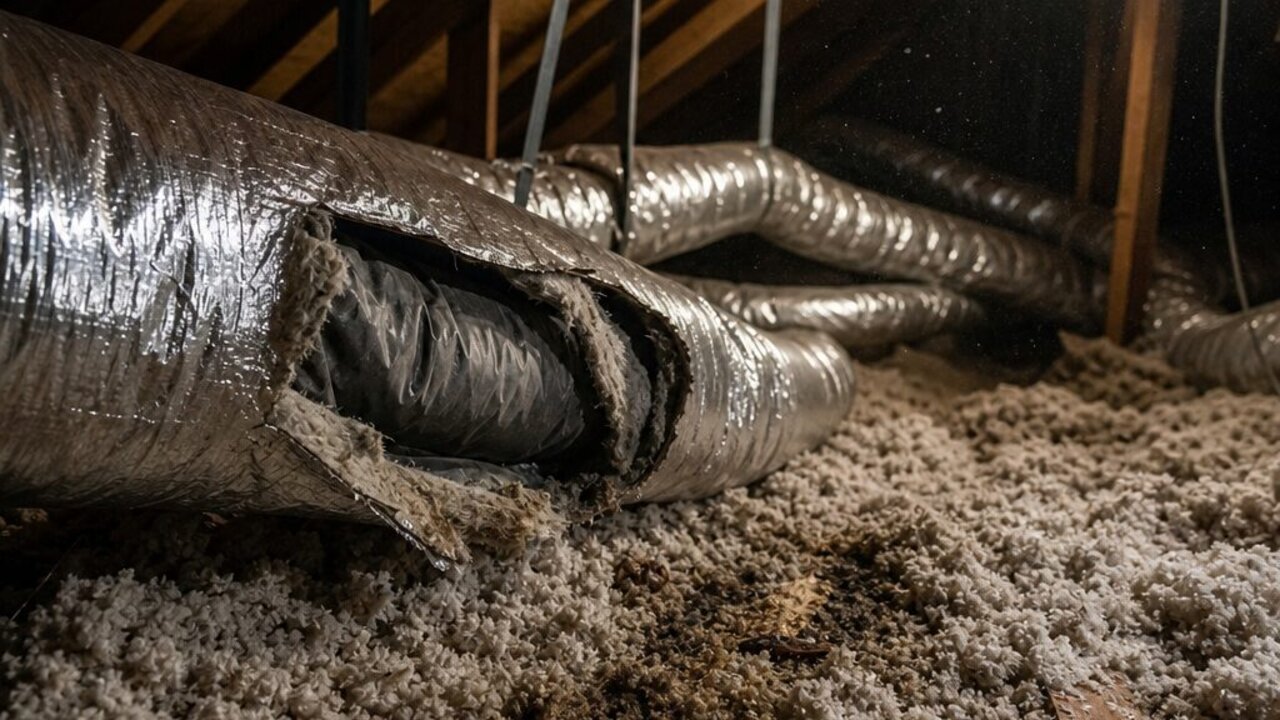
Rodents are not simply attic pests. Once they establish a presence in a home's structural envelope — whether through the roofline, crawl space, or wall penetrations — they frequently move into and through the HVAC ductwork. For Hampton Roads homeowners, this creates a problem that is significantly more serious than a typical pest infestation: your heating and cooling system becomes an active distribution network for rodent contamination, cycling potentially pathogen-laden air through every room of your home every time it runs.
This is a post about what happens when rodents get into your air ducts, why the health risks are serious, and what the correct professional response looks like.
How Rodents Get Into Your Ductwork
Residential HVAC systems offer rodents several entry pathways. Flexible duct connections can be gnawed through. Return air chases that run through wall cavities provide unobstructed travel routes. In older Hampton Roads homes — particularly those with ductwork running through attic spaces — the same gaps that allow rodents into the attic give them direct access to the duct system.
Rodents are attracted to ductwork for two reasons: warmth and protected travel. A duct system that runs from a rodent-infested attic down through conditioned space offers a warm, enclosed pathway into the interior of the home. Mice in particular — which can compress their bodies through a hole the size of a dime — can enter duct systems through return air gaps at wall registers, improperly sealed connections, and deteriorated duct board material.
Our sister company, Universal Pest & Termite, has documented this in detail for Chesapeake homes specifically — read their writeup onrodents in home air ducts in Chesapeakefor additional detail on the mechanisms and health implications.
Why Duct Contamination Is Worse Than Attic Contamination
Rodent contamination in an attic is serious — but it is relatively contained. The contamination sits in an enclosed, static space. The stack effect does move some air through wall cavities, but it is slow and passive.
Contamination inside ductwork is actively distributed. Every time your HVAC system runs, air moves through the contaminated section at high velocity, picks up particulates from droppings, urine residue, and nesting material, and delivers that air directly into your living spaces through supply registers. A system running 8–12 hours a day in a Hampton Roads summer is cycling that air continuously.
⚠ Hantavirus Warning: Ductwork Amplifies the Risk
Hantavirus Pulmonary Syndrome (HPS) is transmitted by inhaling airborne particles from dried rodent droppings and urine. The CDC notes that enclosed spaces — attics, crawl spaces, and ductwork — are the highest-risk environments for hantavirus exposure because contaminated particles become airborne during disturbance. When rodents nest or defecate inside ductwork, your HVAC system does the disturbing for them: it forces air past dried droppings at high velocity on every cycle. Confirmed HPS cases carry an approximate38% mortality rate. If rodent activity in ductwork is suspected, the system should not be operated until the ducts have been professionally inspected and cleaned.See CDC hantavirus guidance.
Signs That Rodents May Be in Your Ducts
Odors from registers.An ammonia-like or musty smell coming from supply or return registers when the HVAC system runs is a strong indicator. The system is actively carrying contaminated air out of the duct and into the room.
Scratching or rustling sounds from vents.Rodents traveling through ductwork create sounds that transmit clearly through metal. If you hear movement inside the walls or from register locations, not just above the ceiling, it may indicate duct travel.
Droppings at or near floor registers.Rodent droppings found inside floor supply registers — or in the immediate surrounding area — indicate active duct access.
Confirmed attic infestation.If a pest inspector has confirmed rodent activity in your attic, the ductwork running through or adjacent to that attic should be treated as potentially compromised. Rodents in attics routinely access ductwork in the same space.
Reduced system efficiency or unusual airflow.Nesting material inside ducts restricts airflow. If you've noticed uneven heating or cooling — rooms that aren't reaching temperature — duct obstruction from nesting debris is one possible cause.
Professional Duct Cleaning: What It Involves
Professional air duct cleaning for rodent contamination is different from standard maintenance cleaning. It requires HEPA-equipped negative air pressure equipment that keeps contaminated particulates from becoming airborne in your living space during the cleaning process. The technician inspects every accessible section of ductwork, removes nesting material and accumulated debris, sanitizes duct interiors, and restores the system to safe operating condition.
Universal Duct Cleaning — our sister company — provides professionalair duct cleaning throughout Hampton Roadsspecifically including contamination from rodent infestation. Their crews are equipped for the level of remediation that a rodent infestation requires, not just routine dust removal.
When Duct Repair or Replacement Is Also Needed
Cleaning removes contamination — but it does not address physical damage. Rodents gnaw. Flexible ductwork is particularly vulnerable: a mouse can chew through standard flex duct in a matter of hours. Once duct integrity is compromised, conditioned air escapes into attic or crawl space before reaching its destination, and the breach becomes an ongoing entry point for further infestation.
After any rodent infestation in ductwork, the system should be inspected for physical damage — gnaw holes, separated connections, collapsed sections, or deteriorated duct board. Sections with damage need repair or replacement, not just cleaning. Universal Duct Cleaning also handlesair duct repair and replacement in Hampton Roadswhen cleaning alone is insufficient to restore the system.
The Correct Sequence After a Rodent Infestation
The remediation sequence matters. Cleaning ducts before sealing entry points means the problem recurs. Installing new insulation before cleaning ducts means contaminated air continues to circulate through freshly insulated spaces. The correct order is:
1. Pest control and exclusion first.Universal Pest & Termite handles rodent elimination and entry point sealing. Until the infestation is resolved, all other remediation is provisional.
2. Air duct inspection and cleaning.Universal Duct Cleaning assesses and cleans the full duct system, including repair or replacement of damaged sections.
3. Attic insulation removal and replacement.Universal Insulation Doctor removes contaminated insulation, sanitizes the attic deck, and installs new insulation. Pest Guard™ is described as intended to deter certain insects; ask for its current label to confirm listed insects and treatment duration.
All three companies are sister organizations operating under the same ownership in Hampton Roads. We coordinate directly so that your remediation proceeds as a single managed project rather than three separate contractor engagements with gaps between them.
Frequently Asked Questions
Should I run my HVAC while waiting for duct cleaning if I think rodents have been in the ducts?
No. If you have reason to believe rodents have been in your ductwork — droppings at registers, odors from vents, confirmed attic infestation near ductwork — avoid running the system until a professional inspection is completed. Every operating cycle distributes potentially contaminated air through your home. If the Hampton Roads summer heat makes this impractical, use window units temporarily while you arrange a professional duct inspection. Call(757) 962-0340and we can help coordinate urgent scheduling with our duct cleaning team.
Suspect the ductwork is carrying it through the house? See our air duct cleaning
Is duct cleaning enough, or will I also need duct repair?
It depends on the extent of physical damage. If rodents have been traveling through the ductwork but haven't gnawed through it, cleaning and sanitizing may be sufficient. If there are gnaw holes, separated flex duct connections, or sections of compromised duct board, those sections need repair or replacement before the cleaning is effective — a hole in a duct returns any cleaned section to an open pathway for future infestation. The duct inspection will determine what's needed.
Want the attic and the ducts looked at in one visit? Book a free inspection
How long does professional duct cleaning take for a typical Hampton Roads home?
A standard duct cleaning for an average-sized Hampton Roads home — 1,500 to 2,500 square feet — typically takes 3 to 5 hours. Homes with rodent contamination requiring more thorough sanitizing, or with ductwork running through attics that also need access, may take longer. Your Universal Duct Cleaning technician will give you a time estimate after reviewing the system layout.
Need pricing first? Check current pricing
Concerned About Rodents in Your Ducts?
Universal Insulation Doctor coordinates with our sister companies — Universal Pest & Termite and Universal Duct Cleaning — to handle every step of rodent remediation for Hampton Roads homeowners. Call us to start the process or request a free estimate online.
Ready for a Free Estimate?
Universal Insulation Doctor serves all of Hampton Roads. Call now or fill out our quick form — we'll get back to you same day.
Have a Question?
Can't find the answer you're looking for? Our team is always happy to help. Give us a call or fill out the form for a free no-obligation consultation.
(757) 962-0340