

Rodent-Contaminated Insulation in Hampton Roads: What Homeowners Need to Know
July 2, 2026
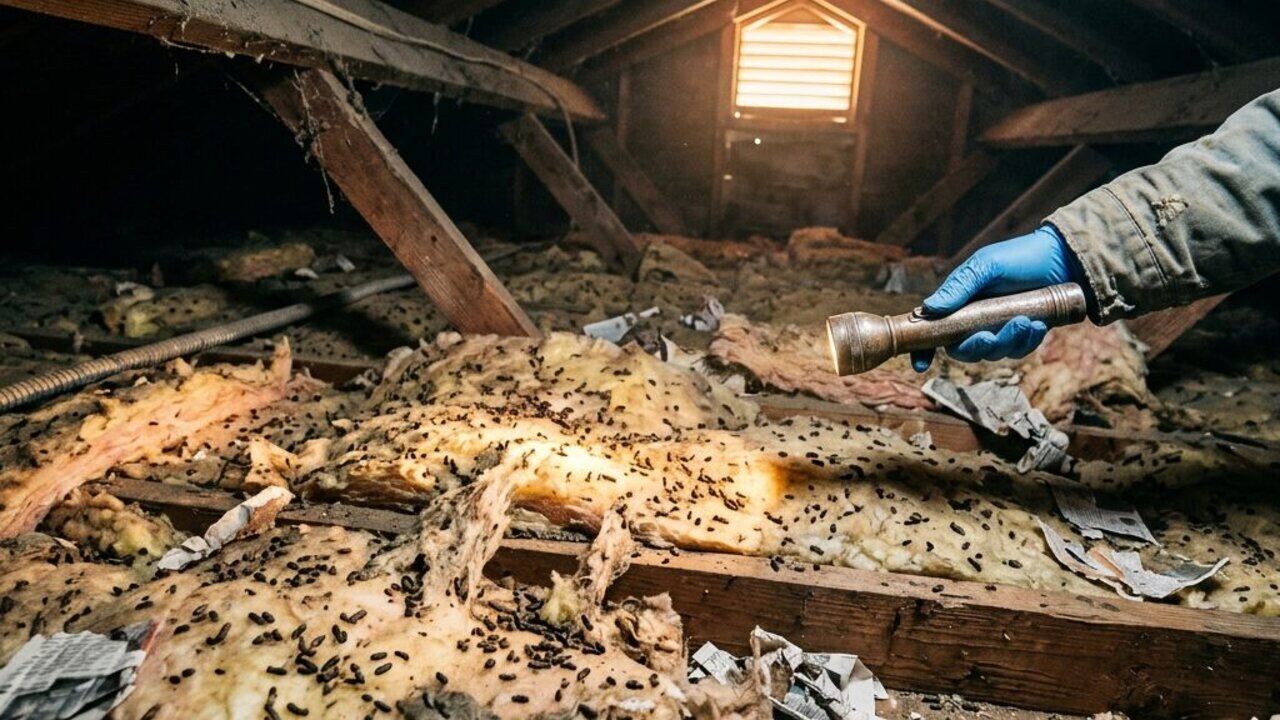
Rodents don't just damage insulation — they transform it into a health hazard. Whether the infestation is in your attic or your crawl space, the insulation they've nested in, urinated on, and defecated through is no longer simply degraded insulation. It's a reservoir for pathogens that can enter your home's air supply through the same stack effect and pressure differentials that govern all air movement in a residential structure.
For Hampton Roads homeowners in Virginia Beach, Chesapeake, Norfolk, and Portsmouth, this is a problem that comes up regularly. The region's mature tree canopy, older housing stock, and humid coastal climate create conditions that rodents consistently exploit. Once they're in, the insulation question needs to be answered correctly — because the wrong answer leaves your family at risk.
How Rodents Damage Insulation
Rodents interact with insulation in ways that render it functionally useless and biologically hazardous simultaneously.
Nesting.Mice and rats tear apart fiberglass and blown-in insulation to build nests. They compress, shred, and burrow through material, collapsing the air pockets that give insulation its thermal value. R-values in active nesting zones can drop dramatically — sometimes to near zero in the densest nesting areas.
Urine saturation.Rodents mark territory continuously through urination. In insulation, this isn't a surface contamination — urine soaks deeply into fiberglass batts or blown-in material and spreads far beyond any visible nesting site. Once dried, it leaves no visible trace but remains biologically active. There is no way to identify the full extent of urine contamination by visual inspection.
Fecal accumulation.A single mouse produces 50 to 75 droppings per day. A small colony established in your attic or crawl space for several months leaves tens of thousands of droppings embedded in the insulation. These droppings carry pathogens and, once dried, can become airborne when disturbed.
Secondary pest attraction.Rodent nests attract secondary pest activity — insects and parasites that feed on nesting debris. A rodent-contaminated insulation layer often develops secondary infestations of mites, beetles, or fleas that compound the remediation challenge.
The Hantavirus Risk in Attic and Crawl Space Insulation
⚠ Hantavirus Warning
The CDC identifies enclosed spaces with rodent contamination — attics, crawl spaces, and wall cavities — as the highest-risk environments for hantavirus exposure. Hantavirus Pulmonary Syndrome (HPS) is not transmitted by touching rodents or their droppings. It is transmitted bybreathing in airborne particlesthat become suspended when dried droppings or urine are disturbed. Attic insulation removal creates exactly those conditions. HPS has an approximate38% mortality ratein confirmed cases. Homeowners should not attempt to remove rodent-contaminated insulation without proper respiratory protection (N95 minimum, P100 recommended) and protective clothing. Professional HEPA-equipped removal is the safe standard.Read CDC guidance on hantavirus prevention.
The other documented pathogens associated with rodent contamination include leptospirosis (a bacterial infection transmitted through contact with urine-contaminated material and capable of causing kidney and liver damage), salmonella (which can enter the home's environment through rodent fecal matter), and lymphocytic choriomeningitis (LCM), a viral infection carried by common house mice.
The stack effect — the natural air movement in a home that draws air upward from crawl spaces and attics into living areas — means contaminated insulation in either location is a pathway to indoor air exposure even without any active disturbance.
Why Only Full Replacement Is Adequate
The question of whether to spot-replace versus fully replace comes up in every rodent remediation conversation. The answer, properly considered, is always full replacement — and here's why:
Contamination is invisible and widespread.Rodent urine soaks into fiberglass insulation across a radius many times larger than any visible nesting site. You cannot see it once it's dried. Removing only the visibly damaged sections leaves contaminated material in place with certainty.
Partial removal cannot restore thermal performance.Attic insulation that has been compressed, tunneled, and matted down by rodent activity has lost R-value permanently. The thermal performance of a patched system is never what it would be with a complete, uniformly deep installation.
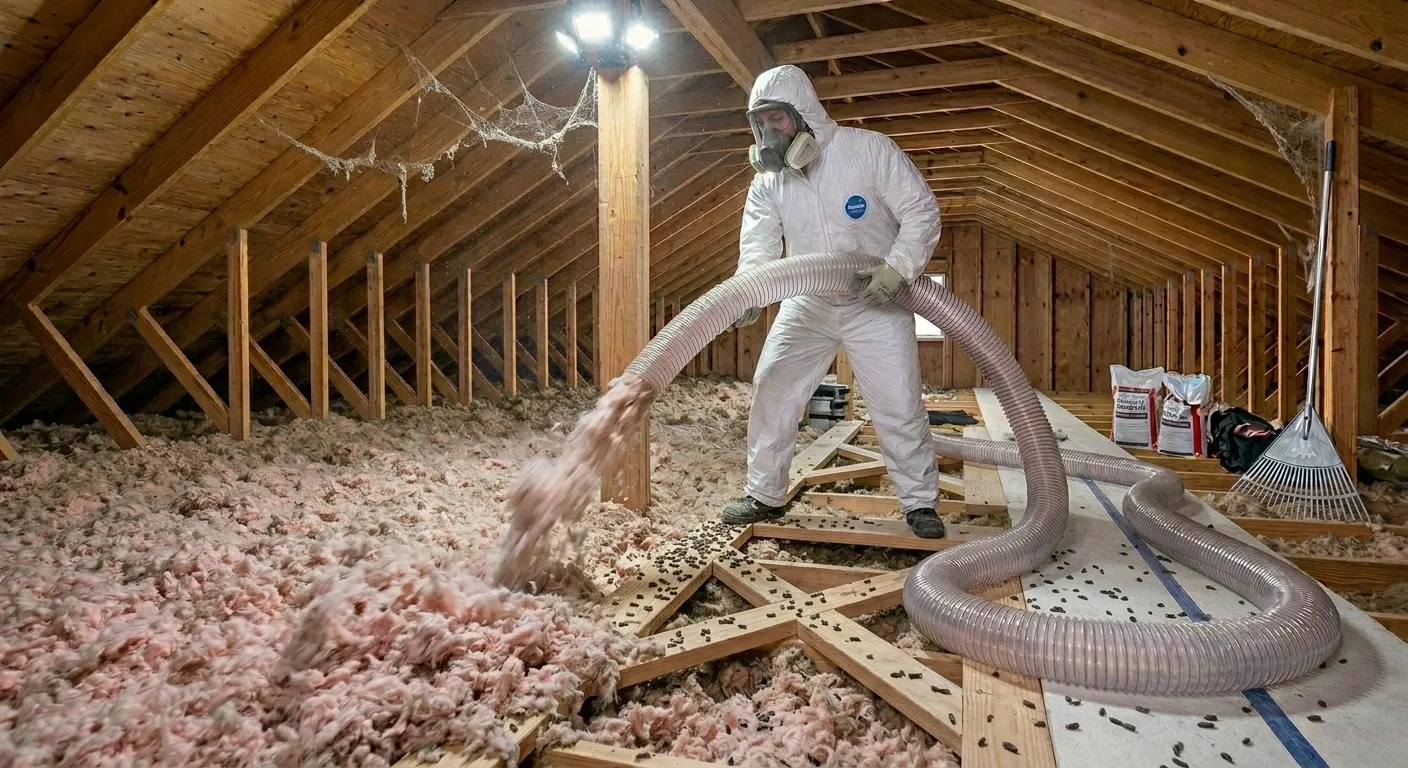
The attic deck must be accessible for sanitizing and sealing.Full removal is necessary to expose the attic subfloor for HEPA vacuuming, antimicrobial treatment, and inspection of all penetrations. These steps — which prevent recurrence — cannot be done with insulation in place.
Universal Insulation Doctor'sinsulation removal servicecovers full extraction, attic deck HEPA vacuuming, antimicrobial sanitizing treatment, and written documentation — followed by proper re-installation to current Department of Energy R-value recommendations for Hampton Roads.
Crawl Space Contamination: A Different Environment, Same Problem
Rodents that enter through crawl space vents, pipe penetrations, or foundation gaps nest in the sub-floor insulation — the batts hung between floor joists — as readily as they do in attic blown-in material. The contamination dynamic is the same; the access challenge for removal is often greater due to low clearance.
Crawl space rodent remediation typically involves sub-floor insulation removal, vapor barrier replacement (which rodents frequently damage in the course of their activity), and — if the crawl space was exposed long enough — treatment for secondary pest infestations. Universal Pest & Termite'scrawl space cleaning serviceaddresses the biological contamination; Universal Insulation Doctor handles the insulation replacement after the space has been cleared and sanitized.
Rodent Exclusion: The Step That Prevents Recurrence
Installing new insulation into an attic or crawl space that still has open rodent entry points is a setup for an immediate repeat infestation. Before any new material goes in, every entry point — soffits, fascia gaps, pipe penetrations, foundation vents — must be sealed.
Universal Insulation Doctor coordinates directly with Universal Pest & Termite forrodent exclusion throughout Hampton Roads. Their team identifies and seals all active and potential entry points before we begin insulation installation — so that your new insulation stays clean.
Pest Guard Insulation™: Long-Term Protection After Remediation
Once contaminated material is removed, the attic or crawl space is sanitized, and exclusion is complete, Universal Insulation Doctor can installPest Guard Insulation™. It is described as intended to deter certain insects. Ask for the current label to confirm its listed insects, approved use, and treatment duration. It does not deter rodents or replace structural exclusion.
Frequently Asked Questions
Can I clean rodent-contaminated insulation instead of replacing it?
No — not safely or effectively. Rodent urine contamination in insulation is invisible once dried and spreads far beyond any visible nesting or droppings. There is no reliable cleaning method that removes urine contamination from within fiberglass or cellulose insulation. Additionally, insulation that has been compressed by nesting activity cannot recover its thermal performance regardless of cleaning. Full replacement is the only approach that resolves both the health risk and the energy efficiency problem.
Still finding droppings after the traps went quiet? Book a free attic inspection
How do rodents typically get into attics and crawl spaces in Hampton Roads homes?
The most common entry points are gaps at the soffit and fascia where rooflines meet the exterior wall, openings around pipe and electrical penetrations, deteriorating ridge cap sections, and unsealed crawl space vents. Mature trees provide roofline access for squirrels and rats via branch contact with the roof. In older Hampton Roads neighborhoods with established tree canopy — parts of Chesapeake, Norfolk, and Virginia Beach — roofline entry is extremely common. Mice can compress through a hole the size of a dime; structural sealing needs to be comprehensive to be effective.
Want to see how contaminated material actually comes out? How insulation removal works
Do I need to deal with the pest infestation before replacing the insulation?
Yes — always. Installing new insulation into an attic or crawl space with an active infestation or unsealed entry points guarantees that the new material will also be contaminated. The correct sequence is: (1) pest control and entry point exclusion, (2) contaminated insulation removal and sanitizing, (3) new insulation installation. Universal Insulation Doctor coordinates this sequence directly with Universal Pest & Termite so the handoff between trades is seamless. Call(757) 962-0340to start the process.
Wondering what Pest Guard adds on the reinstall? About Pest Guard Insulation™
Free Insulation Inspection for Hampton Roads Homeowners
If you've had rodent activity confirmed — or suspect it — don't wait. Universal Insulation Doctor provides free, no-obligation attic and crawl space inspections throughout Virginia Beach, Chesapeake, Norfolk, and Portsmouth. We'll assess contamination extent, measure current R-values, and provide a written remediation estimate before we leave your driveway.
Ready for a Free Estimate?
Universal Insulation Doctor serves all of Hampton Roads. Call now or fill out our quick form — we'll get back to you same day.
Have a Question?
Can't find the answer you're looking for? Our team is always happy to help. Give us a call or fill out the form for a free no-obligation consultation.
(757) 962-0340