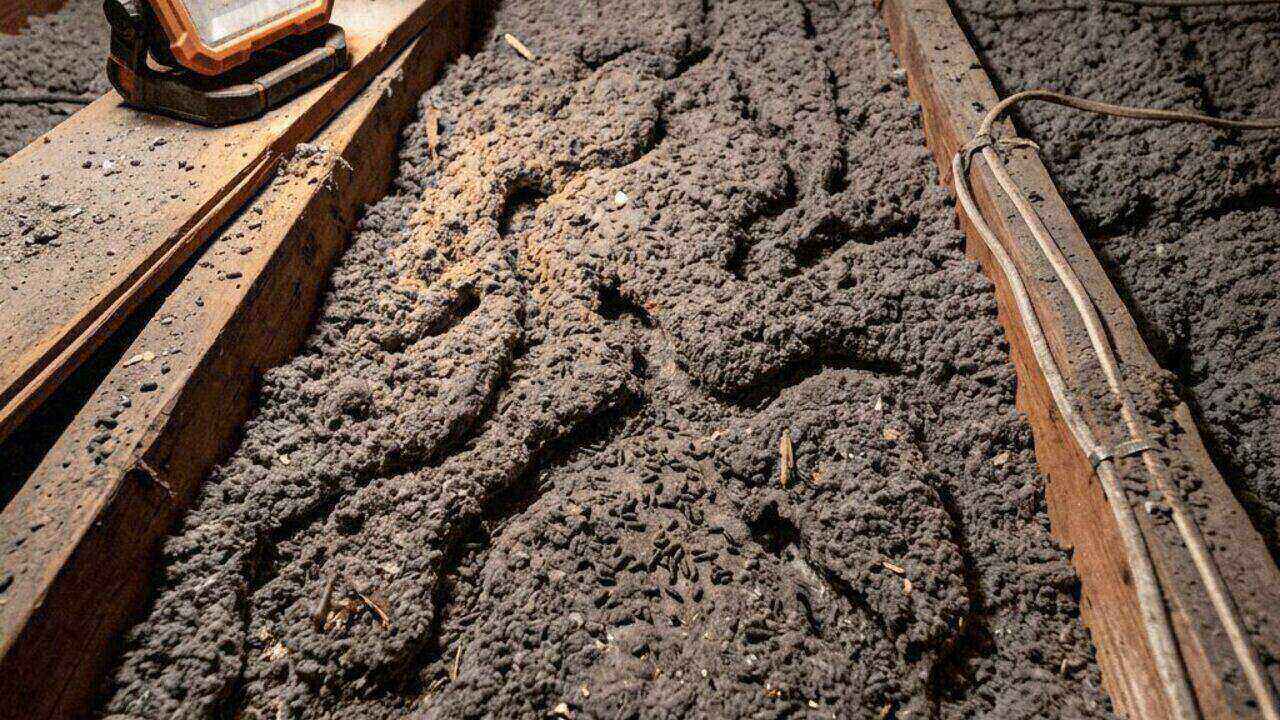
Raccoons and squirrels can leave more than a noisy attic: displaced insulation, nesting material, staining, damaged vents, and chewed areas may all need attention. The first priority is safe documentation and wildlife control, not guessing whether a claim will be approved.
Insurance policies and claim decisions vary. Your insurer decides coverage, while a qualified wildlife or pest company handles animal control and exclusion. The insulation contractor can then scope the damaged material and cleanup separately.
Document Without Disturbing the Evidence
From a safe location, photograph entry areas, disturbed insulation, nesting, stains, visible damage, and any accessible labels or dates. Write down when you heard activity and whether there was a storm, leak, or other event around the same time.
Do not enter an unsafe attic, handle wildlife, or move contaminated material to improve a photograph. Save estimates and reports in one folder, and ask your insurer whether it wants an inspection before repairs begin.
Let Each Professional Own Its Decision
Coverage depends on your policy, cause of loss, exclusions, maintenance provisions, and the insurer’s investigation. An insulation contractor cannot promise coverage or act as an insurance adjuster. Ask the carrier about notice requirements, documentation, deductibles, and authorization before committing to non-emergency work.
Universal Pest & Termite handles pest-control and exclusion work. For raccoons, squirrels, or other wildlife, confirm that the provider is equipped and authorized for the species and work in your locality; wildlife handling is not an insulation service.
Separate Wildlife Work From Insulation Repair
Once the animals and access points are addressed, an insulation inspection can identify what is displaced, compressed, wet, or contaminated. The proposal should distinguish removal, accessible-surface cleanup, treatment if appropriate, and replacement.
Roofing, structural, electrical, and plumbing repairs are separate trades when the inspection finds those issues. Universal Duct Cleaning handles duct work if the air-distribution system needs its own evaluation.
Build a Claim-Friendly Completion File
Keep the initial photographs, wildlife or pest report, insurer correspondence, approved scope, invoices, disposal records, and final photographs. Ask for a line-by-line description of areas repaired and areas not accessed, rather than a single unexplained total.
A clear file helps the insurer make its decision and gives future contractors useful context. It also prevents an insulation estimate from being misread as a guarantee about the claim or the animal-control outcome.
What to Do Next
After your insurer and wildlife or pest provider establish the next step, request a free insulation estimate for a written insulation damage assessment in Chesapeake or Suffolk. Universal Insulation Doctor will keep its scope focused on insulation-related work.
Frequently Asked Questions
Will homeowners insurance cover raccoon or squirrel damage to attic insulation?
Only your insurer can decide coverage under your policy. The decision may depend on the cause, exclusions, maintenance provisions, dates, and documentation, so report the loss and ask what it needs before authorizing non-emergency repairs.
Who removes raccoons and squirrels from an attic?
Use a qualified wildlife or pest-control provider for species-appropriate control and exclusion. Universal Pest & Termite handles pest-control and exclusion services; confirm the provider’s exact wildlife scope before work begins.
Should I replace insulation before wildlife exclusion?
Usually the animals and accessible entry points should be addressed first. Otherwise, new insulation may be disturbed again. Coordinate timing between the wildlife or pest provider and the insulation contractor.
Will an insulation contractor repair chewed wiring or roof damage?
No. Electrical and roofing repairs belong to qualified professionals in those trades. An insulation inspection can document the condition and identify that additional work is needed.
What records should I give my insurance company?
Keep dated photographs, wildlife or pest findings, contractor estimates, written scopes, invoices, disposal records, and correspondence. Ask the insurer whether it wants an inspection or approval before removal.