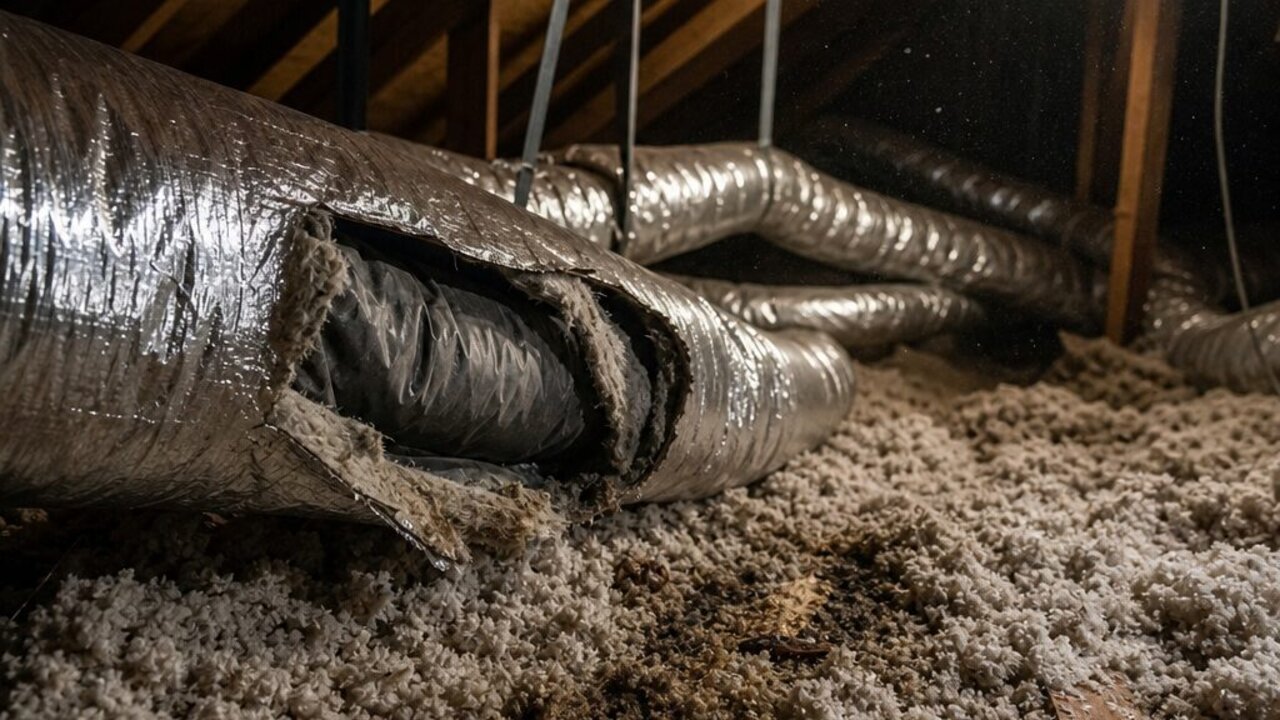
Replacing an aging HVAC unit can improve reliability, but it does not automatically correct hot upstairs rooms, sweating ducts, or high cooling loads. The equipment still has to move conditioned air through the duct system and deliver it into rooms separated from a hot attic or damp crawl space.
When comfort problems persist after an HVAC upgrade, it is useful to evaluate the duct path, attic insulation, air leakage, and crawl-space conditions together instead of treating every issue as an equipment failure.
Heat and Humidity Reach the Ducts First
Ducts routed through an unconditioned attic or crawl space are exposed to the temperature and humidity in that area. If insulation is thin, ducts are damaged, or joints leak, the system can deliver less of the conditioned air the equipment produced.
Condensation on ducts is also a diagnostic clue. It may reflect high humidity, an insulation gap, an air leak, or a temperature difference that should be evaluated by the appropriate HVAC professional.
Know Which Professional Owns Which Repair
Universal Duct Cleaning handles duct cleaning and ductwork services, while Universal Insulation Doctor evaluates attic insulation, air-sealing opportunities, crawl-space insulation, and related cleanup work. Separating those responsibilities makes the proposal clearer and helps the teams coordinate around the same comfort goal.
A reliable plan may include duct repair or sealing by the ductwork team, targeted air sealing at the attic floor, insulation improvements, and moisture management below the house. The order depends on the inspection findings.
Avoid Generic Efficiency Promises
Energy results vary with system sizing, duct condition, insulation, home layout, thermostat use, and weather. Rather than promise a percentage of savings, ask for the condition of each major part of the system to be documented and prioritized.
For homeowners in Hampton and Virginia Beach, a room-by-room comfort complaint can be a helpful starting point. Note when the problem happens, which rooms are affected, and whether it follows rain, afternoon sun, or HVAC cycling.
What to Do Next
Request a whole-home comfort evaluation through our free estimate form, then explore attic insulation in Hampton and Virginia Beach attic insulation.
Frequently Asked Questions
Why are my AC ducts sweating in the crawl space or attic?
Duct sweating can occur when humid air contacts a cold duct surface, especially where insulation is missing, damaged, or poorly sealed. It can also point to broader humidity or airflow issues, so an HVAC or ductwork professional should diagnose the cause before assuming an insulation-only repair.
What R-value duct insulation is required by building code in Virginia?
Duct-insulation requirements depend on the applicable Virginia code edition, duct location, building type, and project details. Confirm the current requirement with the local building department or a qualified HVAC professional rather than relying on a general online figure.
Does poor attic insulation shorten the lifespan of my HVAC heat pump?
Poor attic insulation can increase cooling and heating demand, which may lead to longer equipment run times, but it does not by itself prove that a heat pump will fail early. HVAC condition, sizing, maintenance, duct leakage, and operating conditions all affect equipment performance and lifespan.
How much conditioned air is lost through unsealed, uninsulated attic ducts?
The amount of loss varies widely with duct leakage, insulation condition, duct location, system pressure, and attic temperature. A qualified ductwork professional can test and inspect the system; a specific loss percentage should not be assumed without measurements.
Can insulating my crawl space help eliminate cold floors in the winter?
Improving crawl-space insulation and moisture conditions can help reduce heat loss through the floor, but cold floors may also involve air leaks, duct issues, floor construction, and thermostat settings. An inspection can determine whether crawl-space insulation is likely to address the complaint in a particular home.