A musty smell that appears when the AC starts is a clue, not a diagnosis. The source might be near a return, inside an accessible duct component, on damp insulation, at a condensate pan or drain, in a carpeted room, or somewhere outside the HVAC system altogether.
Do not declare the crawl space the culprit without inspection. Compare timing and location, then have the relevant crawl-space, duct, HVAC, or drainage condition evaluated before selecting a remedy.
Start With Timing and Location
Write down whether the odor appears at startup, after the system runs, or when the blower continues between cycles. Walk through the home and note which supply registers or return grilles are closest to the smell. A localized odor and a whole-house odor can point an evaluator toward different areas, but neither proves a source.
- Check whether the smell changes after rain or on especially humid days.
- Note any visible water near the indoor unit, drain line, or crawl-space floor.
- Record recent filter replacement, duct cleaning, plumbing work, or insulation work.
- Keep people and pets away from standing water or visibly damaged materials until they can be assessed.
Inspect the Crawl Space Without Jumping to a Conclusion
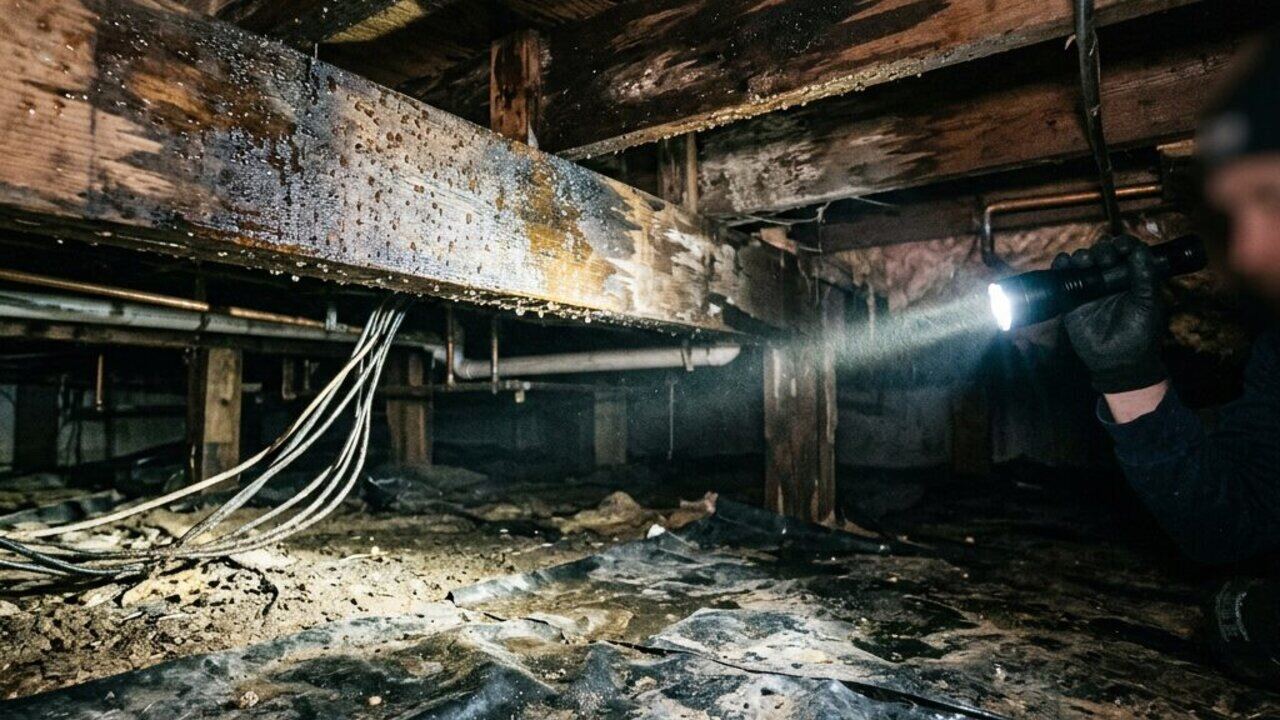
An inspection can look for wet or sagging insulation, condensation on ducts, exposed soil, standing water, plumbing leaks, damaged vapor barriers, and gaps around penetrations. Those observations help distinguish ground moisture, drainage, HVAC condensation, and other possibilities.
A damp crawl space can contribute to odor, but a smell can also originate in the air handler, duct system, wall cavity, flooring, or another room. The correct conclusion follows the evidence rather than the location homeowners fear most.
Check Ducts, Filters, and the Condensate Path
A dirty filter, wet drain pan, blocked condensate line, or damp internal component needs attention from an HVAC professional. Duct cleaning or ductwork service is a separate scope handled by Universal Duct Cleaning. An insulation contractor should not diagnose or repair HVAC equipment.
Replace a filter only with the size and type specified for the system, and never pour chemicals into a condensate line unless the equipment manufacturer or HVAC professional directs you. Stop and request service if water is near electrical components or the system is not draining correctly.
Build a Source-Based Plan
Once the source is documented, the plan may involve correcting drainage, repairing an HVAC condensate issue, cleaning appropriate duct components, removing or replacing damaged insulation, or improving crawl-space moisture control. Different trades may need to coordinate, and a written scope should make those handoffs clear.
Universal Insulation Doctor can evaluate insulation and crawl-space conditions; Universal Duct Cleaning handles duct cleaning and ductwork services; Universal Pest & Termite handles pest work if an inspection finds active pests. None should be represented as a mold-remediation, plumbing, roofing, or HVAC-equipment contractor.
What to Do Next
Start with a free estimate so the right specialist can review the conditions before work is recommended. For related planning, see our Hampton crawl-space service and Virginia Beach insulation information.
Frequently Asked Questions
Does a musty smell when the AC starts prove the crawl space is the source?
No. The crawl space is one possibility among several, including duct components, the air handler, condensate drainage, flooring, or another room. Inspection and timing observations are needed before identifying the source.
What should I check first when the AC smells musty?
Note when the odor appears and where it is strongest, then look for accessible signs of water near the indoor unit, drain path, filter, registers, and crawl-space access. Do not open equipment or enter an unsafe crawl space; request the appropriate HVAC, duct, or insulation inspection.
Who handles a musty-smelling duct system?
A qualified HVAC professional should evaluate equipment and condensate issues. Universal Duct Cleaning handles duct cleaning and ductwork services, while Universal Insulation Doctor evaluates insulation and crawl-space conditions. The responsible scope depends on inspection findings.
Can a dehumidifier remove a musty odor?
Humidity control may help when excess moisture is contributing to an odor, but it does not fix a plumbing leak, blocked drain, wet insulation, or another source. Identify and address the cause before relying on a dehumidifier.
Should I keep running the AC if there is a strong odor or water?
If there is active leaking, water near electrical equipment, unusual noise, or a strong unexplained odor, turn the system off if it is safe to do so and contact a qualified HVAC professional. Do not handle wet electrical components yourself.