How Much Insulation Do You Really Need in Your Attic and Crawlspace?
August 24, 2026
Your home works as a system, but two areas are responsible for many of the comfort complaints we hear from homeowners in Coastal Virginia: the attic and the crawlspace. Hot, humid summers and mild-to-moderate winters make a complete thermal boundary especially important in Virginia Beach, Chesapeake, Norfolk, Portsmouth, Hampton, Newport News, Suffolk, and Williamsburg.
The short answer is that most Hampton Roads attics should be evaluated against an R-60 target, while crawl-space insulation depends on whether the space is vented or encapsulated. The right amount is not just a number on a quote—it also depends on air sealing, moisture, ventilation, existing material, and the condition of the framing.
Hampton Roads insulation targets at a glance
Relative bar lengths use R-60 as the scale. Actual requirements depend on the assembly, construction year, and the current code path for the home.
Attic / ceilingR-60
About 20–22 inches of blown-in fiberglass or cellulose
Vented crawl-space floorR-19
Insulation fitted securely between the floor joists
Encapsulated crawl-space wallsR-10–R-15
Continuous or batt insulation at the foundation walls
R-value measures resistance to heat flow—the higher the number, the greater the resistance. This guide is educational; a site inspection should confirm the right assembly and material for your home.
What R-Value Means
R-value measures how strongly an insulation material resists heat flow. Higher numbers generally provide greater resistance, but the number only helps when the material is installed continuously and stays dry and at its intended depth. Compressed, wet, uneven, or contaminated insulation can perform well below its label.
Much of Virginia is treated as Climate Zone 4 for energy-planning purposes, but a home’s construction details still matter. Building codes and recommended retrofit targets can change, so an inspection should verify the current requirement rather than treating this article as a substitute for a code review.
Attic Insulation: Why R-60 Is the Common Goal
Heat rises in winter, sending conditioned air toward the attic. In summer, the roof absorbs intense solar heat and the attic can radiate that heat back toward the rooms below. That is why upstairs rooms, long air-conditioner cycles, and high summer utility bills often point to the attic first.
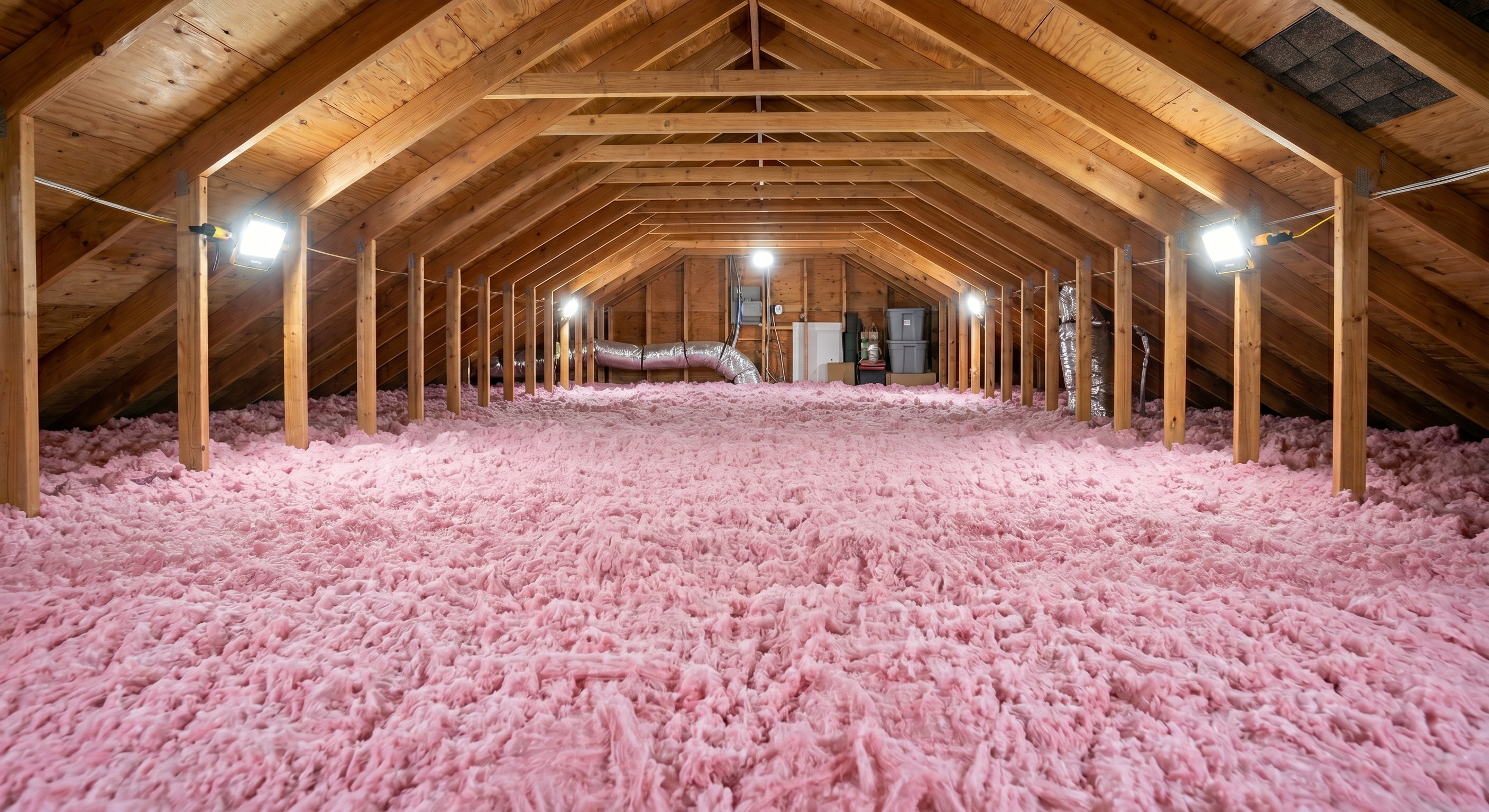
For many existing Hampton Roads homes, an attic evaluation uses R-60as the practical target. With blown-in fiberglass or cellulose, that usually means roughly 20 to 22 inches, though the exact depth varies by product. A home with only three or four inches of older insulation may need a substantial top-off, not simply a light layer spread over the visible low spots.
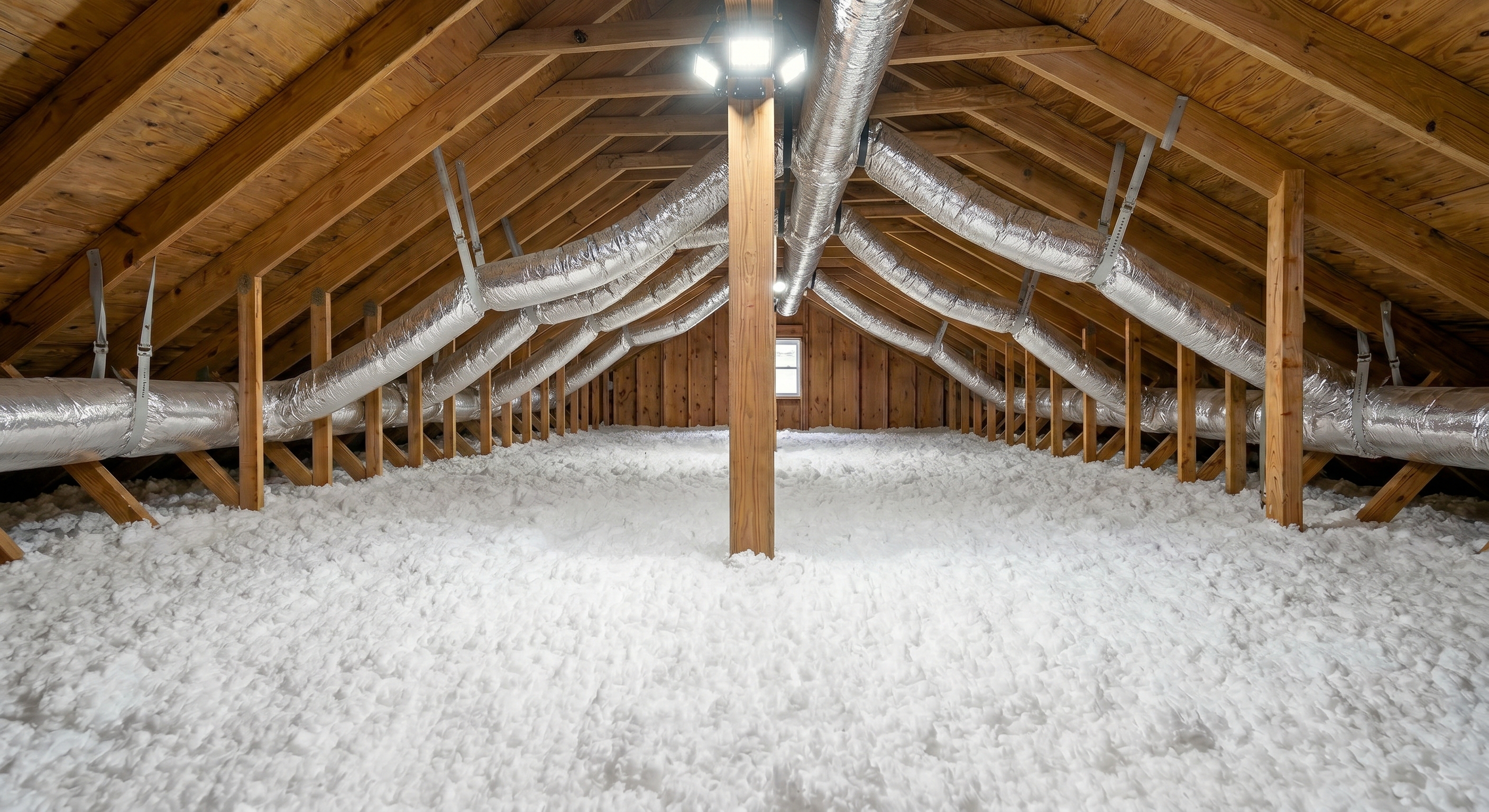
An even attic layer helps the insulation reach its intended depth without burying soffit vents or blocking access to equipment.
Depth is only one part of the attic scope. Before adding insulation, a technician should look for bypasses around light fixtures, plumbing penetrations, top plates, duct chases, and the attic hatch. Soffit and ridge ventilation must remain open, and any roof leak or condensation problem needs attention before new material is installed. See our attic insulation service page for the inspection and installation options.
Crawl-Space Insulation: The Assembly Changes the Answer
Crawlspaces do not all use the same insulation strategy. The first question is whether the space is designed to remain vented or is being brought inside the home’s conditioned boundary through encapsulation. Putting the right R-value in the wrong location can leave the moisture and comfort problem untouched.
Vented crawlspaces: insulate the floor
In a conventionally vented crawlspace, insulation is generally installed in the floor joists beneath the living space. A common planning target is R-19, using material that fits tightly and stays supported between the joists. Gaps around wiring, plumbing, ducts, and the perimeter can reduce the result even when the nominal batts are rated R-19.
Encapsulated crawlspaces: insulate the walls
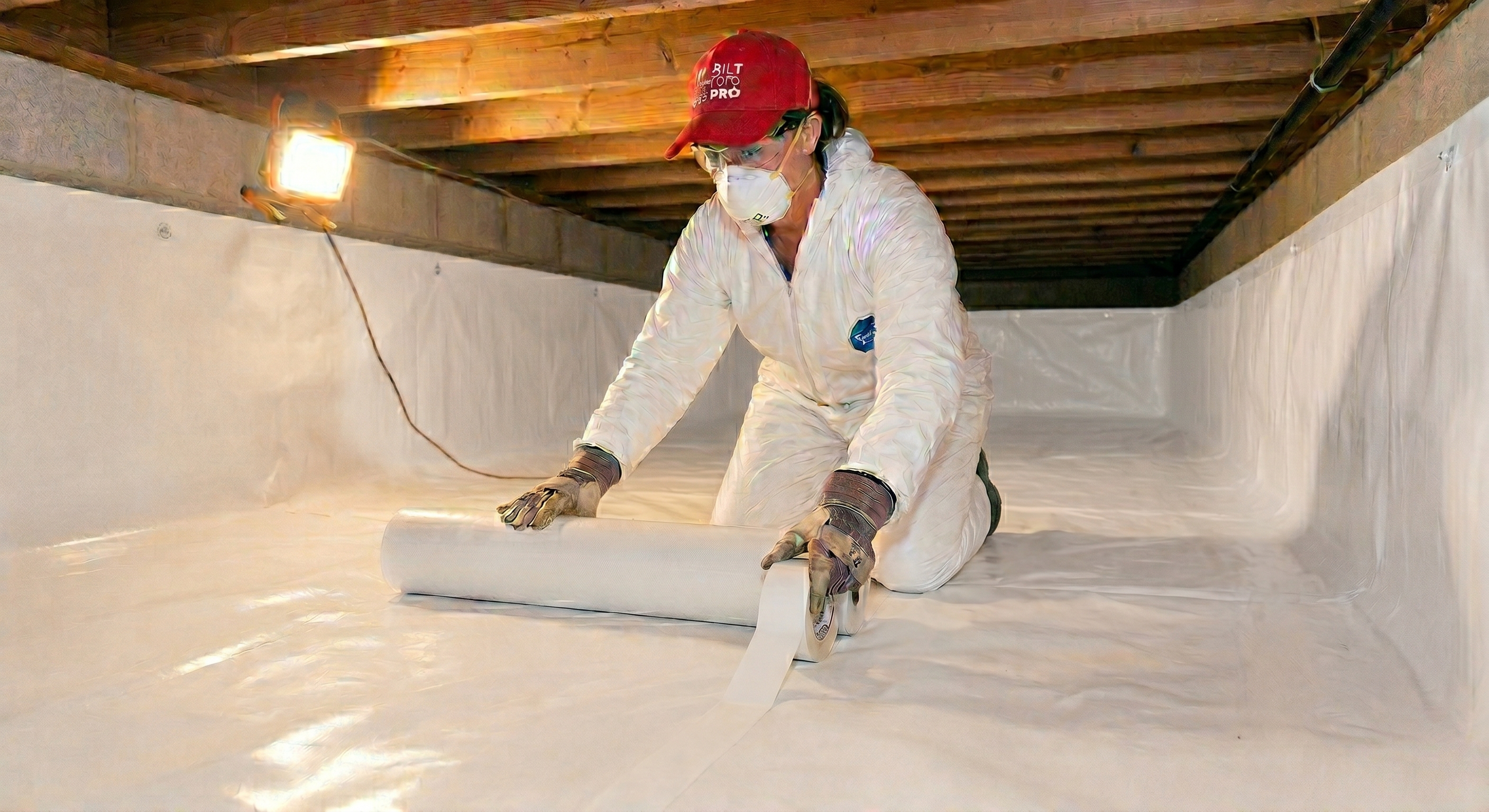
When a crawlspace is properly encapsulated and treated as part of the building envelope, insulation is generally placed at the foundation walls instead of the underside of the floor. Depending on the assembly, a common range is R-10 to R-15 of continuous or batt insulation. The project may also involve a sealed ground liner, wall treatment, air sealing, and humidity control.
Crawl-space insulation works best when the ground-moisture and air-leak conditions are addressed as part of the same plan.
A vapor barrier is not a replacement for insulation, and insulation is not a replacement for drainage or moisture control. If you see sagging batts, wet kraft facing, standing water, staining, or a strong musty odor, start with an inspection. Our crawl-space insulation and encapsulation pages explain the differences in more detail.
Why Insulating Both Areas Together Can Matter
An under-insulated attic can make the top floor uncomfortable, while a damp or poorly sealed crawlspace can affect floor temperatures, odors, and indoor humidity. Treating one area does not automatically correct the other. A whole-home assessment can show whether the best next step is an attic top-off, crawl-space floor insulation, wall insulation with encapsulation, or removal of damaged material first.
If insulation has been affected by rodents, pests, water, or mold-like staining, do not cover it with new material before the source is addressed. Our insulation removal service can be scoped with replacement when the existing material no longer belongs in the home.
How the Total Home Health Team Fits In
Some projects involve more than insulation. When rodents or other pests have entered the attic or crawlspace, Universal Pest & Termite handles pest treatment, trapping, and exclusion. If the duct system is dirty, damaged, or carrying crawlspace air, Universal Duct Cleaning can evaluate and clean the ductwork. Universal Insulation Doctor stays within its insulation scope while the Total Home Health companies coordinate the related work.
What to Ask During an Insulation Estimate
What R-value and final depth are you recommending for each area?
Is the attic floor being air-sealed before insulation is added?
Should a vented crawlspace stay vented, or is encapsulation appropriate?
What happens to wet, compressed, contaminated, or pest-damaged material?
How will soffit vents, recessed lights, access panels, and equipment remain serviceable?
How much insulation should an attic have in Hampton Roads?
Many Hampton Roads attic evaluations use R-60 as the practical target, which is often about 20 to 22 inches of blown-in fiberglass or cellulose. Actual recommendations depend on the existing material, product, air sealing, ventilation, moisture, and the current code path for the home.
What R-value is typical for a vented crawlspace floor?
A common planning target for a vented crawlspace floor is R-19 installed securely between the floor joists. The assembly also needs proper support and attention to perimeter gaps, wiring, plumbing, ducts, and moisture conditions.
What R-value is used on encapsulated crawlspace walls?
Conditioned or unvented crawlspace wall assemblies commonly use about R-10 to R-15 of continuous or batt insulation, depending on the design. Encapsulation, ground moisture, drainage, air sealing, and humidity control should be evaluated with the wall insulation.
Can I add new insulation over old insulation?
Sometimes, if the existing insulation is dry, clean, stable, and not blocking ventilation. Wet, compressed, contaminated, pest-damaged, or deteriorated material should be evaluated for removal before replacement is added.
Does a vapor barrier replace crawlspace insulation?
No. A vapor barrier helps limit moisture rising from exposed soil, while insulation slows heat flow. A crawlspace plan may need both, along with air sealing, drainage work, or humidity control depending on the source of the problem.
Ready for a Free Estimate?
Universal Insulation Doctor serves all of Hampton Roads. Call now or fill out our quick form — we'll get back to you same day.