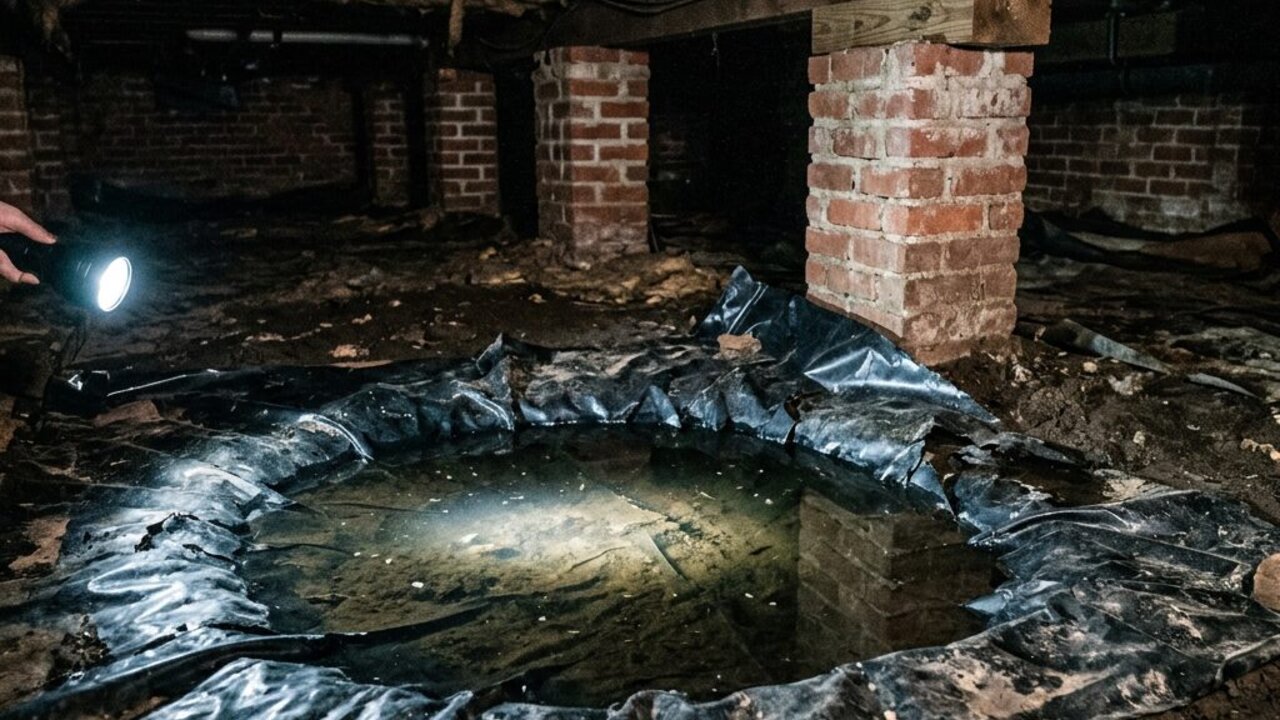
A wet crawl space after a heavy coastal rain is a water-management problem first and an insulation problem second. In Virginia Beach and Poquoson, low-lying sites, high water tables, roof runoff, and storm conditions can all contribute to water below the floor.
The right response is to document where the water is coming from and how long it remains. A liner or new insulation should not be installed over an unresolved source of standing water.
Start by Finding the Entry Path
Water may arrive through grading that directs runoff toward the foundation, downspouts that discharge too close to the house, plumbing leaks, surface flooding, or rising groundwater. Each condition needs a different solution, and some may require a drainage or foundation specialist.
Take photos after rain, note the water depth and location, and check whether the problem follows a specific gutter, downspout, or side of the home. That record makes the inspection more productive.
Wet Insulation Usually Needs a Careful Review
Fiberglass that stays wet, sags, or collects debris may no longer perform well and can keep the crawl space difficult to dry. The condition of the insulation, vapor barrier, wood framing, and subfloor should be assessed after the source of water is addressed.
A crawl-space plan may include a sealed ground liner and humidity management once drainage and bulk-water conditions are under control. The appropriate liner thickness, wall detail, and equipment depend on the home’s layout and access.
Flood Zones Need Local Verification
Flood-zone requirements, flood vents, permits, and allowable modifications can be site-specific. Homeowners should check the current floodplain rules with the local jurisdiction and consult the appropriate qualified professional before making changes that could affect flood performance or insurance.
An automatic sump system can move water from a collection point when it is properly designed and maintained, but it is not a substitute for evaluating the source of water or the home’s floodplain requirements.
What to Do Next
For insulation and crawl-space condition help, request a free crawl space assessment in Virginia Beach or visit our Poquoson service page.
Frequently Asked Questions
What should I do if water stands in my crawl space after a heavy rain in Virginia Beach?
Document the water location and depth, keep electrical safety in mind, and identify obvious roof-runoff or plumbing issues without entering an unsafe space. A qualified professional can help determine whether the source is surface runoff, a leak, groundwater, or flooding and recommend the appropriate next step.
What happens to wet crawl space fiberglass insulation after a flood?
Wet fiberglass can lose its loft, sag, hold debris, and become difficult to dry thoroughly in a closed or humid crawl space. Its condition should be inspected after the water source is controlled so the replacement or removal decision is based on the actual material condition.
Do flood-zone homes need special crawl space encapsulation setups and flood vents?
Flood-zone requirements and flood-vent decisions are property-specific and may be regulated by local floodplain rules. Confirm the current requirements with the local jurisdiction and qualified floodplain or building professionals before modifying a crawl space in a mapped flood area.
How does an automatic crawl space sump pump system protect my foundation?
A properly designed sump system can collect and discharge water from a low point, helping manage certain water-entry conditions. It does not identify or eliminate every source of water, and it requires correct installation, power planning, maintenance, and a lawful discharge path.
Can moisture in my crawl space cause hardwood floors to cup and buckle upstairs?
Excess moisture below a home can affect wood flooring and framing, but cupping and buckling can also be caused by indoor humidity, spills, installation conditions, and other factors. A crawl-space inspection can identify whether below-floor moisture is contributing to the flooring issue.