

Spiking Electric Bills After Pest Removal? How Mouse Damage Wrecks Insulation in Newport News & Fox Hill Homes
August 5, 2026
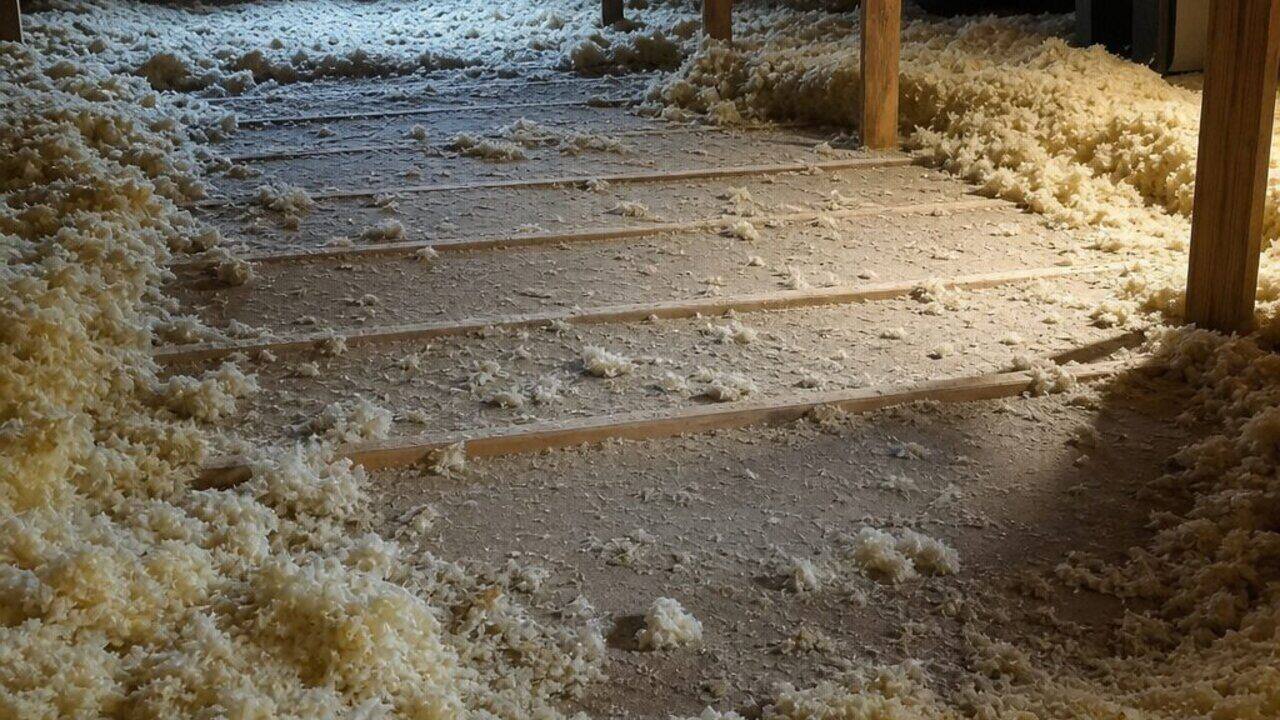
You paid for the pest work. The problem is solved. And then the July bill arrives higher than last July, the upstairs still won't hold temperature, and the air handler is running most of the afternoon.
Homeowners on the Peninsula tend to assume this is bad luck, an aging HVAC system, or a rate increase. Usually it's simpler than that: the insulation in the attic is no longer doing its job, and the rodents are the reason.
What Rodents Actually Do to Insulation's Thermal Performance
Fiberglass and cellulose don't insulate because of the material itself. They insulate because of the air trapped inside their structure. Anything that collapses that structure destroys the R-value, and rodents do it three ways at once.
Compression.A nesting colony flattens insulation into dense mats. Blown-in fiberglass installed at 16 inches for R-49 might be compressed to five or six inches across a nesting zone. Compressed insulation does not recover when the animals leave — the loft is gone permanently.
Tunneling.Mice create runways through the insulation between entry points, food sources, and nests. Each tunnel is a channel of open air through what's supposed to be a continuous thermal blanket. Heat takes the path of least resistance, and a tunneled attic gives it dozens.
Saturation.Urine soaks in and mats fibers together. Wet or previously-wet fiberglass loses loft and does not bounce back once dry. This is also the mechanism that spreads contamination far past the visible nesting area.
The net effect in a badly affected attic is an effective R-value well below what the label says — sometimes a fraction of it — with the worst losses concentrated over the rooms nearest the nesting. That's why the complaint is so often "one bedroom won't cool" rather than "the whole house is hot."
Why Fox Hill and Newport News Homes Get Hit Hard
Fox Hill (Hampton, 23664)is an old waterman's community out toward Grandview and the Back River — low elevation, salt marsh on multiple sides, and a housing stock that's largely 1950s through 1970s. Marsh-edge properties see steady rodent pressure from the surrounding wetlands, and low-slope attics in ranch construction make it easy for nesting to cover a large share of the total attic footprint rather than staying in one corner.
Newport Newsspans a wider range. Hilton Village, the WWI-era planned community, has small dormered attics where even limited nesting affects a big percentage of the insulated area. Denbigh and the mid-century neighborhoods along the Warwick corridor have larger attics but often original insulation depths that were marginal to begin with — R-19 or R-30 in homes that should be at R-49. Rodent damage on top of an already-thin attic pushes performance off a cliff.
Putting a Number on It
Attic insulation and air sealing may improve efficiency for a Hampton Roads homeowner, and the Department of Energy recommends R-49 to R-60 for attics in our climate zone. Actual financial return varies by home, scope, cost, usage, and energy rates. An attic that has dropped from R-38 to an effective R-15 through nesting damage is losing conditioned air continuously through the largest surface in the house.
We won't put a guaranteed dollar figure on your specific home. Restoring an attic from heavily damaged insulation back to full R-49 may reduce heat transfer and HVAC demand, but actual utility impacts depend on HVAC efficiency, thermostat habits, air tightness, the affected area, weather, and energy rates.
Contaminated material may need replacement for health and performance reasons. Project timing should depend on the inspection findings, contamination, budget, and written scope; no utility savings or payback is guaranteed.
Contamination and Efficiency Are the Same Project
There's no version of this where you address the R-value and leave the contamination, or vice versa. The damaged insulation is the contaminated insulation. It comes out, the deck gets HEPA-vacuumed and treated with an antimicrobial, and new material goes in at full depth.
What has to happen first is exclusion. New insulation in an unsealed attic gets re-damaged. Universal Pest & Termite handlesrodent removal and entry-point sealingthrough theirHamptonandNewport Newsteams, and we schedule the insulation work behind them.
Details for your area are on ourHampton attic insulation,Newport News attic insulation, andFox Hillpages. Removal scope is covered underHamptonandNewport News insulation removal, and we've written a fuller Peninsula guide atattic insulation for Hampton and Newport News.
Frequently Asked Questions
Can damaged insulation be fluffed back up instead of replaced?
No. Once fiberglass has been compressed by nesting or matted by urine, the fiber structure that traps air is broken. Raking or fluffing redistributes material but doesn't restore loft, and in contaminated attics it aerosolizes exactly the particles you don't want airborne. Topping off over damaged material is also a poor investment — you're paying for new insulation and leaving the compromised layer underneath.
Bills climbing and you can't find the reason? Get a free home inspection
Only part of my attic had nesting. Do I have to replace all of it?
Usually yes, and it's worth understanding why. Urine spreads well past the visible nesting site and leaves no trace once dry, so there's no reliable way to draw a clean line between affected and unaffected material. Partial replacement also creates an uneven depth profile, which produces exactly the thermal bridging the new insulation was meant to eliminate. We'll tell you honestly at inspection if a partial scope makes sense for your attic.
Want to know what depth your attic should be at? See attic insulation depths
Will my homeowners insurance cover rodent damage to insulation?
Most policies exclude rodent and vermin damage as a maintenance issue, though coverage varies and some carriers treat sudden, accidental events differently. It's worth calling your agent before you assume either way, and it's worth having documentation regardless — we photograph conditions before and after as part of every project, which gives you something concrete to submit if your policy does apply.
Curious what the fix runs? See current pricing
Free Attic Energy Assessment on the Peninsula
We serve Fox Hill, all ofHampton, andNewport News. We'll measure your current depth, document rodent damage, and quote the restoration in writing.
Ready for a Free Estimate?
Universal Insulation Doctor serves all of Hampton Roads. Call now or fill out our quick form — we'll get back to you same day.
Have a Question?
Can't find the answer you're looking for? Our team is always happy to help. Give us a call or fill out the form for a free no-obligation consultation.
(757) 962-0340