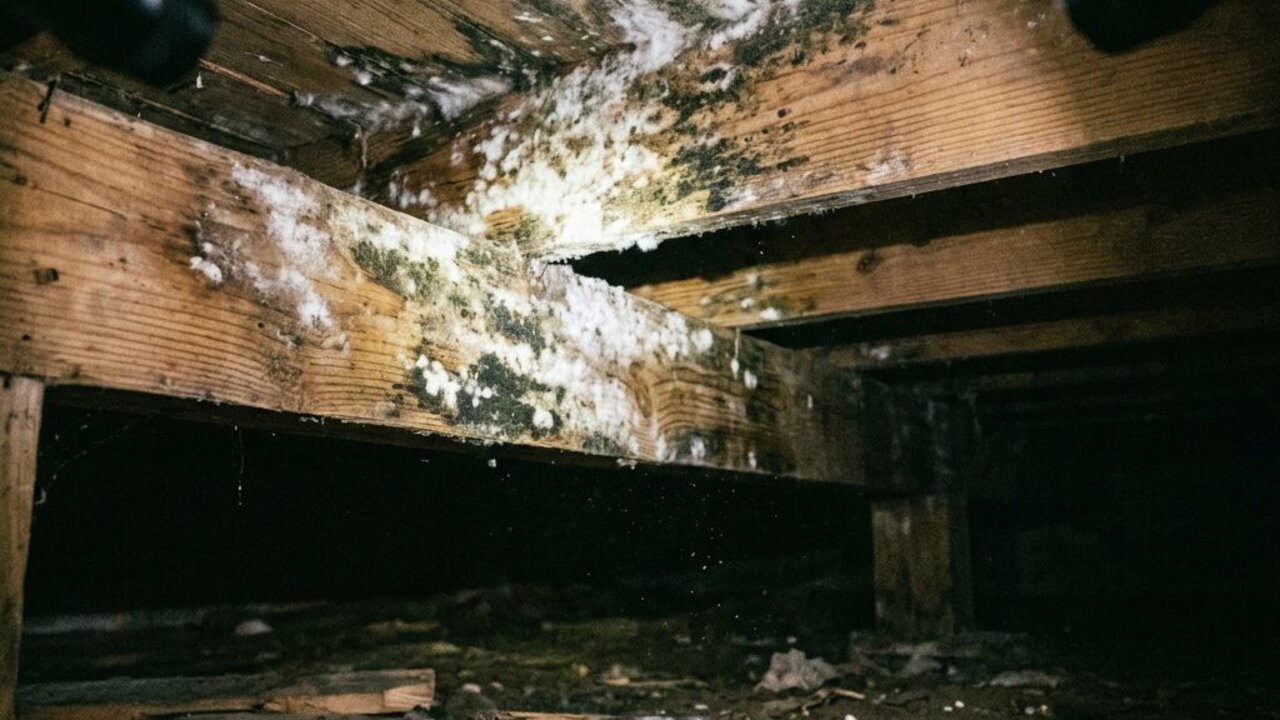
Dark spots on crawl-space joists can be alarming, but a visual mark is only an observation. Dust, staining, surface growth, old water marks, and other conditions can look similar in a photograph. An insulation inspection can document nearby materials and moisture clues; it cannot identify a substance or diagnose a regulated remediation need from appearance alone.
Start with careful documentation and a moisture-source investigation. Encapsulation may be one part of a moisture-control plan, but it should not conceal affected materials or substitute for an independent assessment when one is needed.
Document the Spots Without Disturbing the Crawl Space
Use dated photographs with a ruler or other scale, and record whether spots occur on floor joists, subfloor, piers, insulation, or stored items. Note odor, dampness, recent rain, standing water, condensation, and whether the appearance has changed.
Avoid dry brushing, sanding, spraying household products, or removing material before the condition is scoped. Disturbance can spread dust and remove evidence. An insulation inspection should begin with observation, not a promise to identify the spots by sight.
- Photograph both close details and the full crawl-space context
- Record humidity and visible water only if you can do so safely
- Check for plumbing leaks, exterior water entry, and exposed soil moisture
- Note wet insulation, damaged liners, and blocked or open access points
Investigate the Moisture Source Before Choosing a Scope
Ground vapor, condensation, rainwater, plumbing leaks, and drainage conditions require different responses. A sealed liner can limit ground vapor, but it does not repair plumbing or roof leaks, remove damaged material, or solve every foundation-water condition.
Ask an inspector to document humidity, water patterns, liner condition, insulation, and visible wood without calling the spots a confirmed substance. If testing, regulated remediation, or a health-related concern is involved, select the appropriate independent qualified provider and clarify what the evaluation covers.
What an Insulation Inspection Can and Cannot Tell You
An insulation inspection can describe wet, displaced, compressed, or contaminated-looking insulation; visible water; humidity; access conditions; and nearby framing observations. It can help define insulation removal or moisture-control questions while preserving a clear record of what was actually seen.
It cannot confirm the identity of dark spots, determine a health effect, establish structural capacity, or serve as regulated remediation. Universal Insulation Doctor focuses on insulation and crawl-space moisture-control work and does not provide regulated mold remediation, structural repair, roofing, plumbing, or insurance adjusting.
Match the Next Step to the Finding
If wood appears structurally damaged, arrange a structural evaluation. If a leak is active, call the relevant plumbing, roofing, or drainage professional. If you are concerned about a specific exposure or symptoms, discuss those concerns with a qualified healthcare professional and an appropriate environmental specialist.
A written plan should separate moisture-source correction, material decisions, insulation work, and any independent assessment. That prevents an encapsulation proposal or insulation inspection from being presented as a diagnosis or remediation guarantee.
What to Do Next
Request a free crawl-space moisture assessment and review the crawl-space insulation service before deciding on encapsulation. You can also compare the current service pricing.
Frequently Asked Questions
Do dark spots on crawl-space joists prove mold is present?
No. Visual appearance alone cannot identify a substance or establish a diagnosis. An inspection can document the marks and surrounding moisture conditions, while any testing or regulated remediation decision belongs with the appropriate qualified provider.
What can an insulation inspection tell me about dark joists?
It can document visible conditions such as damp or displaced insulation, humidity, water patterns, access, and nearby framing observations. It cannot confirm the identity of spots, diagnose health effects, or determine structural capacity.
Should I encapsulate before the dark spots are evaluated?
No. Document the condition and investigate moisture first. Encapsulation may address documented ground moisture, but it should not cover affected materials or replace an assessment that calls for another specialist.
Who handles regulated mold remediation if it is recommended?
Universal Insulation Doctor does not provide regulated mold remediation. Select the appropriate qualified remediation or environmental provider and clarify the scope before work begins.
What should I do if my family has symptoms near a musty crawl space?
Discuss symptoms with a qualified healthcare professional. A contractor can document building moisture and material conditions, but should not diagnose illness or promise a health outcome.