

What Is That Smell Coming from My Crawlspace? A Hampton Roads Homeowner's Guide
August 16, 2026
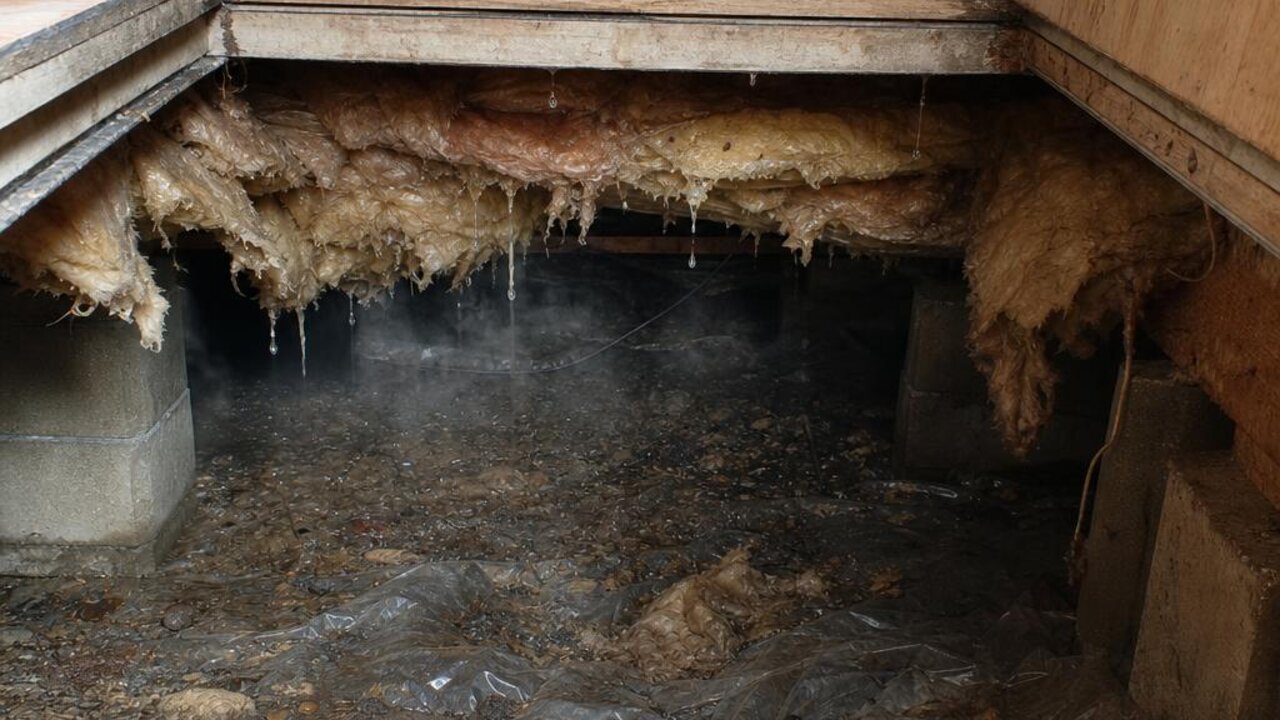
If your Hampton Roads home has a smell that's hard to place — musty when you walk in, earthy near the floor registers, or suddenly much worse after heavy rain — the crawlspace is almost certainly involved. In a coastal region where the water table is measured in inches, tidal flooding is routine in Virginia Beach and Norfolk, and summer humidity runs above 70% for months, crawlspace problems develop fast and spread further than most homeowners expect.
Most crawlspace smells have a clear cause and a clear fix. Here's how to read the odor.
Quick Answer
1. Musty or Mildew Smell: Moisture and Mold
The most common crawlspace smell in Hampton Roads is a persistent mustiness — earthy, damp, strongest after rain or during the humid months of June through September. This is moisture, not necessarily visible mold (though the two often arrive together). In Virginia Beach's tidal neighborhoods — Kempsville (23462), Chic's Beach (23455), and Princess Anne (23456) — and in Chesapeake's Great Bridge (23322) and Deep Creek (23323), ground moisture migrates up through bare crawlspace earth continuously. Without a vapor barrier, it saturates subfloor insulation within a year or two of installation and begins colonizing the wood joists above it.
The fix depends on severity. A vapor barrier replacement — a thick poly liner sealed across the crawlspace floor — stops ground moisture migration and runs $800–$2,500. A full encapsulation (liner sealed to foundation walls, vents closed, perimeter sealed) runs $5,500–$10,500 and is the complete solution for chronic moisture. Add a dehumidifier to maintain crawlspace RH below 50% year-round and budget $7,500–$16,500. If the smell has been present for years, the subfloor insulation is likely already saturated and needs to come out before the liner goes in — $1,400 to $3,800 covers that removal and replacement.
2. Ammonia or Animal Smell: Active Rodent Infestation
A sharp smell described as "like a pet store" or a strong ammonia note is rodent urine. In Portsmouth's Churchland (23703), Hampton's Greater Wythe (23661), and Norfolk's Ocean View (23503), the combination of older housing stock and mature tree canopy creates consistent rodent pressure on crawlspaces. Rats and mice nest in subfloor insulation batts because they're warm, dry, and rarely disturbed.
Do not start with insulation removal if rodents are still active. The correct first step is exclusion — sealing every crawlspace entry point — performed by our sister company Universal Pest & Termite. Once the infestation is cleared and confirmed inactive, we remove the contaminated subfloor insulation, sanitize the crawlspace, and reinstall clean material. Installing fresh insulation before exclusion is complete wastes the entire investment — a new colony will nest in it within weeks.
3. Dead Animal Odor: Decay in the Crawlspace
A sweet, heavy smell that builds over a few days and then slowly fades is almost always a dead animal — typically a rat or squirrel that entered and couldn't exit. The smell peaks around day 3–7 and gradually dissipates over 2–3 weeks, but the carcass and any contaminated insulation surrounding it remain and can attract secondary pest activity. We remove contaminated insulation and sanitize the area. In Suffolk (Harbour View 23435) and Chesapeake's Western Branch (23321), where crawlspace piers and older block foundations create multiple access points, dead animals in the subfloor are a recurring issue in homes that haven't had entry points professionally sealed.
4. The Smell Is Strongest When the HVAC Runs: Ducts
If the odor peaks when the air handler kicks on and blows through registers, the crawlspace smell has entered the duct system. This happens when ductwork runs through the crawlspace — standard in most Hampton Roads homes built before 2000 — and a failed duct joint or torn flex liner is pulling crawlspace air into the conditioned supply stream. Musty air from the vents in summer is the most common presentation.
This is a two-part fix: we address the crawlspace moisture or contamination source, and our sister company Universal Duct Cleaning inspects and cleans the duct interior. We coordinate both scopes so the crawlspace and the duct system are addressed in the same service window wherever possible — no second mobilization, no second day of disruption.
5. Rotten Egg or Sulfur Smell: Sewer Gas
A sulfur or rotten egg smell is typically sewer gas — hydrogen sulfide from a dry P-trap or a cracked pipe — and is a plumbing issue, not an insulation one. We mention it here because it's frequently misdiagnosed as a crawlspace problem. If a plumber has cleared the P-traps and the smell persists, call us for a free inspection to rule out crawlspace involvement. In some cases, organic decay in the crawlspace produces a similar smell, and we can distinguish between the two.
Related pages: crawl space encapsulation, crawl space insulation, insulation removal, Chesapeake insulation services, Norfolk insulation services.
Frequently Asked Questions
Why does the crawlspace smell worse in summer?
Humidity. Hampton Roads summer air runs 80–90% relative humidity in July and August. When that air reaches the crawlspace through open foundation vents or rim-joist gaps, it contacts cooler surfaces, condenses, and turbocharges mold and bacteria activity. The same mold that was quiet all winter becomes very active in summer heat. Full encapsulation eliminates this cycle by keeping humid outdoor air out entirely. Read about crawl space encapsulation or book a free inspection.
Not sure if yours needs a patch or a full restoration? Get a free crawl space inspection
Can crawlspace odors affect my family's health?
Yes. Mold spores, rodent waste particles, and volatile organic compounds from decaying material become airborne and migrate into living spaces through subfloor gaps and through the HVAC system. Crawlspace air quality directly affects indoor air quality in any home that isn't encapsulated — research consistently finds that 40–60% of the air in a home's first floor comes from the crawlspace. People with asthma, allergies, or respiratory conditions are often the first in the household to notice the problem. Call (757) 962-0340 to schedule a free crawlspace inspection.
Think moisture is the underlying problem? Read about encapsulation
My Virginia Beach home near the bay floods occasionally. Is that driving the smell?
Directly. Tidal flooding in Virginia Beach — common in Kempsville near Lake Tecumseh, along Shore Drive in Chic's Beach, and in neighborhoods adjacent to Lynnhaven Inlet — pushes standing water into crawlspaces repeatedly over a home's life. Even after the water recedes, residual moisture in the soil and saturated insulation continues generating odor and mold for months. Homes in flood-adjacent VB neighborhoods almost always need full encapsulation rather than just a vapor barrier to permanently break the cycle. Get a free crawlspace inspection — we assess the flood history and measure current moisture levels.
Want the cost before you commit to anything? See crawl space pricing
How do you get rid of the smell permanently — not just temporarily?
Permanently means eliminating the source, not masking it. For moisture-driven smell: remove saturated insulation, treat any mold on the framing, install a sealed encapsulation liner, close the foundation vents, and add a dehumidifier to hold crawlspace RH below 50%. For rodent-driven smell: Universal Pest & Termite does the exclusion first, then we do the removal, sanitization, and reinstall. Odor neutralizers and foggers are 2-week fixes. A sealed, dry crawlspace is permanent. See crawl space pricing.
Not sure if yours needs a patch or a full restoration? Get a free crawl space inspection
Can you encapsulate just the section where the smell is worst?
Rarely. Moisture migrates continuously through soil — a partial liner leaves uncovered sections that keep generating humid air, which then moves laterally under the floor and undermines the encapsulated area. Full perimeter coverage is almost always necessary for the solution to hold. We'll confirm this at the free inspection and tell you honestly if a partial scope is genuinely appropriate for your crawlspace — it does happen in very specific layouts, but it's uncommon in Hampton Roads where ground moisture is present throughout the crawlspace floor. Schedule a free crawlspace inspection.
Think moisture is the underlying problem? Read about encapsulation
Free Crawlspace Inspection — All Hampton Roads
We inspect and treat crawlspaces across Virginia Beach, Chesapeake, Norfolk, Portsmouth, Hampton, Newport News, Suffolk, and Williamsburg. Free written estimate, no obligation — same-week scheduling available.
Recent Work in Virginia Beach, Chesapeake, Norfolk, Portsmouth, Hampton and Suffolk
Recent Crawlspace Jobs Across Hampton Roads
6 recent crawlspace projects completed in Virginia Beach, Chesapeake, Norfolk, Portsmouth, Hampton and Suffolk, serving homeowners across Virginia Beach, Chesapeake, Norfolk, Portsmouth, Hampton and Suffolk, including work near Kempsville, Great Bridge, Ocean View and Churchland. Click any pin for the neighborhood and service details.
Showing 6 recent completed jobs · Click a pin to see service details
5 Most Recent Jobs
Full vapor barrier, sealed vents and dehumidification installed to lock out ground moisture.
Moisture-damaged and rodent-contaminated insulation removed and disposed of safely.
Full vapor barrier, sealed vents and dehumidification installed to lock out ground moisture.
Sub-floor and rim joist insulation installed to stop cold floors and heat loss.
Full vapor barrier, sealed vents and dehumidification installed to lock out ground moisture.
Ready for a Free Estimate?
Universal Insulation Doctor serves all of Hampton Roads. Call now or fill out our quick form — we'll get back to you same day.
Have a Question?
Can't find the answer you're looking for? Our team is always happy to help. Give us a call or fill out the form for a free no-obligation consultation.
(757) 962-0340