

Why Your Crawlspace Still Smells Like Mice: Vapor Barrier Restoration in Olde Towne Portsmouth & Harbour View
August 10, 2026
The rodents are gone. You can see the sealed entry points. And on the first warm, humid morning after, you walk into the kitchen and the smell is right back.
This is one of the most frustrating situations a homeowner deals with, because everything looks like it should be resolved. The reason it isn't is almost always below the floor, and it's almost always the vapor barrier.
Where the Odor Is Actually Coming From
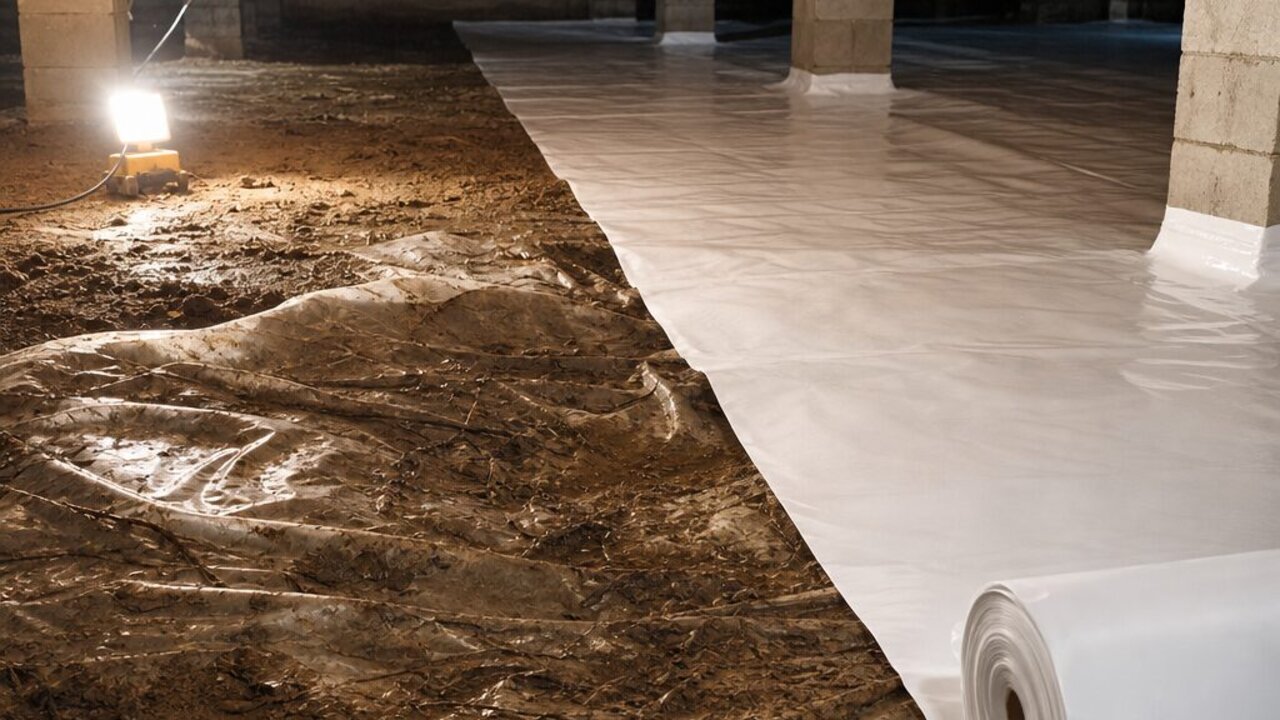
A crawl space vapor barrier is a sheet of poly laid over the soil to stop ground moisture from evaporating up into the structure. When it's intact, it does something else useful: it keeps anything that falls in the crawl space on top of a cleanable plastic surface instead of in the dirt.
When rodents have been living down there, three things go wrong at once.
The barrier gets torn.Rodents burrow under and through poly readily, and a barrier that's been in place fifteen or twenty years is already brittle at the seams. Every tear is a place where waste reaches soil.
Waste in soil doesn't stop off-gassing.Urine that has soaked into crawl space dirt is a reservoir. It can't be vacuumed, can't be effectively surface-treated, and re-releases odor every time humidity rises — which in Hampton Roads is most of the year.
The exposed soil now drives the moisture cycle too.A torn barrier stops controlling ground evaporation, so the crawl space runs wetter, which accelerates microbial growth on the joists and the paper facing of the insulation, which produces its own musty odor layered on top of the rodent smell.
That's why deodorizers, foggers, and charcoal bags produce two weeks of improvement and then fail. They treat the air. The source is in the ground.
Olde Towne and Harbour View: Two Very Different Crawl Spaces, Same Outcome
Olde Towne Portsmouth (23704)holds one of the largest concentrations of historic homes on the East Coast — colonial, Federal, Greek Revival, and Victorian stock, much of it on brick pier foundations with dirt floors and no barrier at all as originally built. Barriers in these homes are retrofits, often laid loose over uneven ground, cut around piers, and never fully sealed at the perimeter. Rodents move under them easily. Add close-set buildings, alley access, and mature street trees, and the pressure is constant.
Harbour View (Suffolk, 23435)is the opposite: mostly 1990s through 2010s construction off the Nansemond River near the I-664 corridor. Newer homes, tighter framing, modern barriers. What Harbour View has instead is water. The soils drain poorly, the water table sits high, and crawl spaces here run persistently humid. Wet conditions attract rodents seeking water, degrade the barrier faster, and make odor problems worse once waste is present.
Historic dirt floor or twenty-year-old poly over saturated clay — in both cases the fix is the same.
What Actually Removes the Smell
1. Confirm exclusion is complete.Nothing below matters if there's still a way in. Universal Pest & Termite coversrodent trapping and exclusionthrough theirPortsmouthandSuffolkteams.
2. Remove the contaminated insulation and the old barrier together.Not one or the other. Batts come down, the barrier comes out, and both leave the site bagged.
3. HEPA-vacuum and treat the exposed structure.Joists, subfloor, sill, and piers get vacuumed and treated with a product-appropriate surface treatment. This is the step that addresses odor bound into the wood, which is why it can't be skipped in a historic Olde Towne home where the framing is the original timber.
4. Address the soil.Where waste has reached the ground, contaminated surface material is removed before anything new is laid.
5. New 20-mil barrier, sealed properly.Overlapped seams, taped, run up the foundation walls and sealed at the piers — not loose poly cut to fit. This is what separates the ground from the space above it for the long term.
6. New insulation, and a moisture plan.In a crawl space that runs wet, replacing batts without addressing humidity buys you a few years. Fullencapsulation in PortsmouthorSuffolk, with a dehumidifier where conditions call for it, is the durable answer in Harbour View especially.
We're deliberate about the language here: this process removes the source of the odor. It isn't a fragrance treatment, and anyone promising to permanently destroy odor molecules while leaving contaminated soil and a failed barrier in place is selling you a scent, not a repair.
Neighborhood detail:Olde Towne crawl space insulation,Olde Towne services,Harbour View services, and nearbyChurchland. Removal scope is onPortsmouthandSuffolk insulation removal.
Frequently Asked Questions
Can I just lay a new barrier over the old one?
No — that traps the contamination underneath rather than removing it, and it does nothing about waste that has already reached the soil. It also makes any future work harder and more expensive, because now two layers have to come out. The old barrier is part of what gets disposed of.
Not sure if yours needs a patch or a full restoration? Get a free crawl space inspection
My Olde Towne house has a dirt-floor crawl space with almost no headroom. Can you even work in it?
Usually, yes — low-clearance historic crawl spaces are routine work for us in Portsmouth. What we'll tell you honestly at inspection is when clearance is genuinely too tight for full encapsulation, in which case we'll scope what is achievable: removal, sanitizing, and a sealed barrier, even where a full encapsulation build-out isn't physically possible.
Think moisture is the underlying problem? Read about encapsulation
Does the smell mean my family is being exposed to something harmful?
If you can smell the crawl space in your living area, air is moving from the crawl space into your living area — and that air carries whatever else is down there, including particulate from dried rodent waste. The CDC's guidance on hantavirus concerns airborne particles from droppings and urine in enclosed spaces. Odor is the signal that the pathway exists; it's worth treating as a health matter rather than a nuisance.
Want the cost before you commit to anything? See crawl space pricing
Free Crawl Space Inspection — Portsmouth & Suffolk
Serving Olde Towne, Harbour View, and all ofPortsmouthandSuffolk. We'll take moisture readings, photograph the barrier condition, and give you a written scope.
Ready for a Free Estimate?
Universal Insulation Doctor serves all of Hampton Roads. Call now or fill out our quick form — we'll get back to you same day.
Have a Question?
Can't find the answer you're looking for? Our team is always happy to help. Give us a call or fill out the form for a free no-obligation consultation.
(757) 962-0340