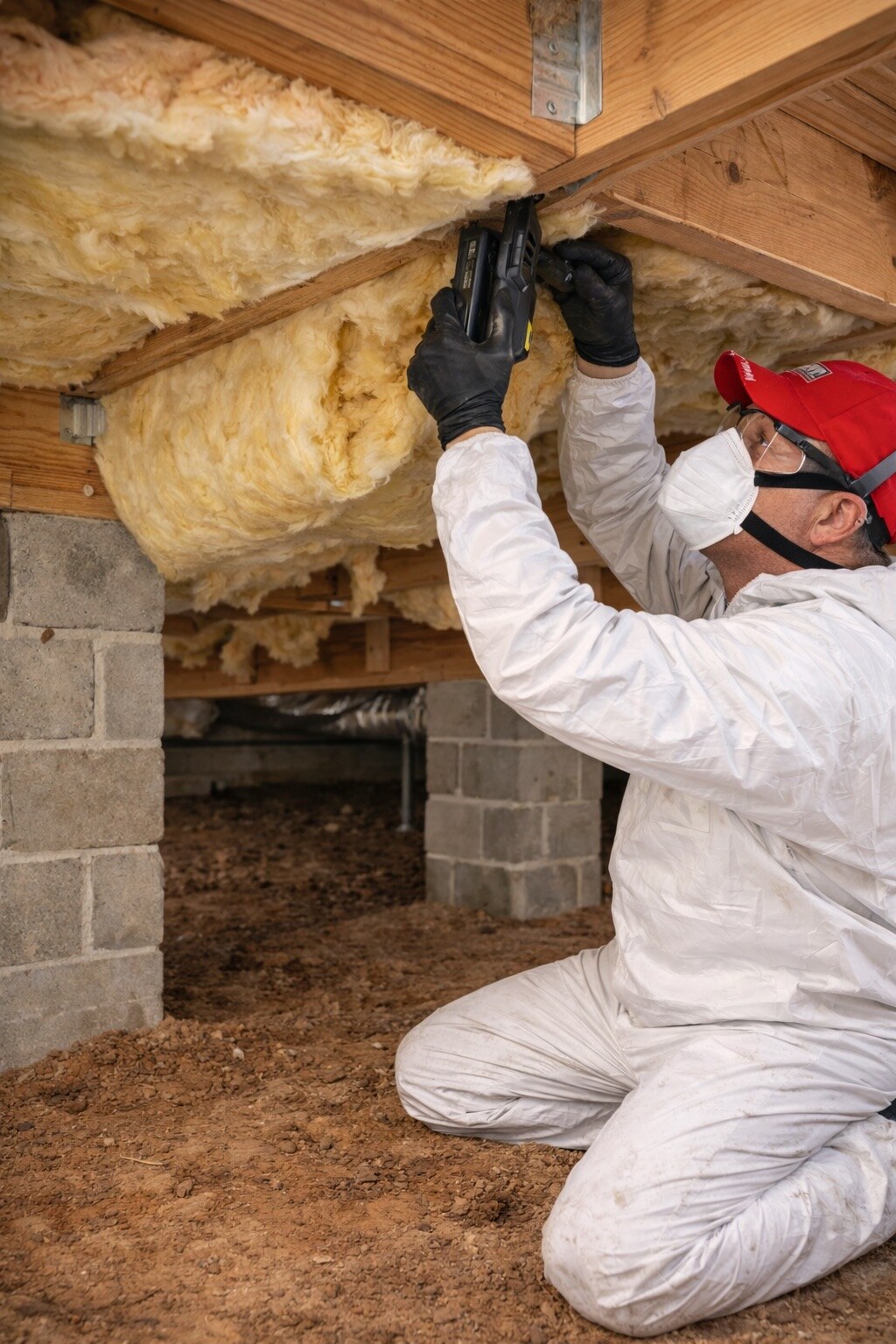
When the first cold nights reach Deep Creek (Chesapeake, VA 23323), it is tempting to close every crawl-space vent and call the winter prep done. But a vent cover by itself does not dry a crawl space, stop groundwater, or turn an older vented foundation into a properly conditioned space. The right answer depends on how your home was built, where moisture is coming from, and what the space needs to stay dry.
Quick answer
Do not automatically close crawl-space vents just because winter is coming. A crawl space designed as a sealed, conditioned space may have closed foundation vents as part of a complete moisture-control plan. Simply blocking vents without addressing drainage, ground moisture, insulation design, and code requirements can leave the underlying problem untouched.
Why the “close them in winter, open them in summer” rule can mislead
Older advice often treated foundation vents like windows: open them for fresh air, then shut them when temperatures drop. Building-science guidance is more nuanced. In mixed and humid climates, outdoor air can carry moisture into a cooler crawl space, where it may condense on framing and other surfaces. At the same time, a sealed crawl space only works when the rest of the moisture strategy is planned too.
A U.S. Department of Energy Building America guide published through ENERGY STAR explains that converting a vented crawl space to an unvented one involves more than closing the openings. The guide discusses moisture control, drainage, air sealing, insulation, and conditioning as parts of the whole assembly. That is why a quick seasonal vent change is not a substitute for checking the space.
What Deep Creek homeowners should check before changing vents
- Look for water first.Standing water, damp soil after ordinary weather, water marks, or a plumbing leak need a source check. Closing vents will not correct roof runoff, poor grading, or a plumbing problem.
- Check the ground cover and perimeter.A torn or displaced ground vapor barrier can allow soil moisture into the space. Note gaps or exposed soil and have the condition assessed before choosing a repair.
- Identify the crawl-space design.Floor insulation, wall insulation, air sealing, and humidity control need to work together. Adding vent covers to an existing vented design can create a different moisture balance without fixing the original one.
- Keep required flood openings clear.Some properties have openings required for flood protection or local code. Never block a flood vent or alter a foundation opening without confirming what it is and what rules apply.
- Look for insulation problems.Sagging or fallen subfloor batts, cold floors, and visible gaps are reasons to inspect the insulation and supports—not a reason to assume that vent position alone is the cause.
When does closing the vents make sense?
In a deliberately sealed crawl-space system, closing the foundation vents may be one part of the design. The complete plan may also call for a ground vapor barrier, water management, sealed air pathways, an appropriate insulation location, and humidity control. The details depend on the house and local requirements, particularly for homes in low-lying parts of Chesapeake.
If your house still has a conventional vented crawl space, do not assume that closing the vents for a few cold months is automatically safer or more efficient. Have the moisture source and the existing floor or wall insulation inspected first. If the crawl space is dry, the vents are in good condition, and the current design is functioning as intended, the answer may be different from a crawl space with standing water, a damaged liner, or fallen insulation.
Why the crawl space matters when the heat comes on
The crawl space sits directly below the floor and may contain water lines, insulation, and HVAC ductwork. A damp or poorly insulated space can contribute to cold floors and comfort complaints, but those symptoms have more than one possible cause. An inspection can help separate moisture, insulation, air leakage, and duct issues instead of treating every problem with vent covers.
For Deep Creek homeowners, ourChesapeake crawl-space encapsulation pageexplains the moisture-control service, and theChesapeake service-area pagelists local insulation options. If you find droppings, gnaw marks, or signs of active pests, arrange a separate inspection withUniversal Pest & Termite in Chesapeake. If the duct system needs a separate inspection or cleaning, contactUniversal Duct Cleaning in Chesapeake.
Before closing vents at a Deep Creek home in Chesapeake, VA 23323, identify the crawl-space design and moisture conditions. A site-specific assessment is more reliable than a seasonal rule—and helps protect the floor system through the next stretch of cold, wet weather.
Sources
Frequently Asked Questions
Should I close my Chesapeake crawl-space vents before winter?
Not automatically. Closing vents may be part of a properly designed sealed crawl space, but the right approach depends on moisture, drainage, insulation, the home's design, and code or flood-opening requirements.
Will closing crawl-space vents stop moisture?
No. Vent covers alone do not correct standing water, plumbing leaks, poor drainage, or ground moisture. Those conditions need to be identified and addressed as part of a complete moisture-control plan.
Can I close a crawl-space flood vent?
Do not block or alter a flood opening without confirming its purpose and the applicable local requirements. Ask a qualified local professional or building official before changing it.