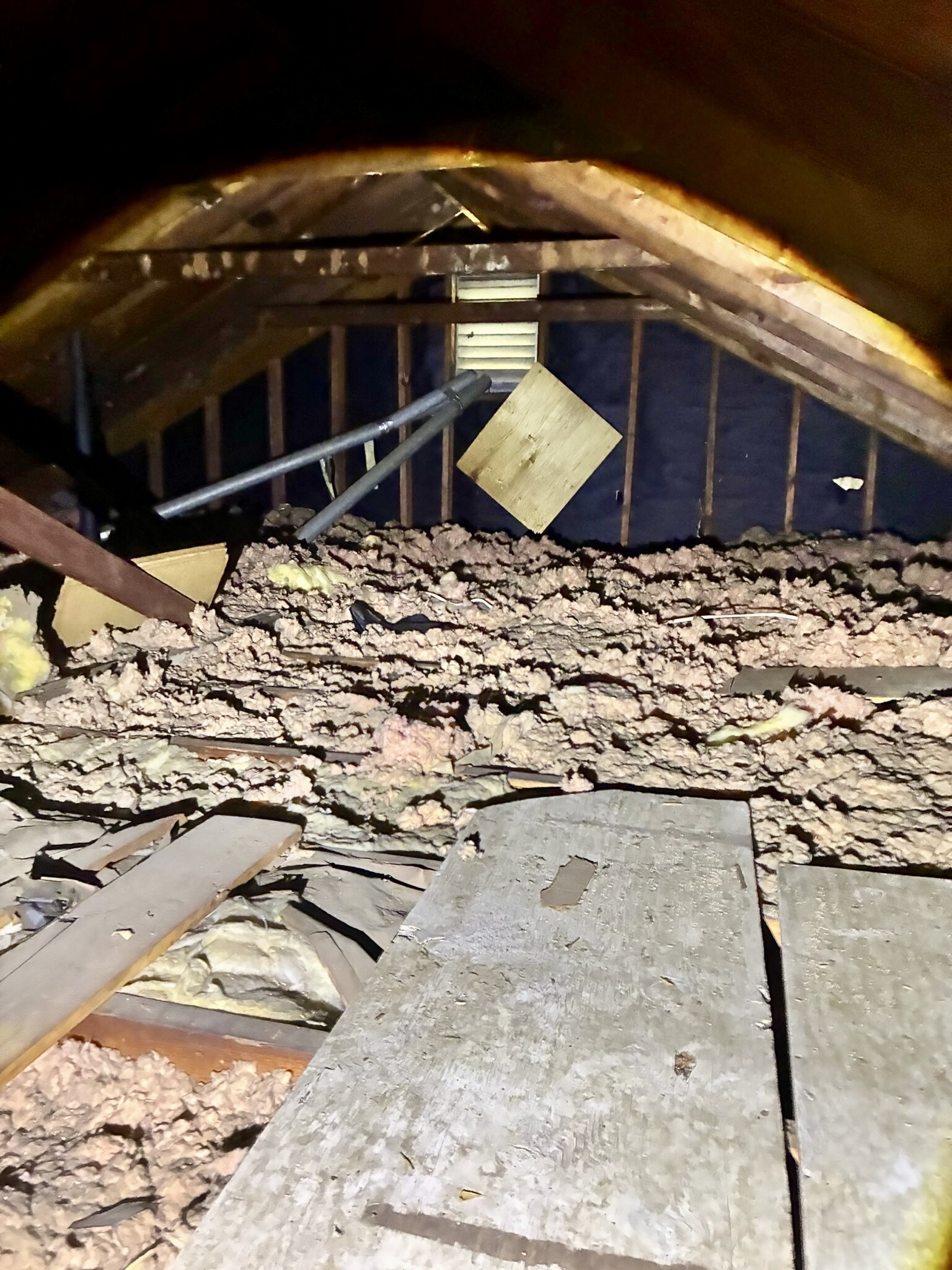
Blowing new insulation over old material can be reasonable in some dry, clean attics, but contamination changes the decision. Covering droppings, nesting, urine-stained areas, or wet insulation can make the real scope harder to see and does not resolve the source.
The answer should come from an attic inspection and written scope—not from a blanket rule that all old insulation must be removed or that every top-off is safe.
Separate Age From Contamination
Old insulation is not automatically unusable. A contractor should inspect whether it is dry, evenly distributed, reasonably intact, and free of visible contamination. Material that is simply dated may have a different solution from material affected by rodents or water.
Warning signs include concentrated droppings, nests, urine odor, staining, dampness, compressed pathways, and insulation displaced around penetrations. The visible area may not define the full cleanup boundary.
Why Covering Contamination Can Backfire
A new layer can hide damaged material, add weight around fixtures, and make future inspection more difficult. It also cannot close the opening used by rodents or correct a roof or plumbing leak.
If rodents are active, Universal Pest & Termite should handle pest control and exclusion before the insulation plan is finalized. Other trades must address roof or plumbing sources when those are identified; insulation installation is not a substitute for those repairs.
What the Inspection Should Document
Ask the estimator to identify material types, depth, wet or contaminated areas, attic access, ventilation paths, fixtures, and any air-sealing opportunities. The proposal should say whether the plan is retain-and-top-off, partial removal, or broader removal and replacement.
- Condition and location of existing insulation
- How affected material will be contained, removed, and disposed of
- Whether accessible framing surfaces will be cleaned or treated
- How soffit vents, wiring, hatches, and lighting will be protected
- Which pest, duct, roofing, or plumbing work is outside the scope
Choose the Sequence, Not Just the Material
A sound sequence is to identify the source, control active pests, resolve water issues through the appropriate trade, remove or retain material based on condition, then install insulation to the agreed scope. Universal Duct Cleaning handles duct work when that is separately needed.
Ask for photographs or measurements in the completion record. Clear documentation helps confirm what was retained, what was removed, and which company is responsible for any follow-up.
What to Do Next
Have old attic insulation and suspected contamination? request a free insulation estimate for a written retain-or-remove assessment in Norfolk or Virginia Beach before anyone adds a new layer.
Frequently Asked Questions
Can new blown-in insulation cover old insulation?
It can be appropriate when the existing material is dry, clean, stable, and otherwise suitable for a top-off. Visible contamination, moisture, pest damage, or unsafe conditions may require removal or a different scope.
Does new insulation seal in rodent odors?
Adding insulation is not a reliable odor-removal method and does not resolve active entry. Pest control, appropriate cleanup, and an insulation decision based on the affected material should be coordinated.
Who removes rodents before insulation work?
Universal Pest & Termite handles rodent-control and exclusion work. The insulation crew can then evaluate removal, cleaning, and replacement after the pest scope is addressed.
Will an insulation contractor repair a roof or plumbing leak?
No. Roofing and plumbing repairs belong to those trades. An insulation inspection can document signs of moisture and explain how the insulation scope depends on the source being corrected.
Can ducts be cleaned during insulation removal?
Duct cleaning is a separate service performed by Universal Duct Cleaning. Confirm that scope independently rather than assuming insulation removal includes HVAC duct work.