

Best Attic Insulation for Humid Climates: What Works in Hampton Roads
May 27, 2026
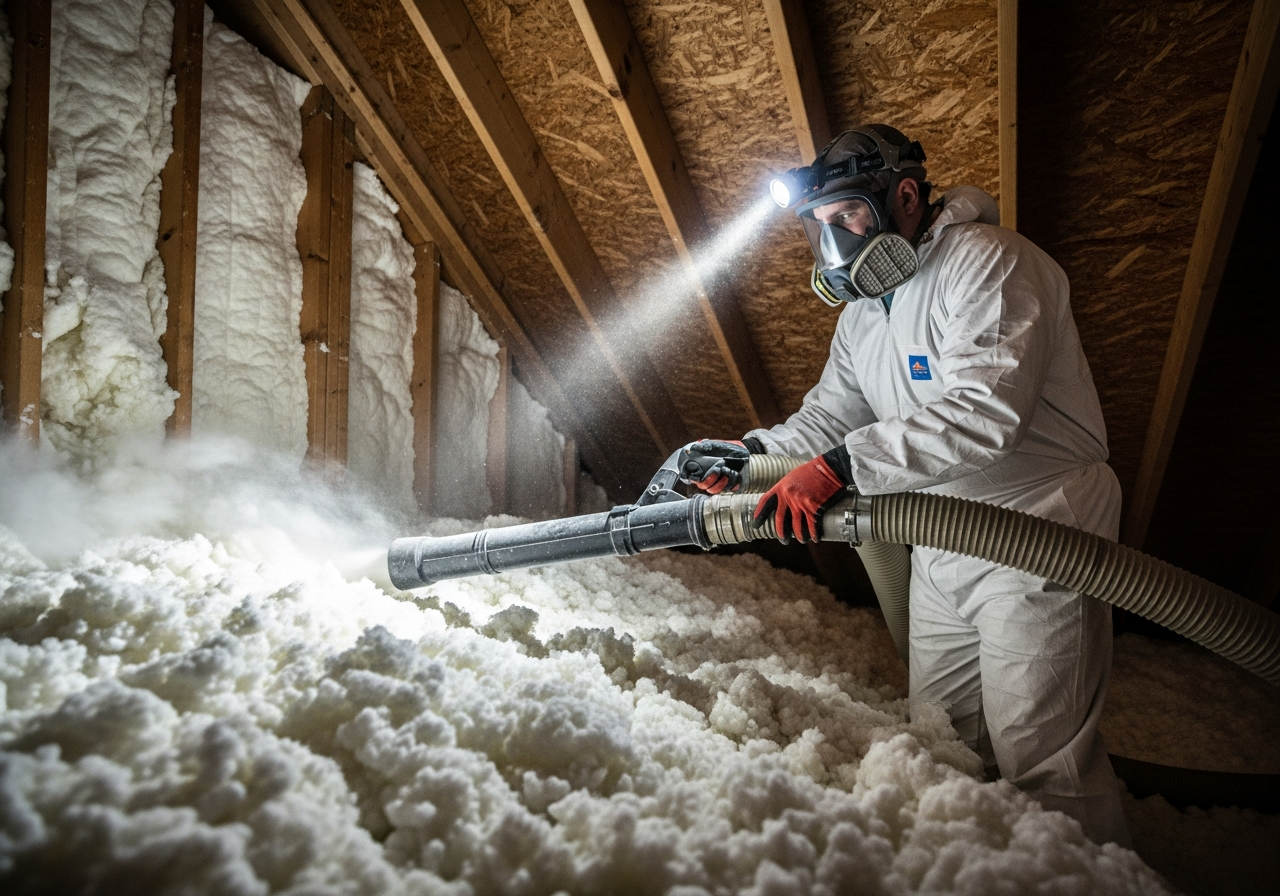
Insulation is not a universal product. A material that performs well in a dry mountain climate can absorb moisture, compress, and lose effectiveness quickly in the coastal humidity of Hampton Roads. Virginia Beach, Chesapeake, and Norfolk average annual relative humidity between 72% and 78% — among the highest of any major metro in Virginia. Choosing the right attic insulation for this environment means understanding how each material responds to moisture, not just what R-value it achieves on day one.
What "Humid Climate" Actually Means for Insulation
Humidity affects insulation in two ways. First, high ambient moisture can infiltrate insulation material and reduce its effective R-value — wet fiberglass, for example, loses a significant portion of its thermal resistance. Second, moisture cycling (the daily expansion and contraction of humidity levels) can cause certain materials to compact and settle over time, thinning the insulation layer and lowering R-value even without direct wetting.
In Hampton Roads, both problems are at play. Summer afternoons push outdoor humidity into the 80s. Temperature differentials between the hot attic and the cooler living space drive moisture movement through the ceiling assembly. Homes near the Chesapeake Bay, Elizabeth River, or coastal marshlands face particularly aggressive moisture conditions.
Blown-In Fiberglass: The Best General-Purpose Choice
For most Hampton Roads attics, blown-in fiberglass insulation offers the best combination of moisture resistance, thermal performance, and long-term stability. Fiberglass does not absorb water the way cellulose does — it resists moisture intrusion and maintains its structure through humidity cycling. When installed to R-49 or higher, it provides the thermal barrier required by the Department of Energy for climate zone 3.
Blown-in (loose-fill) fiberglass is preferable to fiberglass batts in most attic applications because it fills irregularly shaped spaces, covers obstructions, and doesn't leave gaps at framing members the way batts do. Batts in a humid environment are also more prone to sagging and pulling away from framing over time, creating thermal gaps.
Our Pest Guard™ Option: Borate-Treated Fiberglass
Pest Guard™ insulationis a borate-treated fiberglass option described as intended to deter certain insects. We do not have product-specific label or manufacturer documentation available to confirm the listed insects, approved applications, safety guidance, or treatment duration. Ask for the current label before relying on any pest-related claim. It is not a rodent control product.
Cellulose: Effective but Moisture-Sensitive
Cellulose insulation — made from recycled paper treated with borate — offers good R-value per inch and excellent air resistance. However, it is significantly more moisture-sensitive than fiberglass. Cellulose that gets wet from a roof leak or attic condensation can clump, compact severely, and become a mold substrate. In a high-humidity environment like Hampton Roads, cellulose requires careful attic ventilation management and is not the first choice for homes with any history of moisture intrusion.
Spray Foam: High Performance, High Cost
Closed-cell spray foam provides the highest R-value per inch of any insulation material and creates an air and vapor barrier simultaneously. When applied to the underside of the roof deck (creating an unvented, conditioned attic), it essentially eliminates the attic as a thermal liability. It is also entirely moisture-impermeable. The trade-off is cost — spray foam attic installations run 3–5x the cost of blown-in fiberglass per square foot, putting them out of reach for most homeowners doing a straightforward insulation upgrade.
Spray foam makes the most sense for homes undergoing major renovations, new construction, or homes with unusual attic configurations that make blown-in installation impractical.
What to Do Before Any Insulation Goes In
In a humid climate, installing new insulation over an existing moisture problem simply traps the problem. Before new attic insulation is installed, any existing wet, contaminated, or pest-damaged material should be removed (see ourinsulation removal service), air sealing should be completed at all penetrations through the attic floor, and attic ventilation should be verified as adequate. In Hampton Roads, this pre-installation work is not optional — it's the difference between an upgrade that lasts 20 years and one that underperforms within five.
Schedule a Free Attic Inspection
Universal Insulation Doctor serves all of Hampton Roads — Virginia Beach, Chesapeake, Norfolk, Portsmouth, Hampton, Newport News, Suffolk, and Williamsburg. Our free inspections include measurement of your current R-value, assessment of moisture conditions, and a recommendation for the right insulation type for your specific attic. Call757-962-0340or visit ourattic insulation pageto learn more.
Ready for a Free Estimate?
Universal Insulation Doctor serves all of Hampton Roads. Call now or fill out our quick form — we'll get back to you same day.
Have a Question?
Can't find the answer you're looking for? Our team is always happy to help. Give us a call or fill out the form for a free no-obligation consultation.
(757) 962-0340